 8.6 out of 10 based on 79863 reviews







.svg)
.svg)
.svg)
.svg)
.svg)
.svg)


 Menu
Menu
-
 Vaporshop
All Categories
Vaporshop
Vaporshop
All Categories
Vaporshop
- Top 10 Vaporizers
- Spare Parts & Accessories
- AirVape XS GO (2021)
- Arizer Air MAX
- Arizer Extreme Q
- Arizer Solo 2
- Arizer V-Tower
- Arizer XQ2
- Boundless CFC 2.0 Vaporizer
- Boundless CFX
- Boundless TERA (V3)
- CRAFTY+
- DaVinci IQC
- Dr. Dabber Boost EVO
- DynaVap VapCap "M" PLUS 2023
- DynaVap VonG (i) Titanium
- Flowermate Aura
- Flowermate Cap Pro
- Flowermate Slick
- Flowermate V5.0S Pro
- G Pen Elite II
- G Pen Micro+
- G Pen Roam
- Hyer Big-E Rig
- MIGHTY+
- PAX Mini
- PAX Plus
- PLENTY
- Puffco Peak Smart Rig
- Puffco Plus
- Storm Vaporizer
- The Proxy (Puffco)
- VOLCANO CLASSIC
- VOLCANO HYBRID
- Vapman 2.0
- Vapman Click
-
 Smartshop
All Categories
Smartshop
Smartshop
All Categories
Smartshop
- Top 10 Smartshop
- Zamnesia Gift Cards
- After Party
- Aphrodisiacs
- Aromatherapy
- Blue Lotus
- Capsule Machines
- Crystals, Gemstones & Minerals
- Dream Herbs
- Drug Tests
- Extracts
- Happy Caps
- Herbal Tea
- Herbs & Seeds
- Incense
- Kanna
- Kratom
- LSA Seeds
- Mescaline Cacti
- Microdosing
- Nootropics
- Relaxing
- Salvia divinorum
- Smart Seeds
- Stimulants
- Supplements
- Tinctures
- Vape Herbs
-
 TRIBE
All CategoriesTRIBE
TRIBE
All CategoriesTRIBE
- My Membership
- Spend Gift Points
- TRIBE Sale
- Exclusive products
- Earn Extra Gift Points
- Early Access
- Refer a Friend
- Information
 Mushroom Dosage Calculator


 Help
Help United States
Growshop: Everything for Growing at Home
Our growshop stocks the whole chain, from a 60x60 grow tent on a balcony to a 120x120 room with a 480 W LED grow light over it. Tents, lights, extractor fans, carbon filters, substrate, nutrients and the harvest gear are all here, chosen so the parts actually work together. Start with the subcategories below, or read on if you are still deciding what your space can take.
What Is a Growshop, and What Do You Actually Need
Every grow room is the same four systems: a space, a light over it, air moving through it, and something to feed the plants. Get those matched to each other and the rest is detail. Get them mismatched and no amount of nutrients will save the run.
What Is a Growshop and What We Stock
A growshop covers the whole chain rather than one shelf of it. Ours runs from propagation kits through grow tents, lighting, ventilation, substrate and nutrients, all the way to the drying and curing gear you need at the end. Because the parts are stocked in matching sizes, a tent, a light and a fan bought here will actually suit each other.
Grow Tents and Complete Kits
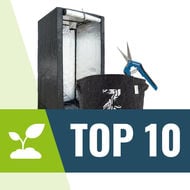
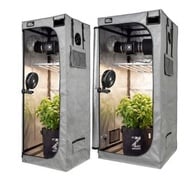
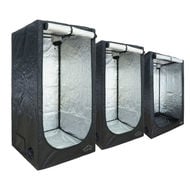
Tent size drives everything downstream. A 60x60x180 holds two plants comfortably; 100x100x200 is where a hobby turns into a routine; 120x120x200 really wants a room you are not otherwise using. Our grow tents come in those footprints and as complete kits with the light and ventilation already paired, which is the version we point beginners at.
Grow Lights: LED and HPS, Nutrients and Climate Control
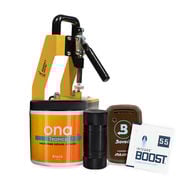
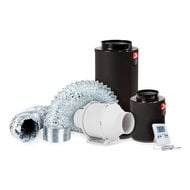
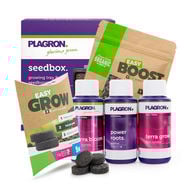
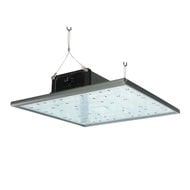
Reckon on 120 W of LED for a 60x60, 320 W for a 100x100 and 480 W for a 120x120, which is exactly how our grow lights are stocked. LED runs cooler than the old HPS lamps and costs less over an 18-hour veg day, though it costs more upfront. For ventilation and climate control you need an extractor fan, ducting and a 150 mm carbon filter, plus a controller from the climate control range to hold temperature and humidity steady, which is what VPD depends on. Base nutrients for veg and bloom sit in fertilizer, and a pH meter and EC meter are worth more than any booster.
Nutrients and Plant Food
Base nutrients split into a veg formula and a bloom formula, and that is most of what you need. Feed at half the label dose to begin with, because burnt leaf edges are nearly always an overdose rather than a shortage. A pH meter matters more than any booster on the shelf: at the wrong pH the plant cannot take up what you are feeding it, however much you add.
Indoor vs Outdoor Growing: Which Setup Fits You
Outdoors costs almost nothing to equip and gives you one harvest a year, at the mercy of the weather. Indoors costs more upfront and gives you several runs a year with full control of the light cycle, temperature and humidity. If you are unsure, start outdoors with pots, soil and nutrients: every one of those carries over when you move inside.
Pest Management
Two problems show up in nearly every indoor grow. Spider mites like the dry heat a lamp creates and sit on the underside of leaves, showing from above only as pale speckling. Fungus gnats live in the top layer of wet substrate and appear when you water too often, so letting the medium dry between waterings fixes most cases. Turning over a couple of lower leaves once a week is the cheapest habit in growing.
Subcategories
The range is split so you can shop by job: grow tents, grow lights, climate control, fertilizer, propagation, harvest, dry and cure, after harvest, plant seeds and accessories. The top 10 is where to start if you would rather not compare specs.
Your First Grow, in Order
- Pick the tent to fit the space you can actually give up.
- Match the LED wattage to that footprint.
- Sort extraction and a carbon filter before you buy anything else.
- Choose your medium: soil forgives mistakes, coco coir and perlite grow faster but need pH and EC watched daily.
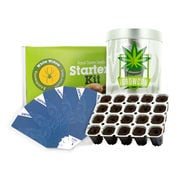
- Feed at half the label dose, and germinate with a propagation kit.
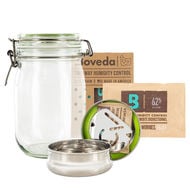
- Line up harvest, drying and curing gear before you need it.
One honest note: autoflowering plants flower on age rather than on a 12/12 switch, so they forgive a beginner's light schedule in a way photoperiod plants do not. If this is your first run, start there. Everything else is in accessories and grow supplies.
FAQ
- What size grow tent do I need?
Pick by floor space, not by plant count. A 60x60x180 takes two plants and fits a room corner, 100x100x200 suits a steady four-plant run, and 120x120x200 really wants a room of its own because you will be ducting air out of it.
- How much LED light does a grow tent need?
Roughly 120 W for a 60x60, 320 W for a 100x100 and 480 W for a 120x120. Our lights are stocked in those steps for that reason. Under-lighting a big tent is the most common and most expensive mistake.
- What are the essential items for starting to grow?
A tent, a light matched to it, an extractor fan with a carbon filter, a substrate, base nutrients for veg and bloom, and a pH meter. That is the whole list. Everything else is refinement.
- How much light do plants need daily?
Photoperiod plants take 18 hours on during veg, then 12 on and 12 off to trigger flowering. Autoflowering plants flower on age instead, so the schedule matters far less.
- Can I grow all year round?
Indoors, yes: you control the light cycle, temperature and humidity, so the season is irrelevant. Outdoors you get one harvest a year and the weather decides how it goes.