
 8.6 out of 10 based on 80766 reviews







.svg)
.svg)
.svg)
.svg)
.svg)
.svg)



 Menu
Menu
-
 Vaporshop
All Categories
Vaporshop
Vaporshop
All Categories
Vaporshop
- Top 10 Vaporizers
- Spare Parts & Accessories
- AirVape XS GO (2021)
- Arizer Air MAX
- Arizer Extreme Q
- Arizer Solo 2
- Arizer V-Tower
- Arizer XQ2
- Boundless CFC 2.0 Vaporizer
- Boundless CFX
- Boundless TERA (V3)
- CRAFTY+
- DaVinci IQC
- Dr. Dabber Boost EVO
- DynaVap VapCap "M" PLUS 2023
- DynaVap VonG (i) Titanium
- Flowermate Aura
- Flowermate Cap Pro
- Flowermate Slick
- Flowermate V5.0S Pro
- G Pen Elite II
- G Pen Micro+
- G Pen Roam
- Hyer Big-E Rig
- MIGHTY+
- PAX Mini
- PAX Plus
- PLENTY
- Puffco Peak Smart Rig
- Puffco Plus
- Storm Vaporizer
- The Proxy (Puffco)
- VOLCANO CLASSIC
- VOLCANO HYBRID
- Vapman 2.0
- Vapman Click
-
 Smartshop
All Categories
Smartshop
Smartshop
All Categories
Smartshop
- Top 10 Smartshop
- Zamnesia Gift Cards
- After Party
- Aphrodisiacs
- Aromatherapy
- Blue Lotus
- Capsule Machines
- Crystals, Gemstones & Minerals
- Dream Herbs
- Drug Tests
- Extracts
- Happy Caps
- Herbal Tea
- Herbs & Seeds
- Incense
- Kanna
- Kratom
- LSA Seeds
- Mescaline Cacti
- Microdosing
- Nootropics
- Relaxing
- Salvia divinorum
- Smart Seeds
- Stimulants
- Supplements
- Tinctures
- Vape Herbs
-
 TRIBE
All CategoriesTRIBE
TRIBE
All CategoriesTRIBE
- My Membership
- Spend Gift Points
- TRIBE Sale
- Exclusive products
- Earn Extra Gift Points
- Early Access
- Refer a Friend
- Information
 Mushroom Dosage Calculator


 Help
Help United States
LED Grow Lights: Full Spectrum From 120 W to 480 W
Tent's up in the spare room, extraction's sorted, and there's one box left to tick: the light. We carry 7 LED grow lights, from the Phytonaut 120 W that pairs with a 60x60 cm tent up to the Phytonaut 480 W pushing 1415.33 µmol/s PPF, all of them full spectrum so one fixture carries plants from seedling through flowering. Have a scroll through the grid, then read the numbers below if you're stuck between two wattages.
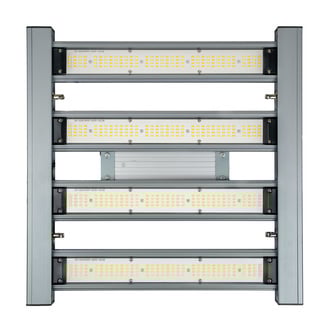
Phytonaut LED Grow Light 120 W (Zamnesia)
The Zamnesia Phytonaut 120 W is a compact full-spectrum LED grow light delivering 330.69 µmol/s PPF across a 60×60 cm canopy. Even light distribution, passive cooling, dimmable from 25–100%, and rated for 54,000+ hours. Built for small tents and compact indoor grows.
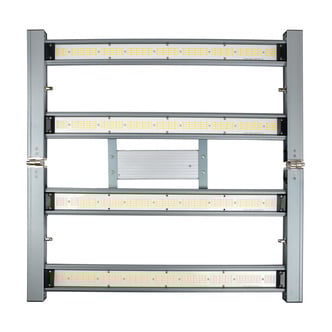
Phytonaut LED Grow Light 240 W (Zamnesia)
The Zamnesia Phytonaut 240 W is a full-spectrum LED grow light that produces 697.10 µmol/s PPF at 2.82 µmol/J for efficient indoor cultivation. A 120° light distribution helps keep coverage consistent across the canopy, while passive cooling, step dimming (25–100%), and IP65 protection make it a reliable, low-maintenance fixture for everyday grows.
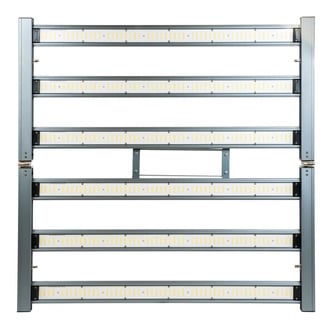
Phytonaut LED Grow Light 320 W (Zamnesia)
The Zamnesia Phytonaut 320 W is a full-spectrum LED grow light delivering 927.64 µmol/s PPF with a high 2.83 µmol/J efficacy for efficient, higher-output indoor grows. It uses a 120° light distribution for broad coverage, runs silently with passive cooling, and includes step dimming (25–100%) plus IP65 protection for humid environments.
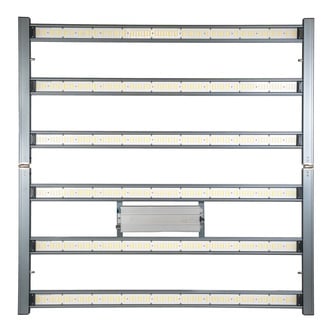
Phytonaut LED Grow Light 480 W (Zamnesia)
The Zamnesia Phytonaut 480 W is a full-spectrum LED grow light built for larger indoor grows that need strong, reliable light across the canopy. It delivers 1415.33 µmol/s PPF at 2.9 µmol/J, with a 120° light distribution for broad spread. Passive cooling, step dimming (25–100%), and IP65 protection make it a solid, low-maintenance option for long-term use.
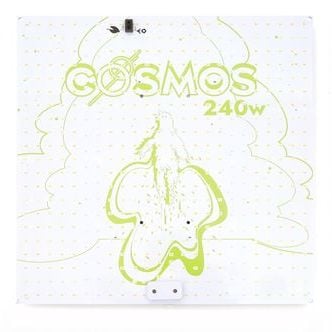
Cosmos LED Board 240W (Vanguard Hydroponics)
The Cosmos LED 240 W, by Vanguard Hydroponics is great for growing plants as it provides the amount of light for every stage of growth and supports optimal photosynthesis and development with its full spectrum feature.
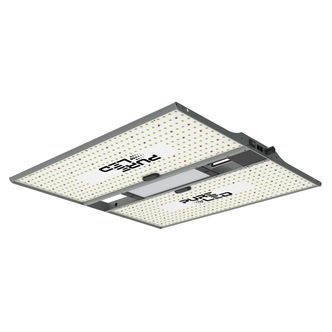
Pure LED Q320 Grow Light (Pure Factory)
Running a large grow room is nice—if you've got the lights to match its size. And with the Q320 Pure LED grow light from Pure Factory, you've got enough light to comfortably fill a 100–120 cm grow tent. Designed to maximise both vegetative growth and flower production, these lamps produce spectacular harvests all year round. What are you waiting for? Order yours now.v
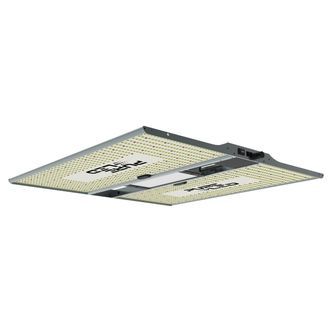
Pure LED Q420 Grow Light (Pure Factory)
Running a seriously big grow room? Then you need a serious grow lamp. Luckily, you've just found it—the Q420 Pure LED grow light from Pure Factory is perfect for larger tents and rooms measuring 120–150 cm. Lightweight, easy to set up, and complete with a few handy features, this lamp offers excellent functionality and the potential to pump out spectacular harvests—all year long.
Picking a Grow Light Without Guessing at the Numbers
Most people shop these by watts because that's the number on the box. Watts only tell you what the fixture pulls from the wall. What your plants actually eat is photons, and that's where the micromole figures come in. Here's how to read them, and which of the fixtures on this shelf lands where.
Micromoles, Not Marketing: What PPF and Efficacy Mean
PPF is the total usable light a fixture puts out per second, measured in micromoles per second. Efficacy, in µmol/J, is how many of those photons you get per joule of electricity. Across the Phytonaut range the ladder runs like this: the 120 W gives 330.69 µmol/s at 2.74 µmol/J, the 240 W gives 697.10 µmol/s at 2.82 µmol/J, the 320 W gives 927.64 µmol/s at 2.83 µmol/J, and the 480 W tops out at 1415.33 µmol/s at 2.9 µmol/J. All four run Sanan and Osram LED chips behind a balanced full spectrum, so you're not swapping fixtures or adding a bloom bar when you flip to 12/12.
Watch out for one thing: those figures shift a little with manufacturing tolerances and test conditions, and we don't publish PPFD maps or square-metre coverage claims for these lights. PPF and efficacy are the honest comparison points. The 120 W also sits at the bottom of the efficiency ladder at 2.74 µmol/J, so if you care about photons per watt, the 480 W is the stronger buy of the two.
Watts Versus Tent Size: Where Each Fixture Lands
The 120 W is the one we'll put in writing as the small-space option, and it arrives ready to hang with steel cables, hooks, rope ratchets and a 3 m data cable. Step up and you've got choices at the same wattage. At 240 W you can take the Phytonaut 240 W with its 697.10 µmol/s, or the Vanguard Hydroponics Cosmos LED Board 240 W if you want a board-style fixture instead of a framed panel. At 320 W it's the Phytonaut 320 W against the Pure Factory Pure LED Q320, which measures 54 cm across, weighs 5.6 kg and is built on Samsung LMB281+ PRO diodes plus Honglitronics SMD3535, IP 65 rated with a power factor above 0.90. The bigger Pure LED Q420 runs 420 W, spans 62 cm, weighs up to 6.4 kg, uses the same Samsung LMB281+ PRO and Honglitronics SMD3535 mix with the same IP 65 rating and power factor above 0.90, and ships with a 150 cm cable, so check your ratchets are rated for the load before you hoist it. The Phytonaut 480 W is the full-room end of the ladder, with the 240 W and 320 W sitting between it and the 120 W. Grab whatever else the room needs, tents, ratchets and timers included, from the growshop.
Hanging Height, Dimming, and Reading Your Plants
Every Phytonaut spreads light at 120 degrees, which pushes output towards the corners instead of burning a hotspot in the middle. Hang it at 90 cm above seedlings and clones, 60 cm through veg on 18/6, and 40 cm in flower once you've flipped to 12/12. Curling or bleached leaf tips mean the light's too close, stretchy internodes mean it's too far. Dimming is a rotary knob on the driver, from OFF to full power, and the driver also supports 0 to 10 V external dimming systems such as the Zamnesia Grow Environment Controller, which is sold separately. Passive cooling means no fan hum at all, so the loudest thing in the tent stays your extraction fan.
Growers call these weed lights, plant lights, whatever sticks. If this is your first small setup, start with the Phytonaut 120 W and dim it down for the first fortnight. If you're already filling a bigger space and want output headroom for the next run, the 320 W is the one we'd pick, and there's more kit in the Zamnesia growshop to match it.
Frequently asked questions
- Which LED grow light works in a small space?
The Phytonaut LED Grow Light 120 W. It's the smallest in the range and is set up for compact spaces, giving 330.69 micromol/s PPF at 2.74 micromol/J with a 120 degree spread so the corners don't go dark. It comes ready to hang with steel cables, hooks, rope ratchets and a 3 m data cable.
- What do PPF and micromol/J actually tell me about a grow light?
PPF is the total usable light the fixture puts out every second, and efficacy in micromol/J tells you how many of those photons you get per joule of power. Higher PPF means more light reaching the canopy, higher efficacy means less waste at the wall. On the Phytonaut range that runs from 330.69 micromol/s at 2.74 micromol/J on the 120 W up to 1415.33 micromol/s at 2.9 micromol/J on the 480 W, all of it from Sanan and Osram LED chips.
- Do you have anything at 240 W or 320 W?
Both. At 240 W there's the Phytonaut LED Grow Light 240 W at 697.10 micromol/s and 2.82 micromol/J, or the Vanguard Hydroponics Cosmos LED Board 240 W. At 320 W you can pick the Phytonaut 320 W at 927.64 micromol/s and 2.83 micromol/J, or the Pure Factory Pure LED Q320, which is 54 cm wide, weighs 5.6 kg and runs Samsung LMB281+ PRO diodes plus Honglitronics SMD3535, IP 65 rated with a power factor above 0.90.
- How far above my plants should the light hang, and can I dim it?
With the Phytonaut fixtures, hang at 90 cm above seedlings and clones, 60 cm in veg, and 40 cm in flower. Raise it if leaves curl or bleach, lower it if growth goes stretchy. Dimming runs from OFF to full power on the driver's rotary knob, and the driver also supports 0 to 10 V external dimming systems such as the Zamnesia Grow Environment Controller, sold separately.