









.svg)
.svg)
.svg)
.svg)
.svg)
.svg)



 Menu
Menu
-
 Vaporshop
All Categories
Vaporshop
Vaporshop
All Categories
Vaporshop
- Top 10 Vaporizers
- Spare Parts & Accessories
- AirVape XS GO (2021)
- Arizer Air MAX
- Arizer Extreme Q
- Arizer Solo 2
- Arizer V-Tower
- Arizer XQ2
- Boundless CFC 2.0 Vaporizer
- Boundless CFX
- Boundless TERA (V3)
- CRAFTY+
- DaVinci IQC
- Dr. Dabber Boost EVO
- DynaVap VapCap "M" PLUS
- DynaVap VonG (i) Titanium
- Flowermate Aura
- Flowermate Cap Pro
- Flowermate Slick
- Flowermate V5.0S Pro
- G Pen Elite II
- G Pen Micro+
- G Pen Roam
- Hyer Big-E Rig
- MIGHTY+
- PAX Mini
- PAX Plus
- PLENTY
- Puffco Peak Smart Rig
- Puffco Plus
- Storm Vaporizer
- The Proxy (Puffco)
- VOLCANO CLASSIC
- VOLCANO HYBRID
- Vapman 2.0
- Vapman Click
-
 Smartshop
All Categories
Smartshop
Smartshop
All Categories
Smartshop
- Top 10 Smartshop
- Zamnesia Gift Cards
- After Party
- Aphrodisiacs
- Aromatherapy
- Blue Lotus
- Capsule Machines
- Crystals, Gemstones & Minerals
- Dream Herbs
- Drug Tests
- Extracts
- Happy Caps
- Herbal Tea
- Herbs & Seeds
- Incense
- Kanna
- Kratom
- LSA Seeds
- Mescaline Cacti
- Microdosing
- Nootropics
- Relaxing
- Salvia divinorum
- Smart Seeds
- Stimulants
- Supplements
- Tinctures
- Vape Herbs
-
 TRIBE
All CategoriesTRIBE
TRIBE
All CategoriesTRIBE
- My Membership
- Spend Gift Points
- TRIBE Sale
- Exclusive products
- Earn Extra Gift Points
- Early Access
- Refer a Friend
- Information
 Mushroom Dosage Calculator


 Contact
Plant Seed Shop: Veg, Herb, Flower and Cactus Seeds
Say you want salad by next week, chillies by August, and a San Pedro that outlives your flat. Those are three different aisles, and this plant seeds hub is where you split off into them. The branches underneath run from cress on a kitchen windowsill to Papaver somniferum in a border and Lophophora williamsii seeds that take their sweet time.













Sixteen Seed Aisles and How to Find Yours in Two Minutes
Most people land here with one job in mind: a tray of something edible on the windowsill, or a slow project on the balcony. Both work, but the seeds, the timing, and the kit behind them are nothing alike. Sprouting seeds go from dry packet to edible in about five days, while cactus seeds sit under glass for months before they look like anything at all. Work out which grower you are, then pick up soil, plugs, and pots from the growshop in the same order.
Every Seed Is a Packed Lunch With a Built-In Timer
A seed is an embryo plus a food store, wrapped in a hard coat. Dormancy is the pause button: that coat keeps water out until conditions are right, which is why some species ask for a soak, a spell of cold stratification, or a light scratch (scarification) before they move. Viability is the other half. Cress, radish, and mustard stay lively for years, while Green Mormon Tea (Ephedra viridis) and plenty of the exotics fade faster, so buy those for the season you will actually sow. Every packet carries the botanical name, Physalis ixocarpa for tomatillo, Eschscholzia californica and Papaver somniferum for two very different poppies, Echinopsis pachanoi for San Pedro, because "poppy" on its own covers dozens of plants. The packet is also where you check whether a variety is open-pollinated or an F1 hybrid, and whether it needs light to germinate or a shallow covering.
From Cress on the Windowsill to San Pedro on the Balcony
The table below is the fast route in. If you would rather see the lot in one go, every seed we stock sits in one list, and the top 10 of the plantshop shows what is moving this month. After Hawaiian Baby Woodrose? Argyreia nervosa sits in the psychoactive plant seeds branch with the rest of the ethnobotanical collector's shelf.
| Branch | What grows there |
|---|---|
| Vegetable seeds | Carrots, gherkins, pumpkins, chard. Beds and big pots. |
| Fruit seeds | Physalis ixocarpa, Cucumis metuliferus, tomatoes you won't see in shops. |
| Herb seeds | Lovage, summer savory, angelica, Stevia rebaudiana. |
| Chili pepper seeds | Capsicum annuum, sweet pointed types to dwarf mixes. |
| Flower seeds | Cornflower, nasturtium, bee & butterfly mixes. |
| Microgreens | Mizuna, fennel, daikon radish. Cut in 10 days. |
| Sprouting seeds | Alfalfa, mung bean, cress. A jar, no soil. |
| Edible plant seeds | Edible flower mixes, New Zealand spinach, leafy oddities. |
| House plant seeds | Indoor pots and sills, Coleus 'Rainbow Mixed' included. |
| Companion planting | Sown beside crops to pull in pollinators. |
| Medicinal plant seeds | Ashwagandha, wild lettuce, mallow. Old apothecary garden stock. |
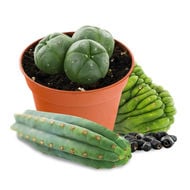
| Cacti | Echinopsis pachanoi, Peruvian Torch, Lophophora williamsii. Seeds and plants. |
| Exotic seeds | Klip Dagga, Mucuna pruriens, warm-climate curiosities. |
| Psychoactive plant seeds | Ethnobotanical collector's seed, Argyreia nervosa and Ipomoea tricolor included. |
Waking Them Up, and Keeping the Spares Alive
Almost everything here starts the same way: moist, not soaked, and warm. Coco germination plugs hold water without going to sludge, and the Seed Propagator keeps humidity steady so a tray of Mizuna doesn't dry out on day two while you're at work. Sowing depth counts as much as heat: fine seed stays on the surface, bigger seed goes under a shallow layer. Watch out for the slow ones: cactus seed such as Echinopsis pachanoi can take two to four weeks to break the surface and then sit there for months looking like green grit, so judge it on germination time rather than patience alone. If you want something to eat this fortnight, the sprouting branch beats the cacti branch every time. Leftover packets go somewhere cool, dark, and dry, in a sealed tin so they don't sweat. Cut mung bean sprouts around day four, while they're still snappy and taste faintly nutty instead of sour. Anything raised indoors gets hardened off before it moves out. Starting one tray tonight, we'd put Sprouting Salad Mix on the counter and hold the Cherry Tomato 'Supersweet 100 F1' back for March.
Frequently asked questions
- What is a plant seed, exactly?
It's a plant embryo packed with its own food store and sealed in a protective coat. That coat holds the seed dormant until warmth and water tell it to go, which is why some species need soaking or a cold spell first. Viability is how long that package stays alive on the shelf, and it varies hugely between cress and, say, an exotic like Velvet Bean.
- How long can I keep seeds before I sow them?
Kept cool, dark, and dry, most vegetable, herb, and flower seed stays usable for two to four years, and cress or mustard often longer. Exotics and ethnobotanical species are less forgiving, so treat those as one-season stock. A Humidity Control Pack in a sealed tin does more for shelf life than any other trick we know.
- Where do I find LSA or Hawaiian Baby Woodrose seeds?
They sit in the psychoactive plant seeds branch of this hub, next to the rest of the ethnobotanical collector's seed. We sell them as seed for growers and collectors, and we don't publish preparation, extraction, or dosage information for any of those species. If you want the botanical side, the species pages list Latin names and growing habit.
- Which seeds work if I only have a windowsill?
Sprouting seeds need a jar and five days, microgreens need a shallow tray and about ten, and the house plant seeds branch covers things like Coleus 'Rainbow Mixed' that stay happy indoors year round. Herbs such as basil and summer savory also do fine in a sunny window, though carrots and pumpkins really want a bed outside. Packets ship fast and discreetly across Europe, so you can start a tray the week they land.