










.svg)
.svg)
.svg)
.svg)
.svg)
.svg)



 Mushroom Dosage Calculator


 Contact
Do Autoflowers Need Nutrients?




Not sure if your autos need feeding yet? This guide answers what nutrients autoflowers need, plus a practical week-by-week rhythm and product tips for your medium.
Feeding autos can feel weirdly confusing: Half the grow world says “they barely need anything”; the other half is pushing full-strength bottles from day one. The truth lies in the middle, and it starts with understanding that autoflower nutrients aren’t handled the same way as photoperiod plants are.
Because autos run on a fixed schedule and tend to be more sensitive to stress, they usually prefer a gentler, more gradual approach, especially early on. That doesn’t mean starving them; it means giving the right inputs at the right time, and knowing when to leave the medium alone.
In this up-to-date guide, we’ll break down what to feed at each stage, how to build a simple schedule, and how to choose products that match your setup, so you can stop guessing and start growing with confidence.
Do autoflowers need nutrients?

Autoflowers need nutrients, just like any cannabis plant. The real question is whether your grow medium already contains enough food to carry them through, or if you’ll need to supplement.
With a rich, pre-fertilised “super soil”, seedlings can often cruise for a few weeks on what’s in the pot. A lighter “light mix” has a smaller nutrient charge, so you’ll typically start feeding earlier (but still gently). In inert media such as coco coir, rockwool, or plain peat-based mixes, there’s basically nothing available, so you must provide a complete nutrient programme from early growth.
Where people get tripped up is the dose. Because autos are quick and a bit more sensitive, the best approach is often to give less, watch the plant, and increase gradually rather than chasing bottle charts. Many growers find that autoflowers need fewer nutrients, which is effectively true in practice, provided you keep them consistently supplied and avoid overfeeding.
What nutrients do autoflowers need?

Autoflowers need the same core building blocks as any cannabis plant, but they have less time to correct mistakes. The primary macronutrients are N-P-K: nitrogen (N) drives leafy growth, phosphorus (P) supports roots and early flower development, and potassium (K) helps overall vigour, water regulation, and bud formation.
Secondary nutrients matter too, even though they’re used in smaller amounts. Calcium and magnesium are key for strong cell structure and photosynthesis, while sulphur supports enzyme function and terpene-related processes. Micronutrients (such as iron, zinc, manganese, boron, and copper) are required in tiny amounts, but deficiencies can still slow plants down.
Nitrogen sensitivity is common in autos because they often transition from veg to flower quickly, so that high-N feeds can tip them into dark, clawed leaves. For context, their rapid pace mirrors the cannabis life cycle, meaning balanced, modest feeding usually beats heavy-handed dosing. This section focuses on which nutrients autoflowers need before we map timing and products.
Why do autoflowers need fewer nutrients than photoperiod plants?
Autoflowers are bred with Cannabis ruderalis genetics, which is what gives them their automatic flowering behaviour. That same influence often results in a slightly lower feeding appetite than many photoperiod-heavy hybrids.
Their vegetative window is also short, and the plant doesn’t have much time to bounce back from mistakes. With photoperiods, you can ease off, flush, and veg a bit longer to recover; autos keep moving regardless, so setbacks tend to cost yield.
Overfeeding is the classic trap, because the smaller root zone and faster timeline make nutrient burn more likely and more damaging. The practical takeaway is simple: start low, build up slowly, and let the plant’s colour and growth rate guide you; less is more with autos.
Growing autoflowers without nutrients: Is it possible?
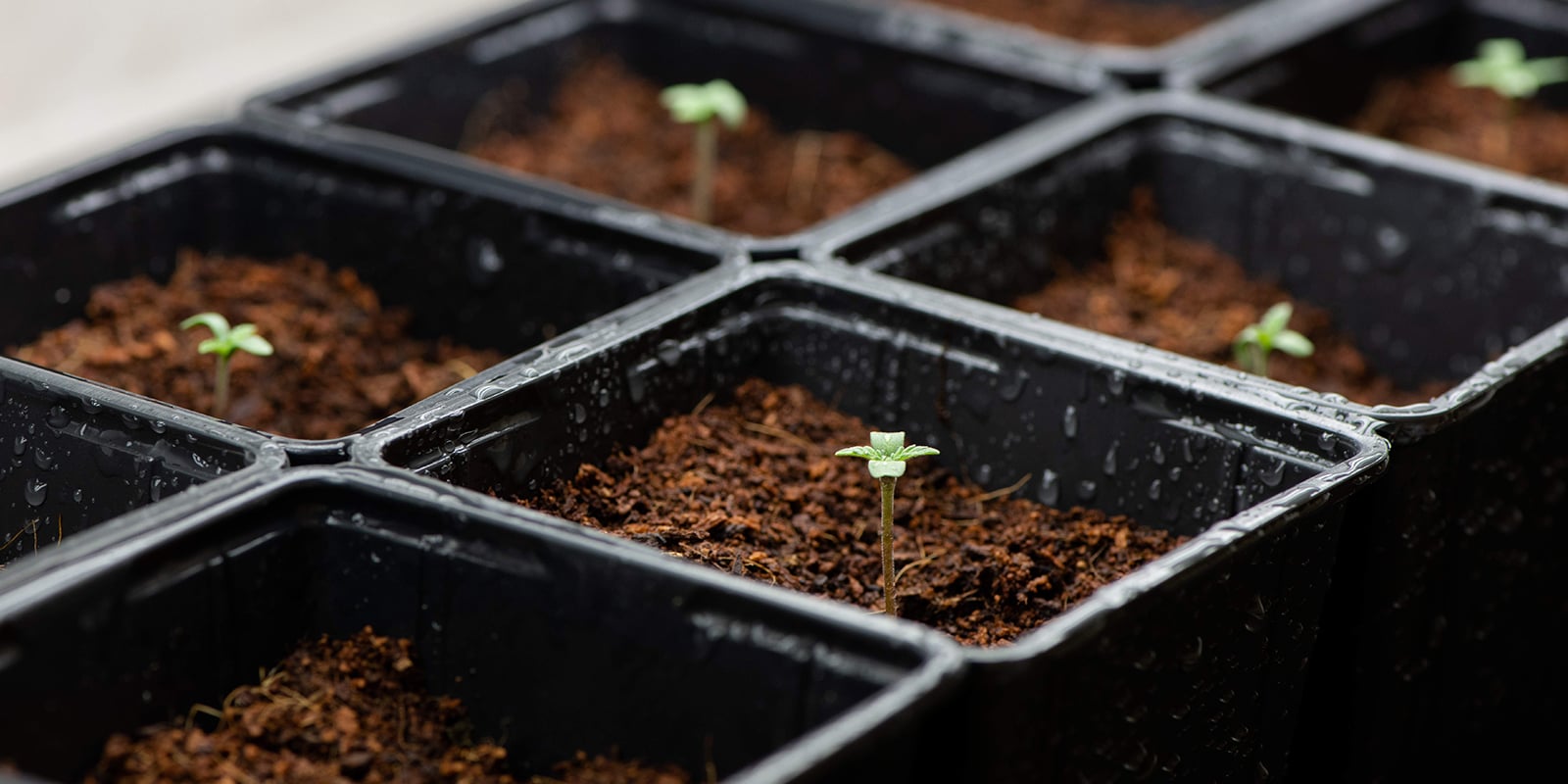
Water-only autoflower runs are possible, but they’re not “nutrient-free” in the true sense; they rely on a living soil or supersoil that’s already loaded with organic inputs and an active microbial ecosystem.
This approach can work well when the mix is properly built and aged, the pot is large enough, and watering is on point. It tends to fall apart when the soil runs out of food mid-grow, the balance is off, or the plant’s needs ramp up quickly in flower; problems that are hard to diagnose if you’re still learning.
For most beginners, a light, controlled feeding plan is the safer route. With autoflower nutrients, you can respond to what the plant is showing you, correct issues faster, and avoid the all-or-nothing gamble that comes with guessing a soil’s remaining charge while growing autoflowers without nutrients.
When should you start feeding autoflowers nutrients?

Seedlings don’t usually need extra feed. In the first 10–14 days, the plant is working off what’s stored in the seed and building a small root system so that strong fertilisers can do more harm than good.
A practical rule for “when to start feeding” is to let the medium decide. In inert coco or similar, begin with a very mild nutrient solution once the first true leaves are established (around day 7–10), then ramp up slowly. In light-mix soil, many growers start at roughly week 2–3, when the initial charge is fading. In pre-fertilised soil, you may not need anything until week 3–4.
Watch for early deficiency signals rather than sticking to a rigid calendar: Pale new growth, slower-than-expected development, or lower leaves yellowing sooner than normal can all signal that the plant is asking for a little more.
How often should autoflowers be fed nutrients?

As a baseline, feed little and often, and avoid piling on nutrients at every watering. In soil, a simple feed–water–feed rhythm works well: One watering with nutrients, the next with plain pH-balanced water, then repeat.
Coco and hydro are different because they’re effectively inert and don’t hold nutrients the same way. In coco, it’s common to feed at most waterings (at a lower strength), while hydro systems usually deliver nutrients continuously at a controlled EC.
Regardless of the setup, consistency matters more than big swings. If you want a deeper dive into how salts, organics, and uptake behave in different media, our guide to cannabis nutrients is a solid reference.
Common beginner mistakes include chasing bottle schedules, increasing strength too quickly, and feeding again when the real issue is pH or overwatering.
Autoflower nutrient schedule (week-by-week)
A week-by-week schedule keeps things simple, but it should be treated as a starting point, not a strict script. Different genetics, lights, temperatures, and pot sizes will change how quickly an auto eats.
| Week | Focus | Feeding idea |
|---|---|---|
| 1 | Seedling | Water only (or very light root support) |
| 2 | Early veg | ¼ strength veg feed if needed |
| 3–4 | Veg → stretch | ½ strength, watch leaf colour |
| 5–7 | Flowering | Bloom feed, steady, not heavy |
| 8+ | Ripening | Ease off; finish per product guidance |
A basic awareness of EC/PPM helps you avoid overdoing it, but beginners don’t need to obsess. Read the plant first; adjust the bottle second.
Best nutrients for autoflowering cannabis

Once you’ve got the basics down, choosing the right feed is mostly about control. Autos prefer gentler doses, so a suitable product is easy to measure, mixes consistently, and lets you step up in small increments without pushing the plant into burn.
There are a few solid routes. Liquid bottled nutrients are beginner-friendly and fast-acting, making it simple to correct issues quickly. Organic inputs (like teas, top dressings, and living-soil amendments) can deliver great flavour and a forgiving buffer, but they’re slower to adjust if something drifts. Mineral- or salt-based lines offer precision and predictability, especially in coco and hydro, though they require closer attention to strength and runoff.
No brand is a magic bullet; the best autoflower nutrients are the ones that match your medium, your watering habits, and your willingness to monitor EC/PPM, even at a basic level.
Best nutrients for autoflowers in soil
Soil is naturally buffered, which makes it forgiving, but it also means your feeding should be geared around what’s already in the pot. With light-mix soil, you’ll usually introduce a gentle veg feed early, then swap to a mild bloom formula as flowers set. In enriched soil, hold back longer and top up only when the plant starts to pale or growth slows.
For autos, look for beginner-friendly formulations you can run at low strength without missing key micros (mainly calcium and magnesium). A good soil line should also be easy to taper down late in flower, rather than forcing you into heavy doses.
When shopping, the best nutrients for autoflowers in soil are typically those sold as “soft” or “light” feeds with clear, simple mixing guidance, ideal for growers who want consistency without playing chemist.
Best nutrients for autoflowers indoors vs outdoors
Indoor grows tend to be more predictable: stable temps, consistent light intensity, and controlled watering. That usually translates to steadier nutrient demand, so mineral or liquid feeds that let you dial in small changes can be a great fit, especially if you’re measuring runoff and keeping notes.
Outdoors, conditions swing. Heat, cold nights, heavy rain, and variable sunlight all affect how much the plant drinks and how fast it metabolises food, so feeding strength often needs to be lighter and more cautious. In that setting, slower-release organics and soil amendments are popular because they buffer mistakes and don’t spike the root zone after a sudden downpour.
Whichever route you choose, match the product to the environment: precision for indoor control, resilience for outdoor variability.
Common autoflower nutrient problems and how to avoid them

Most issues come down to doing a bit too much, too fast. These quick checks prevent the classic setbacks:
- Nutrient burn: Caused by feeding too strongly or too often; leaf tips go yellow/brown and curl. Prevent it by starting at ¼–½ strength, following a feed–water–feed routine in soil, and backing off at the first sign of “crispy” tips.
- Lockout and pH issues: Caused by pH drifting out of range or salt build-up, so nutrients are present but unavailable. Keep water/feed pH consistent, avoid piling on boosters, and use occasional plain-water irrigations; for symptom spotting, see our cannabis problem-solving guide.
- Overfeeding: Often mistaken for deficiency, leading to darker, clawed leaves and slowed growth. Reduce EC/PPM, simplify to base nutrients only, and give the plant time to recover before adjusting again.
Choosing the right autoflower nutrient products
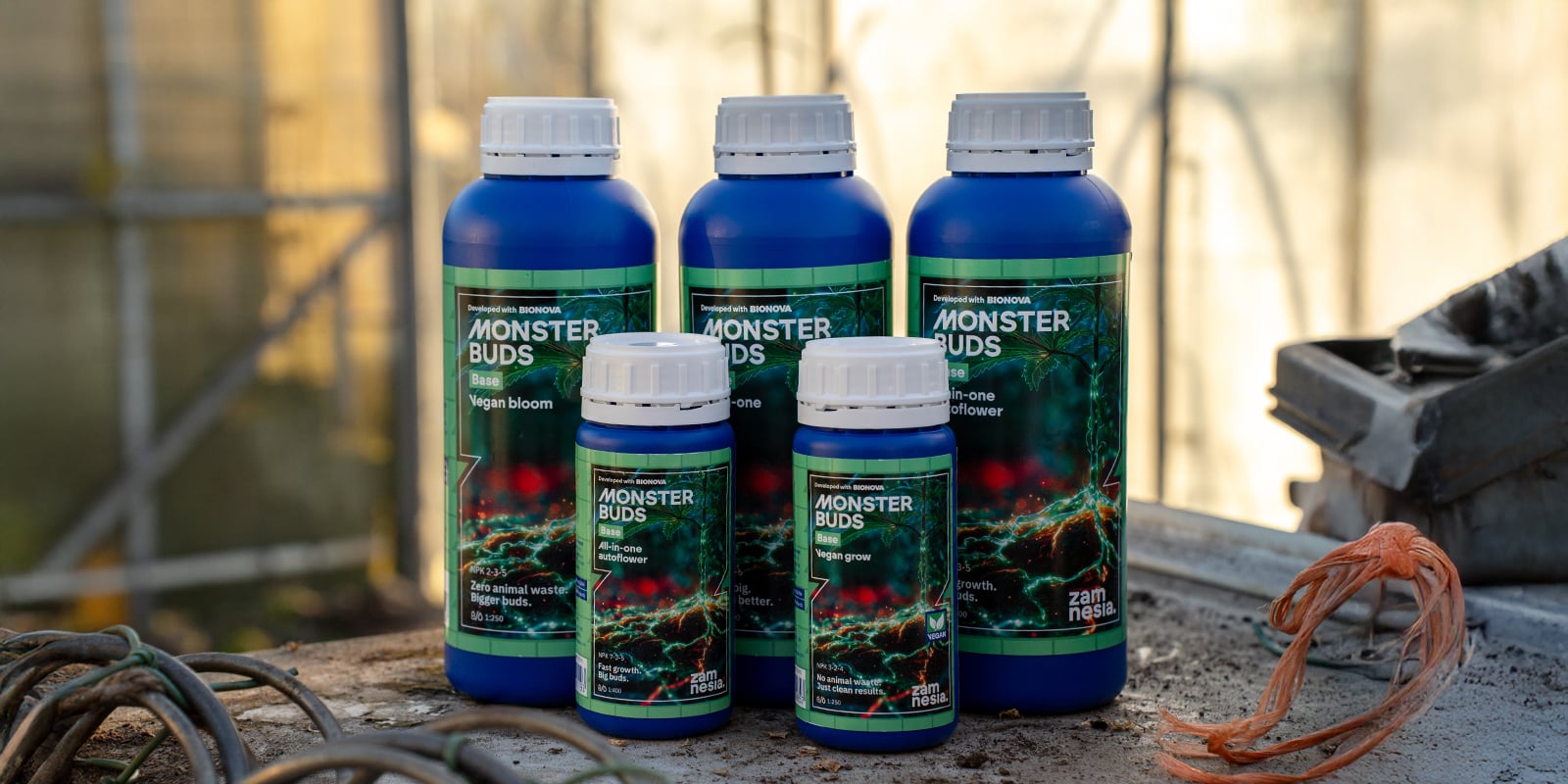
Reading labels is the quickest way to avoid buying the wrong bottle. Check the NPK ratio first (nitrogen higher for veg, phosphorus/potassium higher for bloom), then look for a complete micronutrient profile, including iron, manganese, zinc, and boron, so you’re not chasing deficiencies later.
Autos generally respond best to complete but mild formulations, especially when the feeding chart gives sensible “light feed” starting points and precise dose increments. The goal is flexibility: a base nutrient you can run low on, then nudge up only when the plant asks for it.
For comparing options in one place, our fertiliser selection works as a practical hub across organics, liquids, and mineral lines. We’re also working towards a dedicated Zamnesia autoflower nutrient mix, built to keep dosing straightforward for beginners.
Final tips for feeding autoflowering cannabis plants
_1.jpg "Final tips for autoflowering cannabis plants")
Keep feeding simple, and you’ll avoid most headaches. Start low, increase gradually, and only change one thing at a time so you can actually see what’s working.
Watch the plant, not the calendar. Leaf colour, tip burn, and overall vigour tell you far more than any chart, and autos don’t always have time to “grow out of” a mistake.
Patience pays: mild, consistent inputs and a stable environment usually beat aggressive schedules and a cupboard full of additives. Whenever you need a second opinion on products or symptoms, Zamnesia’s grow resources and curated range are built to help you dial things in with confidence.