
 8.6 out of 10 based on 80654 reviews








.svg)
.svg)
.svg)
.svg)
.svg)
.svg)



 Mushroom Dosage Calculator


 Help
Help United States
Rootbound cannabis guide: From early symptoms to pruning fixes
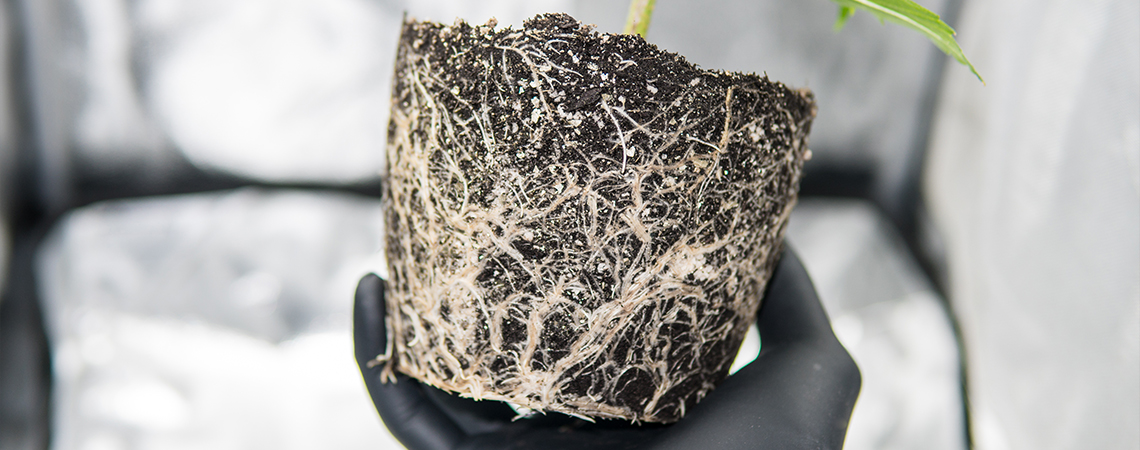



Learn how to tell when a root-bound cannabis plant is choking in its container, what to do next, and how to root-prune in soil if you can’t up-pot. Includes prevention advice to keep growth and yields on track.
Noticing stunted growth or drooping in your cannabis plants? You might be dealing with rootbound cannabis. In this guide, we’ll break down the most common rootbound cannabis symptoms, show you how to confirm a rootbound cannabis plant, and explain practical fixes, including cannabis root pruning when transplanting isn’t an option.
What is rootbound cannabis?
A plant becomes rootbound when its root system has outgrown the confines of the container. Instead of expanding into fresh medium, the roots start circling the pot, forming a tight mass that can choke airflow and cause uneven water distribution. With less room to explore, the plant struggles to take up oxygen and nutrients efficiently.
This is especially common in indoor grows, where container size is often chosen to fit a tent, a cupboard, or a specific run schedule. Fast-growing cultivars, long veg times, and warm indoor conditions can fill a pot quicker than you’d expect, sometimes before the canopy shows obvious stress.
If you want a deeper overview of how it develops and why it affects growth so quickly, our rootbound cannabis guide breaks down the basics in more detail.
How to tell if your cannabis is rootbound
Root issues can look a lot like nutrient problems or over/underwatering, so it helps to check for a pattern before you change your whole routine. The key is spotting above-ground stress that doesn’t improve, even when your watering, feeding, and environment are dialled in.
Above-ground symptoms
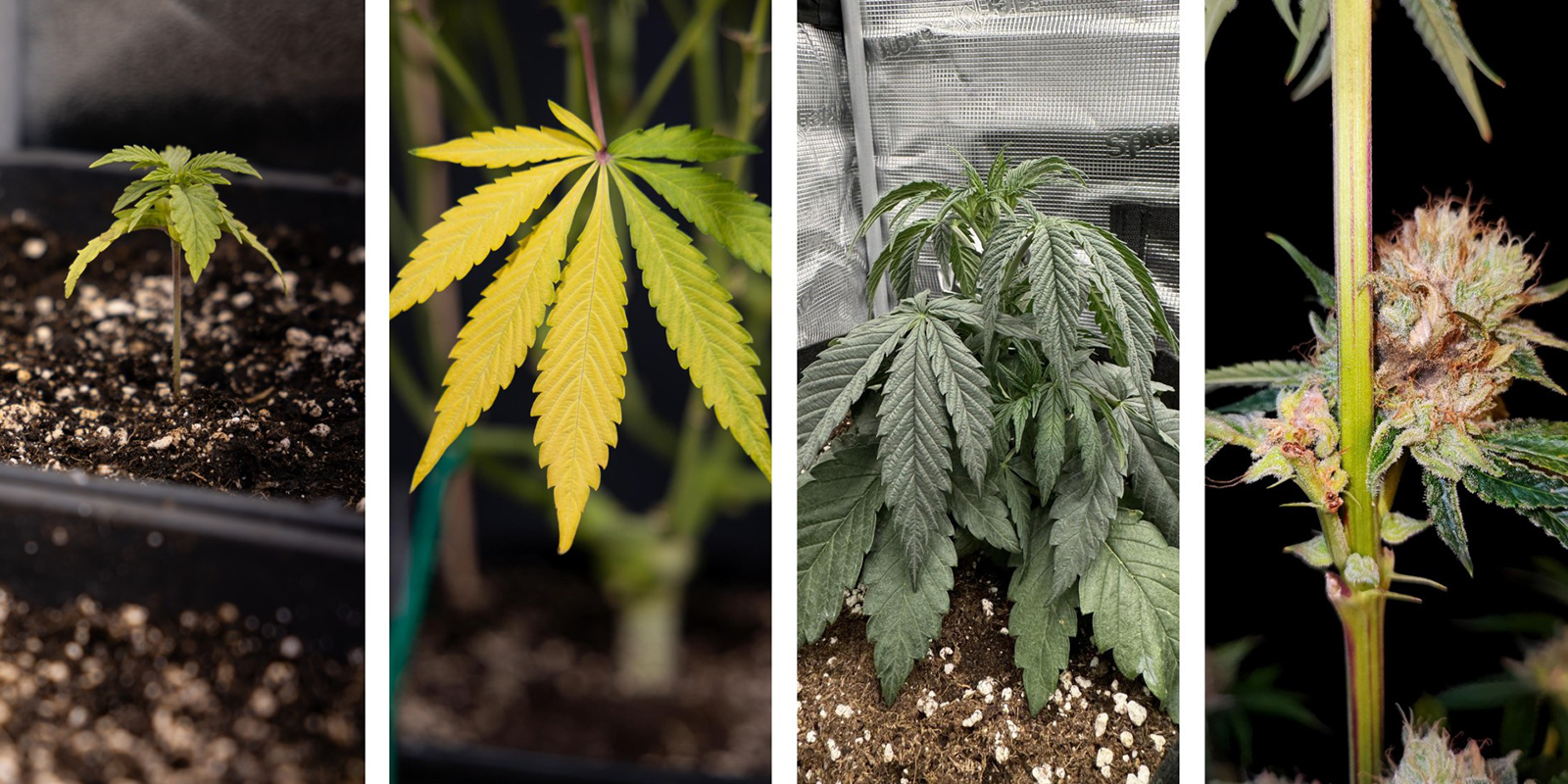
When the roots are packed tightly, the first clues often appear in the leaves and the overall pace of growth. Because the plant can’t expand its root zone, it struggles to keep up with water and nutrient demand, especially under strong indoor lighting.
Common rootbound cannabis symptoms include:
- Stunted growth: new shoots stay small, internodes tighten up, and the plant seems “stuck” even with good conditions.
- Yellowing leaves: lower leaves may fade first, but general chlorosis can appear as uptake becomes inconsistent. If you’re unsure whether it’s a deficiency or something else, see our guide to diagnosing yellow cannabis leaves.
- Wilting or drooping: the plant can look thirsty shortly after watering, because moisture isn’t moving evenly through the root ball.
- Slow flowering: stretch may be reduced, and bud development can lag, as energy is redirected to coping with stress rather than building flowers.
Root zone clues
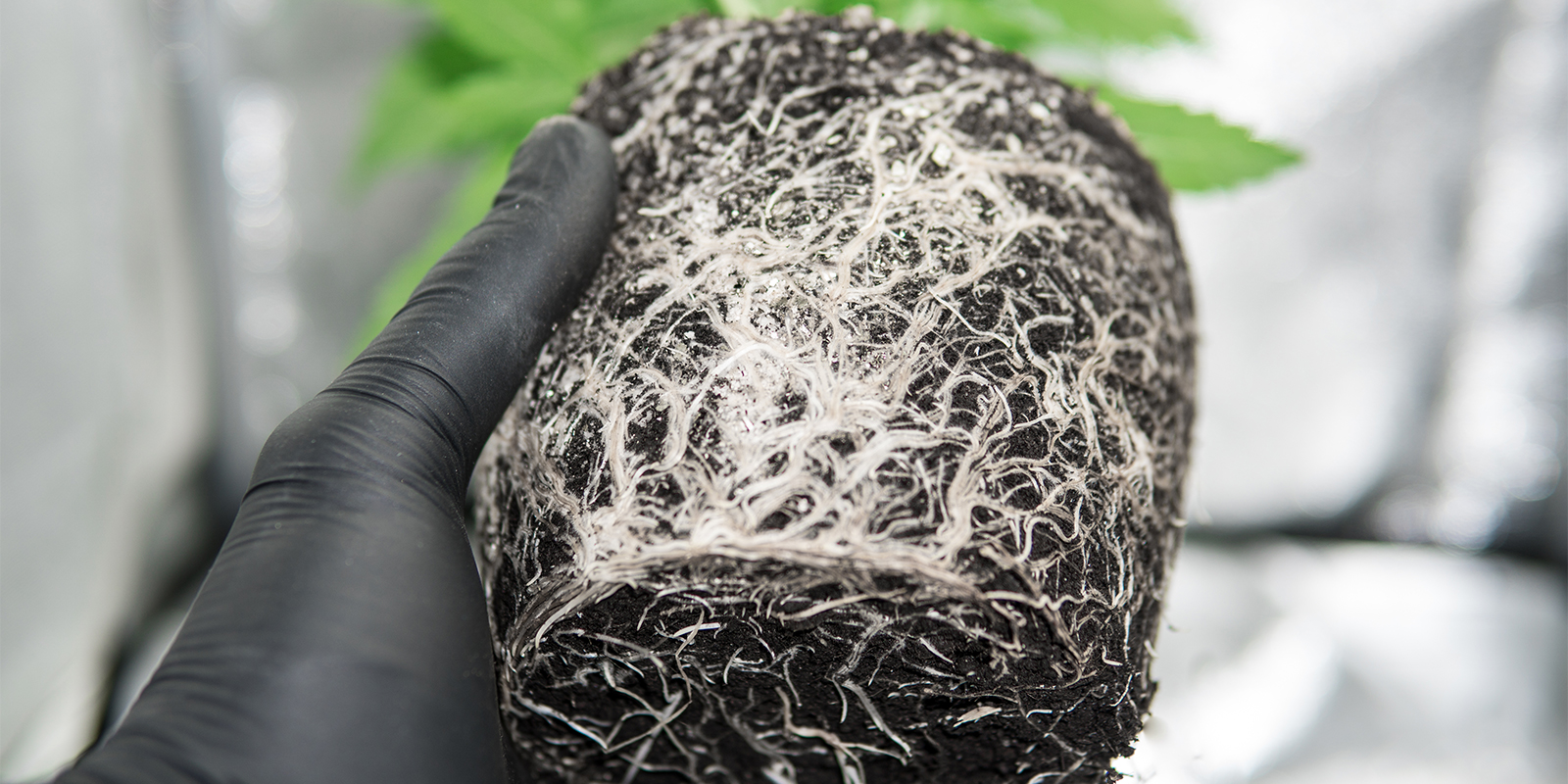
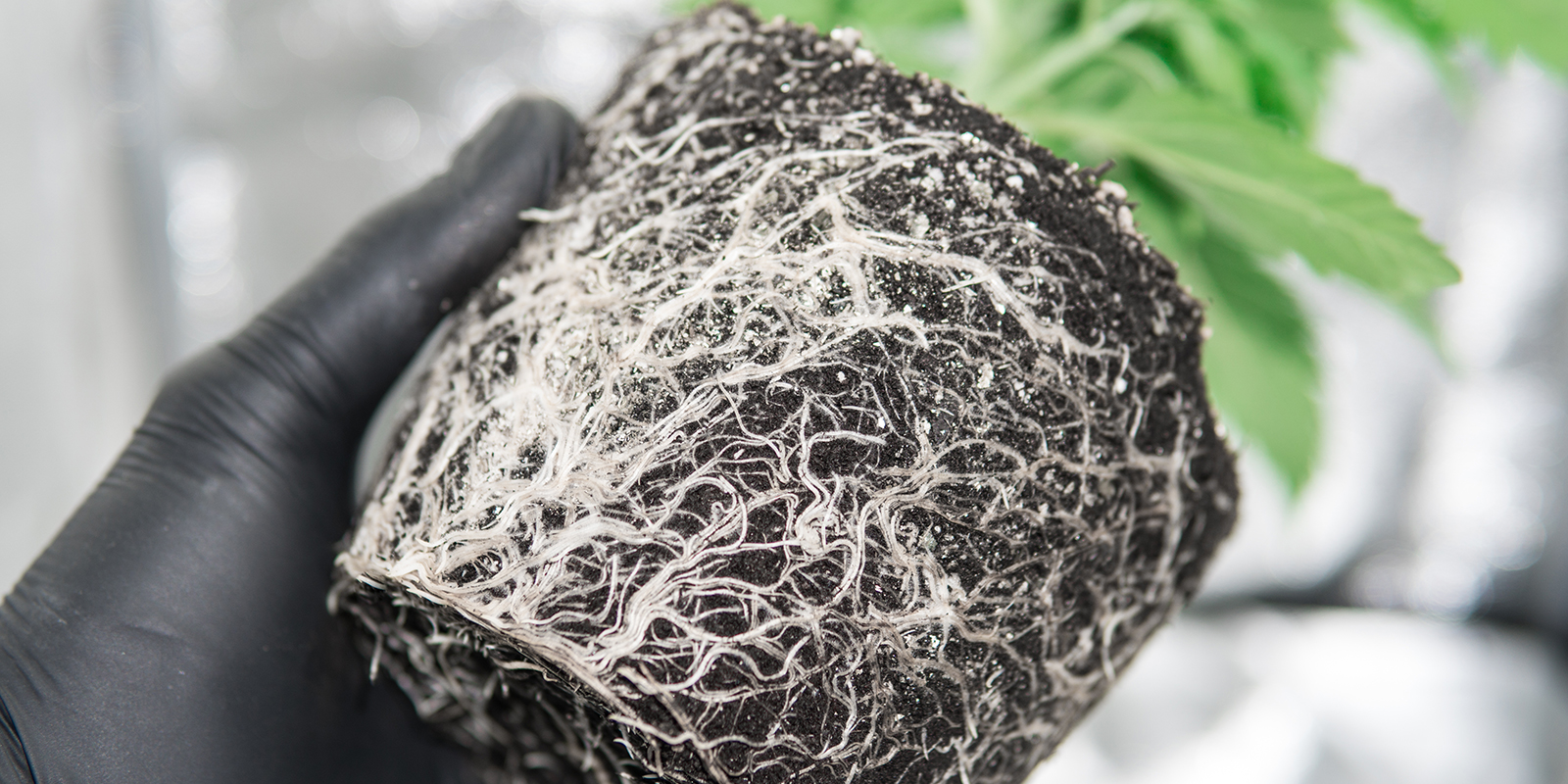
If you can safely check the container, the root zone usually tells the story fast. The clearest sign is roots circling the inside of the pot in tight loops, almost like a coiled spring, rather than branching out through the soil.
Other giveaway clues include white roots poking out of drainage holes or pushing up along the surface of the medium. When the pot is this full, water can start to run straight down the sides or out the bottom, leaving parts of the root ball dry while other areas stay soggy.
That uneven moisture is also why rootbound plants are more at risk of root rot. Compacted, constantly damp pockets don’t get much oxygen, creating the perfect conditions for pathogens. If you notice a sour smell, slimy roots, or rapid decline, compare what you’re seeing with our guide to cannabis root rot.
What happens if you don’t fix it?
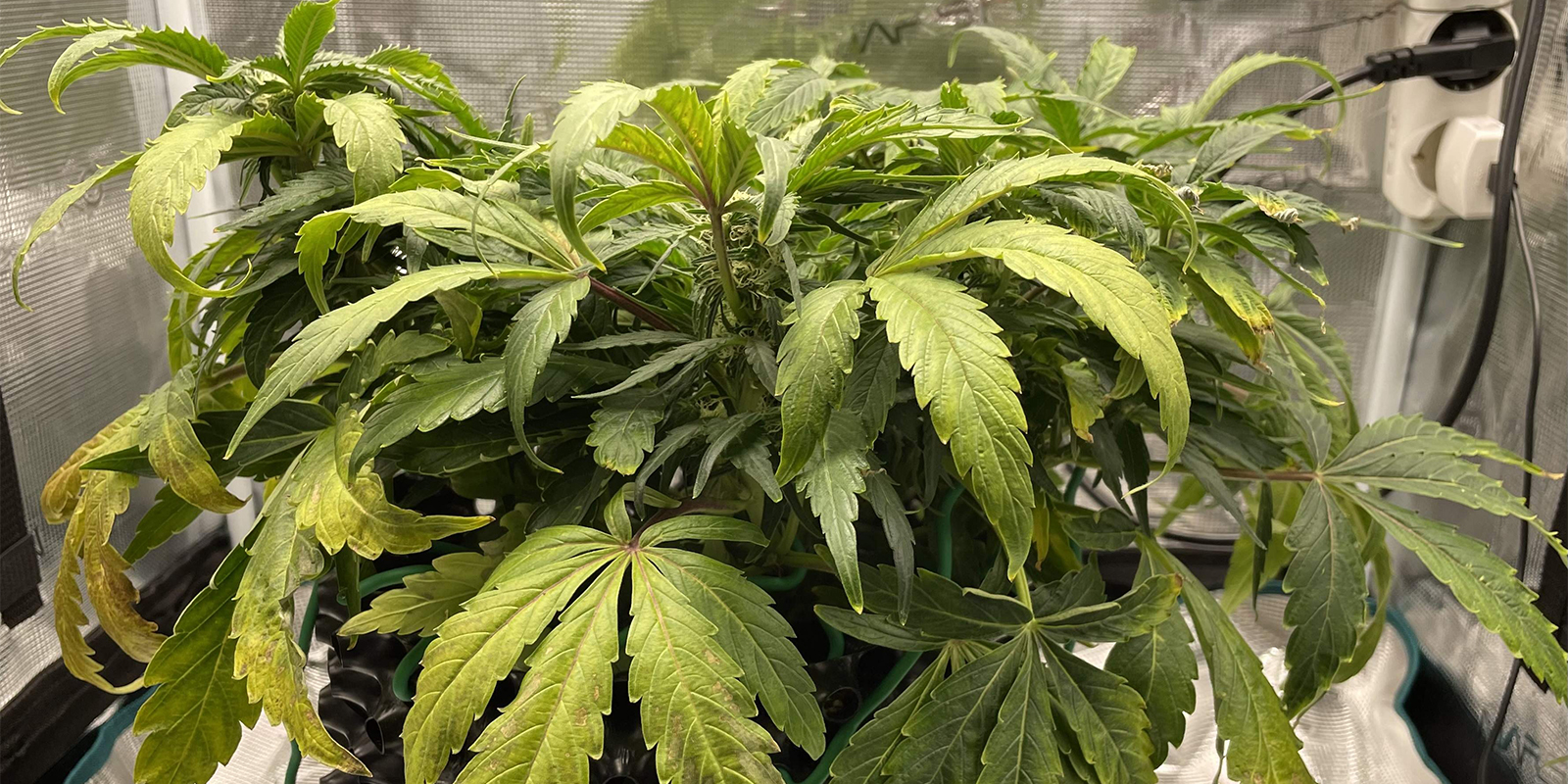
Left unchecked, a rootbound plant usually keeps declining, sometimes slowly, sometimes all at once when temperatures rise, or the plant hits peak demand in flower.
One of the most significant knock-on effects is nutrient lockout. Even if you’re feeding correctly, cramped roots and poor oxygenation can stop the plant from absorbing what’s in the medium, leading to deficiencies that seem to “come out of nowhere”.
You can also see a hormonal imbalance and general stress. When the roots can’t expand, the plant receives constant signals that it’s in survival mode, which can reduce vigour, slow development, and limit flowering potential.
For a more detailed breakdown of consequences and solutions, see our rootbound cannabis guide. If you’re juggling multiple issues at once, the cannabis problem-solving guide can help you narrow down the real cause.
Fixing rootbound cannabis
Once you’ve confirmed your plant is outgrowing its pot, the goal is simple: give the roots space and oxygen again, without adding extra stress. In most cases, that means transplanting into a larger container, but if space is tight, other practical fixes can still turn things around.
Option 1: Transplant to a Larger Pot
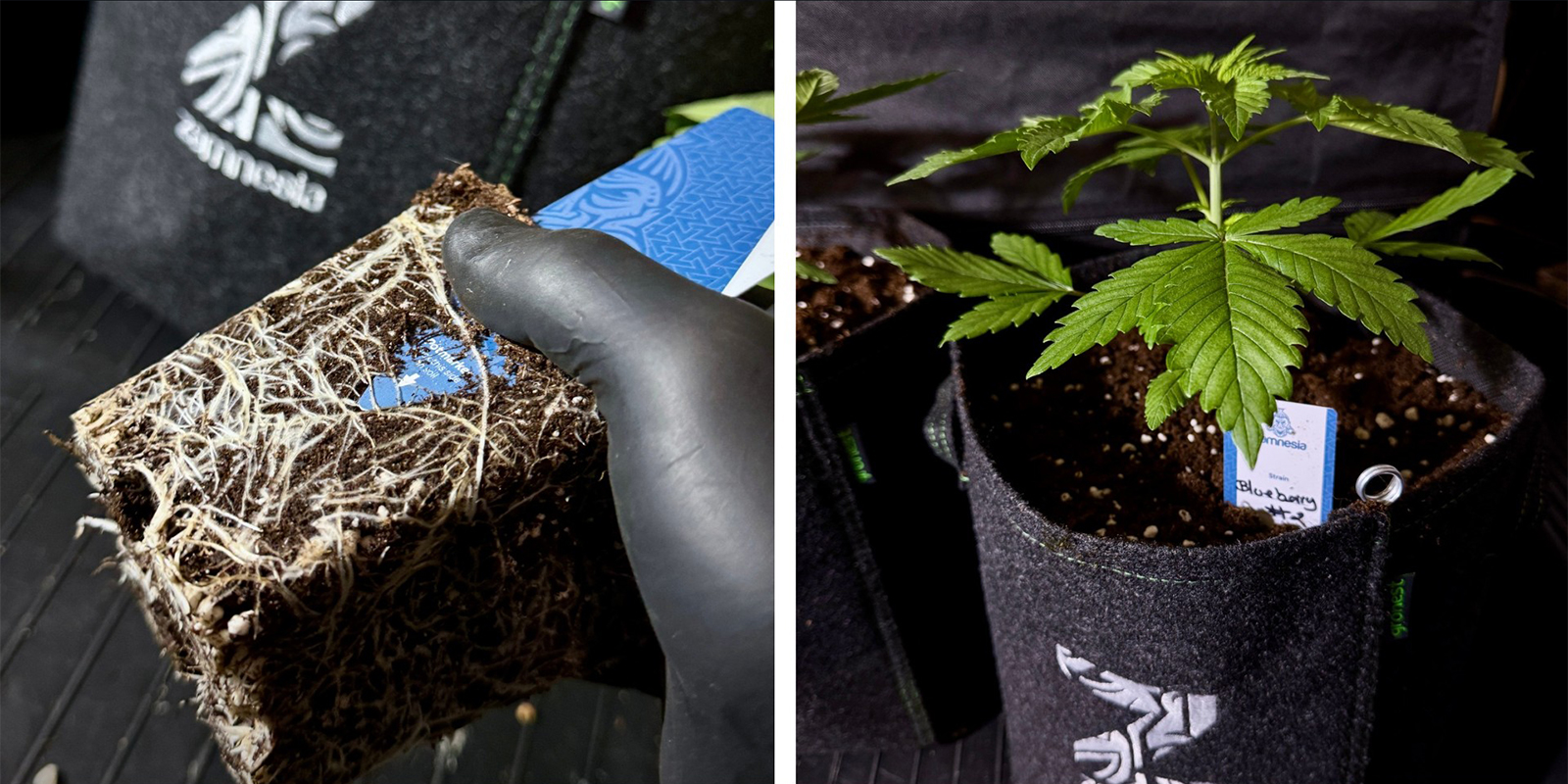
Transplanting is the cleanest fix for a rootbound plant, because it immediately restores space for fresh root growth. The trick is doing it in a way that keeps stress low.
To reduce transplant shock:
- Water a few hours before moving (not bone-dry, not soaked) so the root ball holds together.
- Pre-moisten the new medium and make a hole that fits the root ball snugly, no forcing or squashing.
- Handle by the pot and the root ball, not the stem.
- After potting up, water in lightly and give the plant a day or two of gentler light while it settles.
For a deeper walkthrough, see our guide to transplanting cannabis plants.
Option 2: Root Pruning in Soil
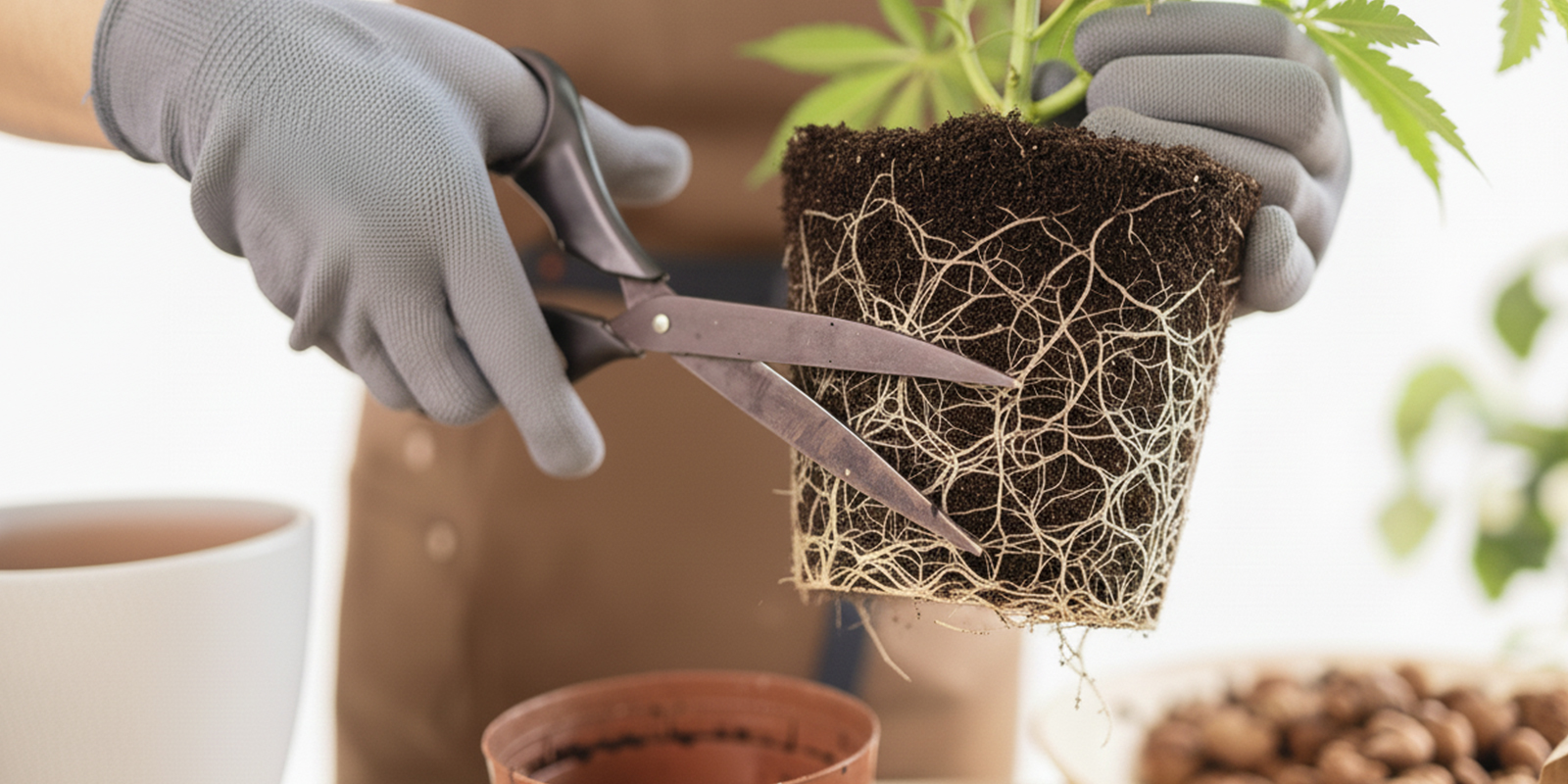
Root pruning is worth considering when you can’t upsize the pot (limited tent space, stealth grows, or a plant that’s already too far into flower to transplant safely). Done carefully, it encourages fresh feeder roots and improves oxygen flow through the medium.
- Water lightly the day before so the root ball holds together without being soggy.
- Slide the plant out and, with clean scissors or a sterile knife, trim a thin “slice” from the bottom and a little from the sides (aim to remove the most tightly circling roots).
- Loosen the outer layer gently, then return the plant to the same container with fresh soil around the edges and underneath.
After cannabis root pruning, maintain calm conditions: moderate light for 24–48 hours, careful watering (avoid saturating), and hold off on heavy feeding until new growth appears. For more detail, read our guide to cannabis root pruning and make sure you’ve got the right grow accessories ready.
Preventing rootbound in the future
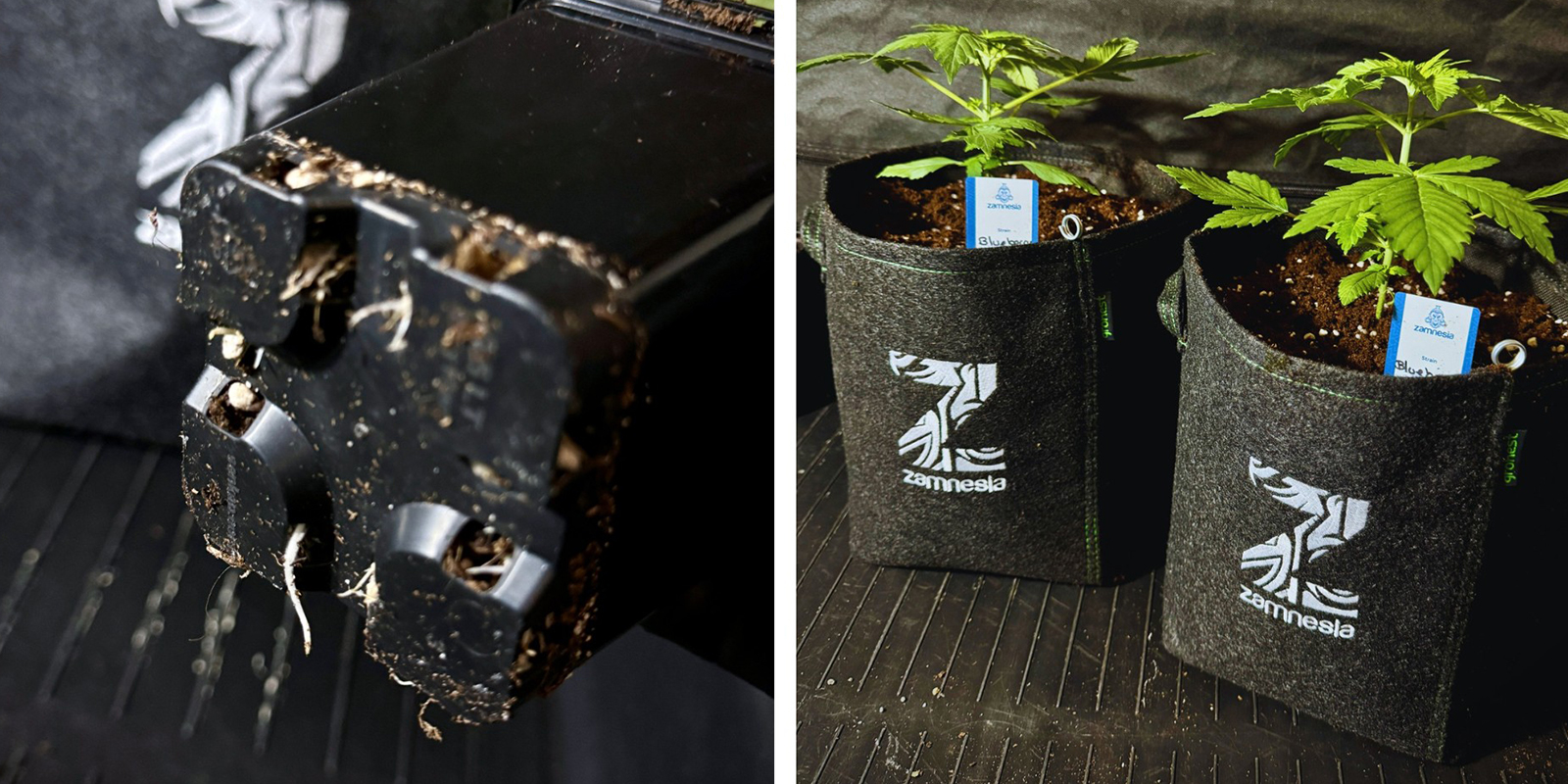
Prevention mostly comes down to planning your containers around the plant’s timeline. As a rough rule, shorter veg cycles can thrive in smaller pots, while long veg and large photoperiod plants need more volume from the start. If you’re unsure, use this guide to container size as a baseline.
Build transplant checkpoints into your grow cycle: pot up when the medium dries very fast, growth slows, or you see early root tips at the drainage holes, ideally before the roots start tightly circling.
If you deliberately run long veg phases in a fixed pot, light preventive root pruning can help keep the outer root mass from turning into a hard ring. For more cultivation tips, browse our cannabis grow guides.
Root problems? Solved. Now let your plants thrive!
If you need a quick check, classic rootbound warning signs include rapid drying, stalled growth, drooping that doesn’t match your watering, and roots showing at drainage holes.
- Do act early: transplant or prune before the plant is severely stressed.
- Do keep tools clean and handle the root ball gently.
- Don’t overwater after a fix, fresh roots need air as much as moisture.
- Don’t hammer nutrients to “force” recovery.
Want to gear up properly? Browse the essentials in our growshop.