
 8.6 out of 10 based on 80729 reviews







.svg)
.svg)
.svg)
.svg)
.svg)
.svg)



 Mushroom Dosage Calculator


 Help
Help United States
What Are Feminized Cannabis Seeds?
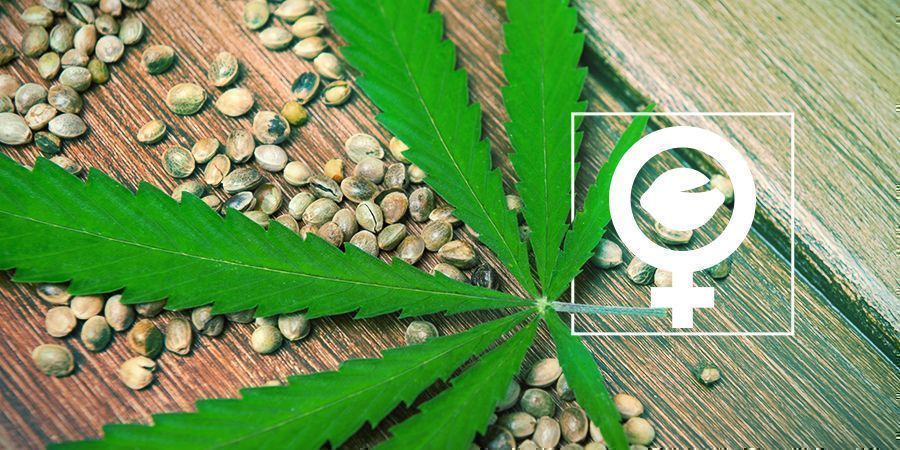



What are feminized cannabis seeds? How do feminized seeds differ from regular and autoflowering seeds? What do you need to know to have the best results when you grow them? We’ll answer all those questions, and more, in this article.
There are major types of cannabis seeds available for purchase: feminized, autoflowering and regular. What are feminized seeds, though, and how are they different from the regular and autoflowering varieties? We’ll walk you through all of that, their pros and cons, and what you’ll need to know when growing feminized seeds, as we proceed in our discussion.
An Introduction To Feminized Cannabis Seeds
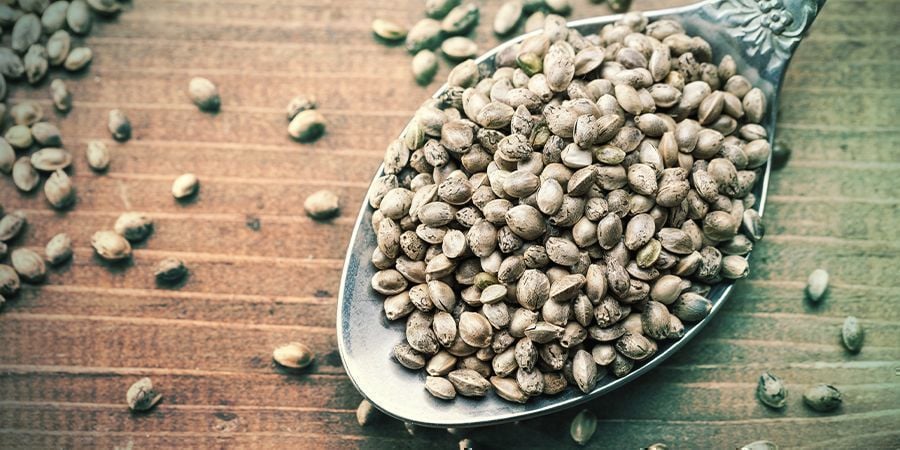
Amongst all types of cannabis seeds, feminized seeds are the most popular variety. Almost every grower in Europe (95%) uses them to grow cannabis, and there are good reasons why.
Firstly, feminized seeds will only develop into female plants (99% of the time, anyway). This is important because only females develop good buds, while the male plants are not too useful. Said differently, with feminized cannabis seeds, you can grow weed without ever needing to worry about males popping up. It hasn’t always been so easy, though. In fact, feminized cannabis seeds only came to the market in the late 1990s. Before that, regular cannabis had been the standard.
WIth that standard, growing cannabis wasn't just less convenient as it is today, it was also less efficient. The reason? When planting regular seeds, there is a 50:50 chance that it may develop into a male or a female plant. Because you don’t want the males to pollinate your females (this would make them grow seeds and result in poor quality bud), you want to identify the males early and remove them. Naturally, there’s no need for all that hassle with feminized seeds. Plus, since all of your plants offer a yield, your grow op ends up being twice as efficient.
Are Feminized Cannabis Seeds the Same as Photoperiod Seeds?
When it comes to cannabis, the terms feminized and photoperiod are often used interchangeably. Yet, they don't mean the same thing. Feminized seeds are seeds that are guaranteed to bloom into female specimens. Photoperiod seeds produce cannabis plants that bloom dependant on light cycle change.
As such, feminized seeds can also be photoperiod, but they do not have to be. For example, an autoflowering variety may be feminized but is not photoperiod—as its blooming phase is dictated by time, not light cycles. Regular strains may be photoperiod but are not feminized, as they can produce male plants.
In today's market, the feminized-photoperiod combination reigns supreme. Quite a lot of cannabis growers refer to photoperiod seeds as "feminized seeds". They have re-imagined the term, so to speak. For most, "feminized" will refer to seeds that not only develop into female plants, but that are photoperiod dependent as well. In a nutshell, technically speaking, they are two different terms, but popular use has rendered them interchangeable.
Plant Genders: Male vs. Female Plants
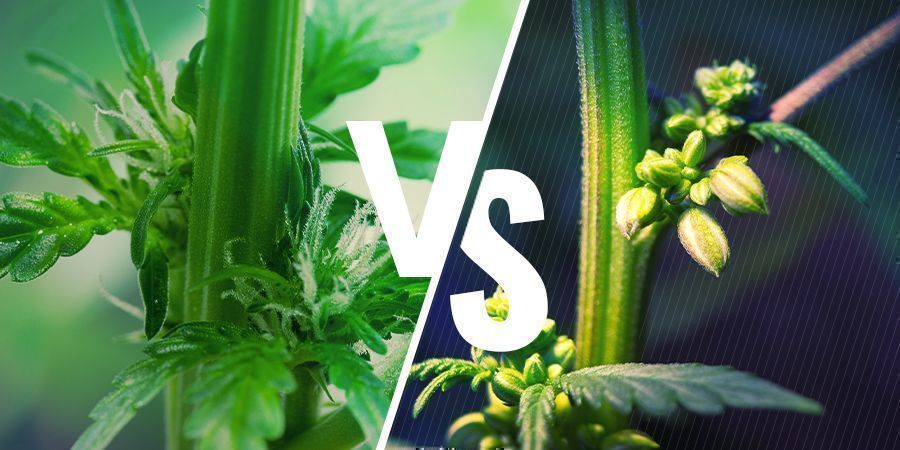
We already went into it a bit, but the main difference between female and male plants is, of course, that females grow flowers/buds while the males develop pollen. On occasion, one can also end up with intersex, or hermaphrodite, plants, which can have buds along with seeds and seed pods. So, how can you tell a female plant from a male? With feminized seeds, you’ll likely never see a male, but it’ll nevertheless be helpful if you know how you can spot them. Here are a few things to consider:
-
Roughly 6 weeks after germination, your weed plants will have developed their sex organs, allowing for gender identification. At the joints where the branches meet the stalk, females will grow wispy hairs, known as pistils, which come out of a small, tear-shaped pod (the calyx).
-
The males, however, will have small pollen sacs, and won’t have pistil hairs sticking out on top.
-
If a plant has both pollen sacs and pistils, it’s a hermaphrodite. You’ll want to treat these as males, so you should remove them unless you’re trying to obtain more seeds.
-
Males generally grow a bit sturdier than females of the same variety. They have a thicker stalk and fewer leaves.
Why You (Likely) Don’t Want Male Cannabis Plants
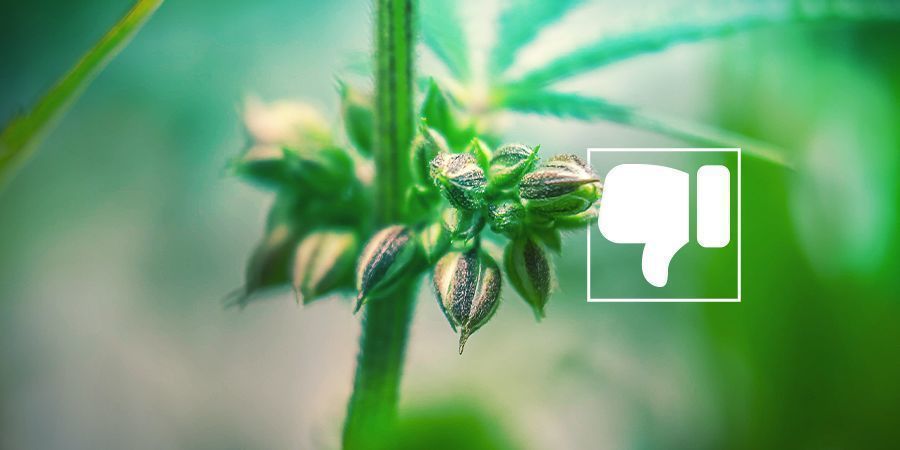
If you’re growing your own weed to smoke, vape, etc., like most hobby growers do, you don’t want male plants. Only the females, as we discussed before, grow great buds, while the males develop pollen sacks. This makes males less desired, if not entirely useless, for typical growers. “So what’s the point of regular seeds then?” Well, because you’ll need pollinated females to get seeds, you’ll need the males if you’re breeding cannabis. Alternatively, even if that isn’t your concern, some desirable old-school strains may not be available in feminized form.
Pros And Cons Of Feminized Seeds
Let’s talk about the pros and cons of feminized seeds, and detail what you can (and can’t) do with them.
Feminized Seeds: The Pros
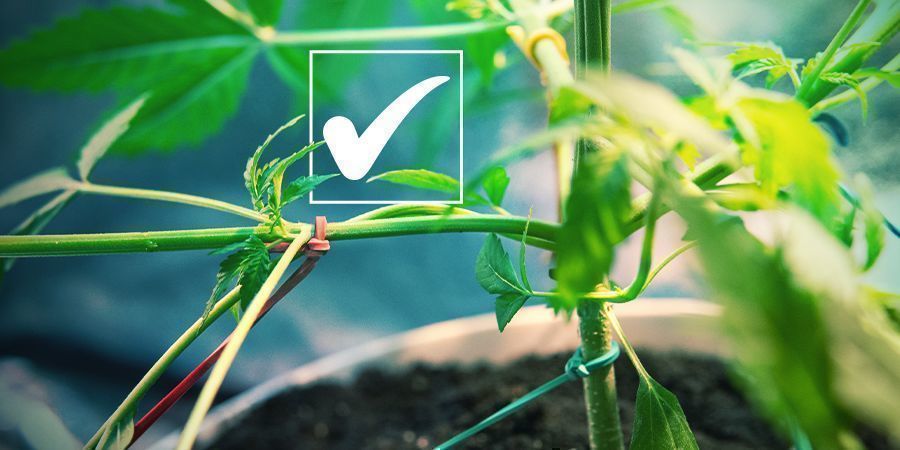
As we’ve stated throughout this article, feminized cannabis seeds offer tons of advantages. Now might be a good time, then, to detail exactly what they are.
-
They Are Cost-Effective
Because pretty much all (99%) your plants will grow into females you can maximize your grow space for getting cannabis flowers. Otherwise, with regular varieties, you’ll toss about half of them at some point, wasting growing space, nutrients, and time.
-
You Can Start Training Early On
Because you can be sure that your plants are females, you can start training them early. This is recommended for many plant training techniques including LST (Low Stress Training), since mature plants are brittle and can easily break. With regular seeds, in contrast, you’d need to wait 6 weeks before you even know whether to keep it. This wait, in turn, leaves you with suboptimal training conditions.
-
No Sexing And Selecting Plants
New growers may not have the experience to be able to tell males from females. Along with needing to tell the sex of your plants, you won’t need to worry about males pollinating your crops. Female cannabis seeds are therefore easier overall and they will save you some work.
-
Feminized Seeds Can Be An Alternative To Growing From Clones
Growing cannabis from clones isn’t for everyone. They can become contaminated, or get infested with pests, and cause a headache. Even then, you may not even be able to get clones where you live, while seeds arrive discreetly by mail. This makes utilizing feminized seeds a good alternative method for growing your favourites.
-
Many Different Varieties On Today's Market
Feminized seeds are by far the most-common types of seeds these days, with tons of varieties of cannabis for you to choose from. Chances are, you’ll find a strain that tastes great, feels just right, and is bred to thrive in your climate. There is much less of a variety with regular cannabis seeds, or when growing from clones.
-
Crafted With Extreme Care And Expertise
Feminized cannabis seeds from reputable sources, such as Zamnesia, are expert-crafted from superior genetics. These seeds have the best germination rates, and are bred to showcase the most desirable strain qualities while offering the highest possible yields.
While regular seeds aren’t inherently worse, there’s a greater chance that regular seeds from unknown sources are of questionable quality. Likewise, regular cannabis varieties are often older, old-school varieties that, unlike feminized varieties, may be less “tweaked” (ie. bred for good potency, etc.) than modern strains.
-
Their Yields Are Larger Than Autoflowers
Feminized strains (& photoperiod strains in general) have larger yields than autoflowering strains due to their height. In turn, compared to regular varieties, you can have twice as many plants growing buds in your space.
Feminized Seeds: The Cons
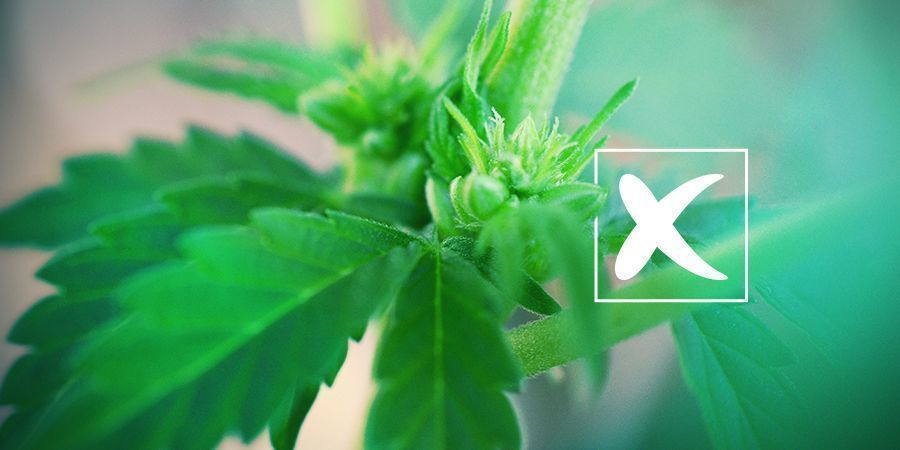
Despite having many positive attributes, not everything about these seeds is perfect. Let’s explore their disadvantages in a bit more detail.
-
Unsuitable For Breeding Programs/Seed Production
Because there won’t be any male plants to pollinate the females, feminized seeds are unsuitable for breeding and seed gathering.
-
Low-Quality Feminized Seeds May Become Hermaphrodites
Due to the way they’re created (we’ll cover this later), feminized cannabis seeds of low quality may easily turn into intersex plants.
-
More Difficult To Grow Than Autoflowers
Feminized cannabis seeds, along with the regular kind, rely on adjustments in their lighting schedule to shift between growing phases. Autoflowers, on the other hand, flower automatically under any consistent lighting schedule. The need to switch light cycles when growing indoors, or the need to consider planting and harvesting times when growing outdoors, makes feminized cannabis more difficult to grow. As a result, they’re less suitable for beginners.
How Do Seeds Become Feminized?
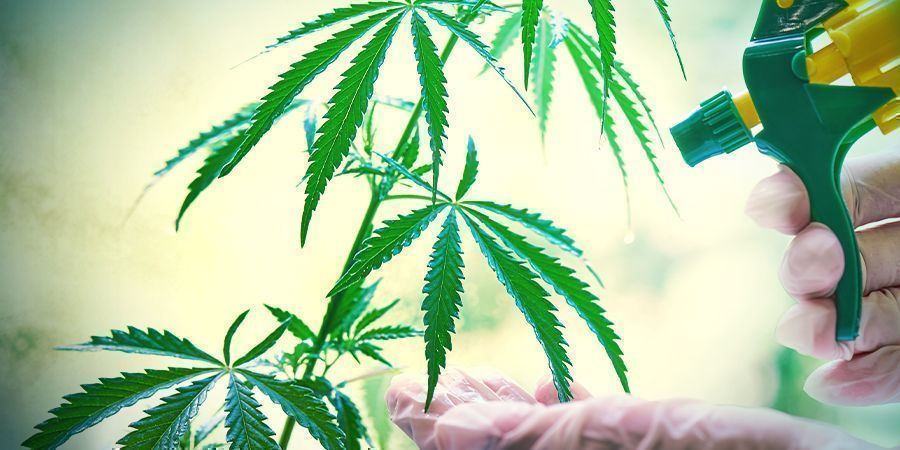
There are several techniques to produce feminized seeds out there. Let’s look at the most common methods:
1. Stressing the Plant (Rhodelization)
Making a female plant intersex by stressing it (Rhodelization) is a classic method to get feminized seeds. This is usually done by interrupting the light cycles during flower, which will trigger the plant to produce pollen. Pollinate a female with the hermie pollen, and you’ll end up with seeds. These seeds won’t have male chromosomes, so they’ll yield 100% females all the time.
2. Spraying With a Colloidal Silver Solution
Spraying females with colloidal silver is the most common way to get feminized seeds. It doesn’t involve genetic modification, and intersex traits won’t be carried over either. For this method, the breeder blends water and silver particles together. The silver inhibits the flowering hormone ethylene; as a result, the plant will develop male flowers with pollen sacs. As no actual male is involved, the plants will only carry female genetics, and pollination will result in feminized seeds.
3. Spraying With a Silver Thiosulphate Solution
Some breeders use silver thiosulphate as an alternative to colloidal silver. The way it works is the same, though; plants will change sex and turn into males, but without the disadvantage of male genes. Some breeders say that feminizing with silver thiosulphate is better for maintaining the stability of genetics.
Can You Feminize Cannabis Seeds At Home?
So, can you make your own feminized seeds at home? Yes, and the colloidal silver method makes it genuinely doable for home growers, with no lab or genetics degree required. Here’s exactly how it’s done:
-
Get a genuine colloidal silver solution. It’s widely available online, in health shops, and on most major ecommerce sites (it’s sold as a dietary supplement, too). Make sure the label says “colloidal silver” specifically, with a concentration of at least 30 PPM. This is what suppresses ethylene, the hormone that drives female flowering.
-
Pick your donor female and switch her light cycle to 12/12 (flowering). Starting from the first day of the flip, mist the budding sites daily for three to four weeks, until you see pollen sacs open up. You can treat the whole plant or just a branch or two, just make sure any bud you spray never ends up in your stash, as sprayed buds shouldn’t be smoked.
-
Harvest your feminized pollen. Once the sacs are open, snip them off and let them dry for about a week. From there, seal them in an airtight bag or container until you’re ready to use them.
-
Pollinate the female you want to breed from. Give the bag a gentle shake to loosen the pollen, then use a small paintbrush to dab it onto the bud sites of your chosen plant. Again, you can pollinate a single bud or go all in across the whole plant.
-
Wait around six weeks for your seeds to mature and drop. Use them straight away, or tuck them away somewhere cool and dark for later.
A little patience pays off here: consistency is what makes or breaks this method, so keep your spray schedule tight and keep the treated plant well away from any others you don’t want pollinated by accident.
That said, it’s worth asking whether making your own feminized seeds is the best use of your time. With feminized seeds now available for pretty much every taste, budget, and growing style, buying them outright often works out better value once you factor in the weeks of effort the home method takes, plus you get the consistency of professionally stabilised genetics. Still, if you’re the curious type who wants to see the process through yourself, there’s nothing stopping you from giving it a go.
What To Do With Your Homemade Feminized Seeds
Once your seeds have dropped, you’ve got two options: get growing, or tuck them away for another time. If you’re ready to plant, head straight to our germination guide to give your homemade seeds the best possible start. Not quite ready yet? Store them properly: cool, dark, and dry is the rule of thumb, and they’ll stay viable for years. And if the whole process has convinced you that leaving feminization to the experts is the smarter move, our feminized seed collection has you covered, with genetics bred for reliability from seed to harvest.