 8.6 out of 10 based on 80850 reviews








.svg)
.svg)
.svg)
.svg)
.svg)


 Autoflower Seeds
 Feminized Seeds
 Zamnesia Seeds


 Help
Help United States
Low stress training autoflowers: The ultimate guide
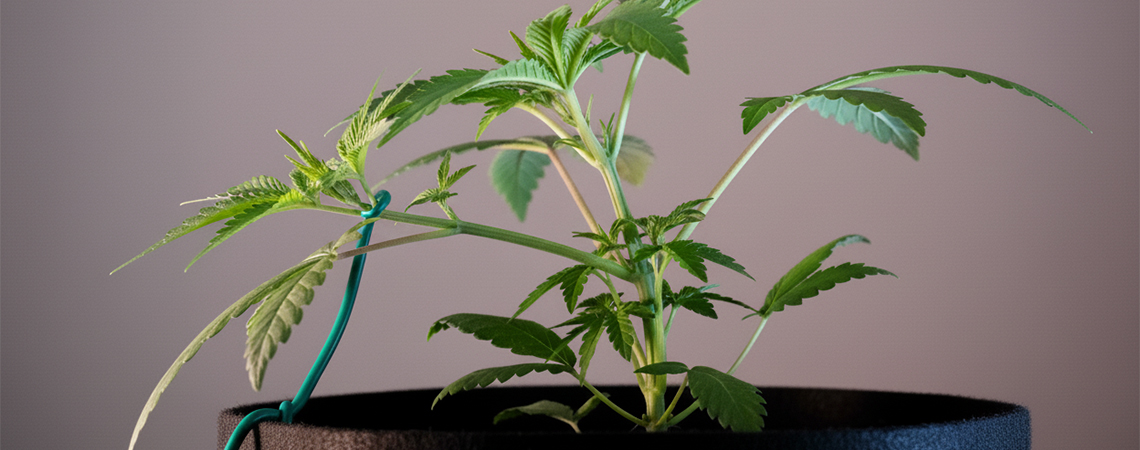



Learn how to LST autoflowers with a clear, step-by-step approach tailored to fast, compact plants. Explore pros and cons, when to LST autoflower strains, and how techniques like SOG and ScrOG compare, so you can shape healthier canopies and make the most of limited space.
Looking to boost your autoflower’s yield without stressing your plants? Low stress training (LST) is your solution. This gentle technique lets you reshape your plants without cutting or snapping branches, making it perfectly suited to the fast, compact life cycle of autos.
At its core, LST is a non-invasive way of guiding stems and side branches into a more open, horizontal structure using soft ties and gradual bending. Instead of one tall central cola shading everything else, you encourage multiple tops to sit at a similar height. This helps your light reach more bud sites, which can translate into noticeably higher yields from the same space.
Because you are not wounding the plant, low stress training autoflowers keeps recovery time to a minimum, crucial when you only have a few weeks of vegetative growth to play with. You also gain much better control over the final shape of your plants, making it easier to manage small tents, stealthy cupboards, or dense setups like SOG or ScrOG while maintaining healthy, vigorous growth.
Is LST suitable for autoflowers?
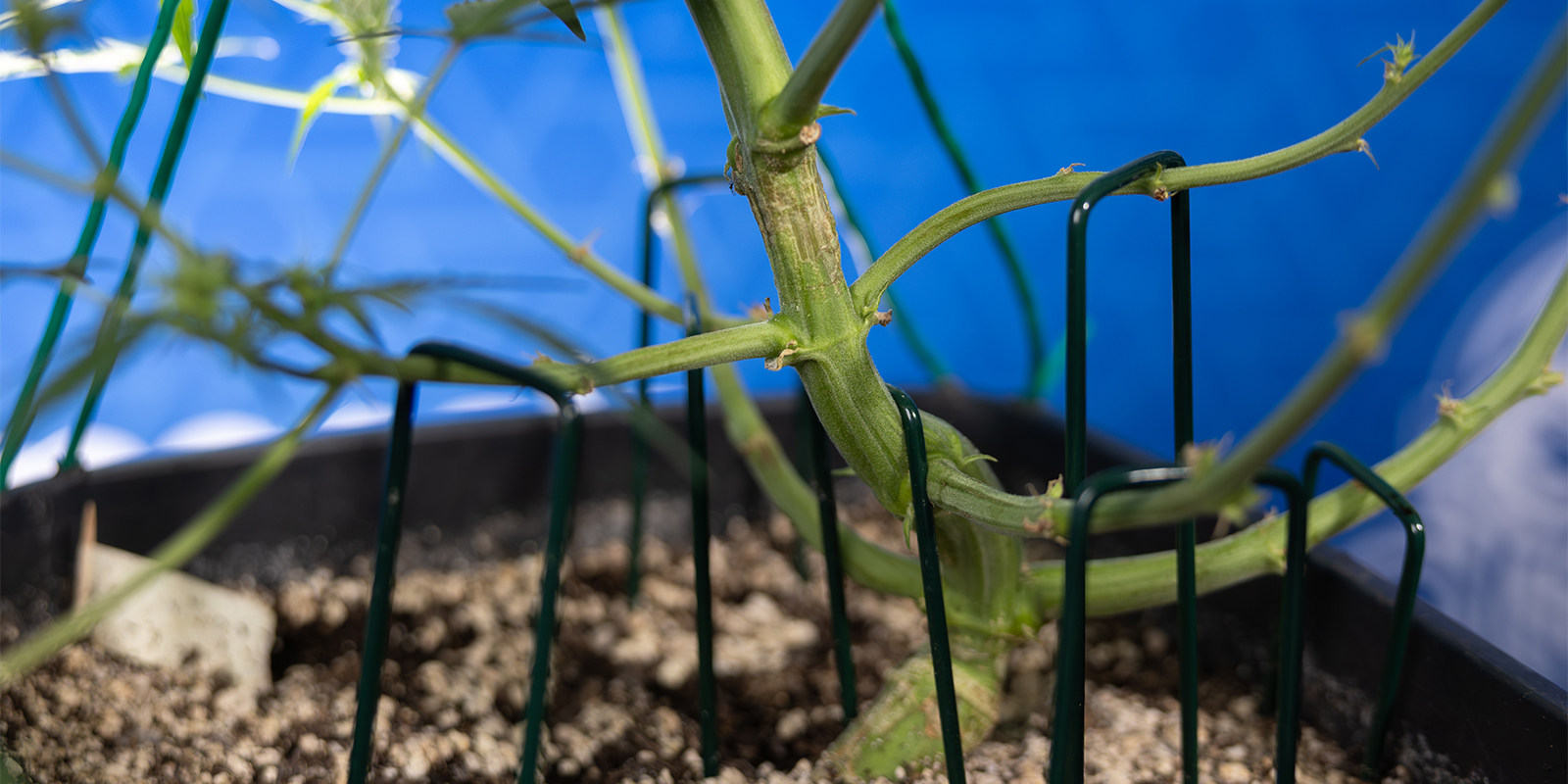
Low stress training is a gentle way to guide your plants’ growth by slowly bending and tying down stems rather than cutting or damaging them. Rather than forcing your plants to recover from heavy pruning or topping, you simply persuade branches to grow horizontally so more of the plant sits in the “sweet spot” of your light.
This soft-touch approach is particularly well-suited to autoflowers, which grow quickly and spend little time in the vegetative phase. Because you are not inflicting major stress, autos can keep racing through their life cycle while subtly changing shape, instead of wasting precious days on recovery. For growers working in tight tents, cupboards, or balconies, being able to control height and spread without stunting the plant is a big advantage.
When used correctly, LST autoflowers can deliver several key benefits:
- A more compact, manageable plant that fits better in small or low spaces.
- Improved light penetration to lower bud sites, helping them develop more evenly.
- Better airflow through the canopy, which supports healthy growth and reduces the risk of moisture-related issues.
- The potential for more uniform buds, rather than one main cola and lots of airy popcorn.
If you are new to autos, it can help to first understand their growth rhythm and basic needs with a dedicated guide such as growing autoflowers indoors and outdoors, then move on to more detailed advice on low stress training techniques to refine your approach once you are comfortable with their speed and structure.
Pros of LST autoflowers
When used thoughtfully, low stress training autoflowers can offer several clear advantages:
- Boosts yield potential by exposing more bud sites to strong, even light.
- Keeps plants short and manageable, ideal for small tents, cupboards, and stealth grows.
- Improves airflow through the canopy, helping to prevent moisture build-up around flowers.
- Creates a flatter, more uniform canopy that works well with fixed lights and compact setups.
- Allows gentle shaping without heavy stress, so autos keep growing without major recovery time.
- Gives growers more control over individual plants in SOG or ScrOG-style arrangements.
Cons of LST autoflowers
Even though it is a gentle technique, low stress training autoflowers does come with a few drawbacks to keep in mind:
- Requires regular attention to adjust ties and keep the canopy even as plants stretch.
- Poorly timed bending can slow growth if done late into flowering or on weak plants.
- Inexperienced growers may snap branches if they bend too fast or too far.
- Not every small grow needs it; very compact autos can perform well with minimal training.
- Can be fiddly in crowded tents where access to each pot is already limited.
When to start LST on autoflowers?
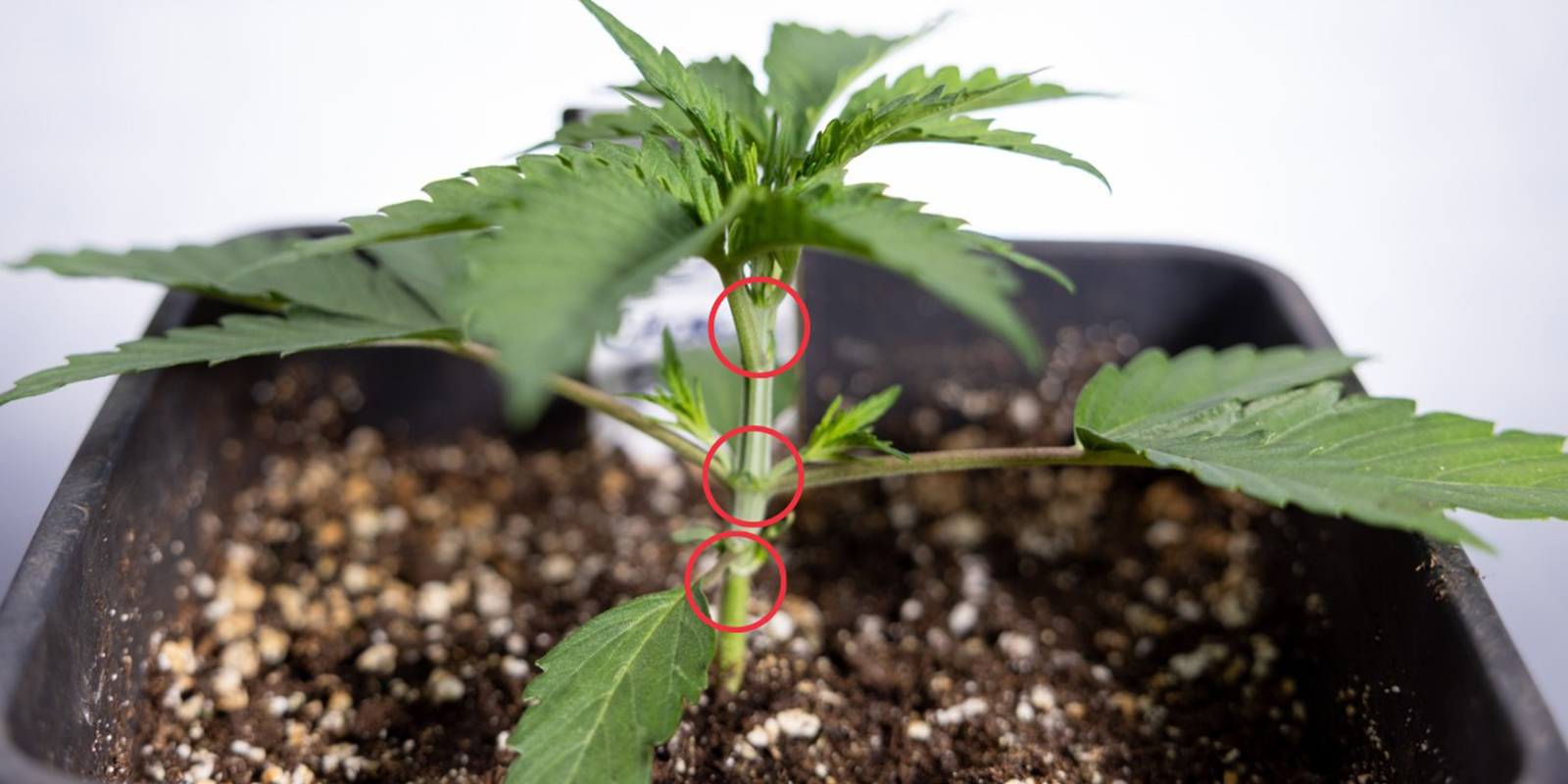
Timing is everything with autoflower LST. Because autos grow on a fixed internal clock, you only have a short window to shape them before they commit fully to flowering. Start too early, and the stems are fragile and easily damaged; start too late, and any stress or slowdown can nibble away at your final yields.
As a rule of thumb, the best moment for low stress training autoflowers is once the plant has developed around three to four nodes and is looking sturdy with a healthy, thickening main stem. At this stage, your plant is old enough to handle gentle bending, but still young enough that its structure can be steered without much resistance. Many growers find that beginning during the second week of vigorous growth gives the right balance between flexibility and strength.
If you are unsure when to LST autoflower strains in your particular setup, watch for the transition from delicate seedling to confident young plant: leaves widen, internodes space out slightly, and new growth appears quickly at the top. Combining this visual cue with broader advice on maximising autoflower yields will help you judge the perfect moment to start guiding, rather than fighting, your plant’s natural rhythm.
How to perform LST on autoflowers (step-by-step)

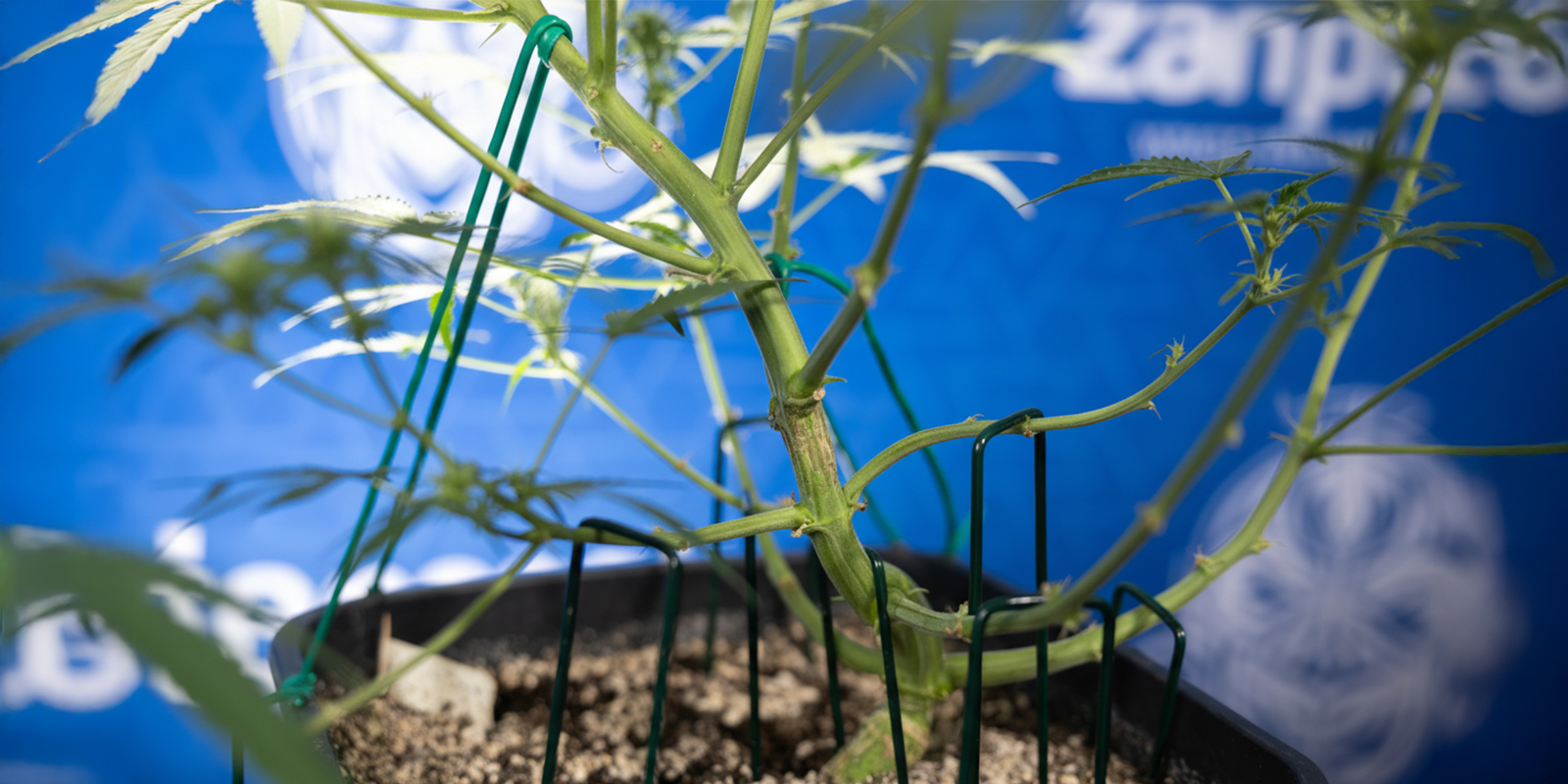
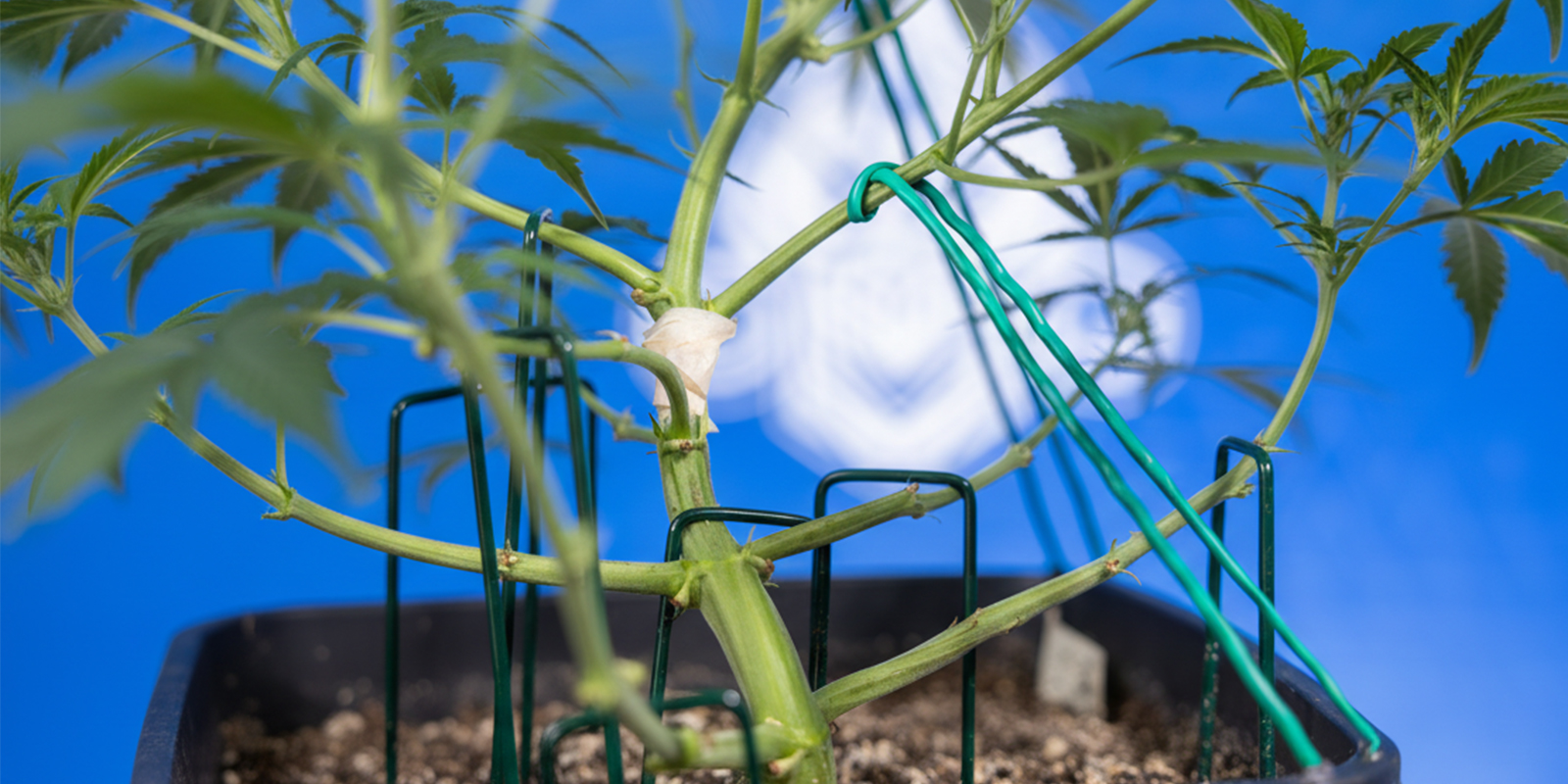
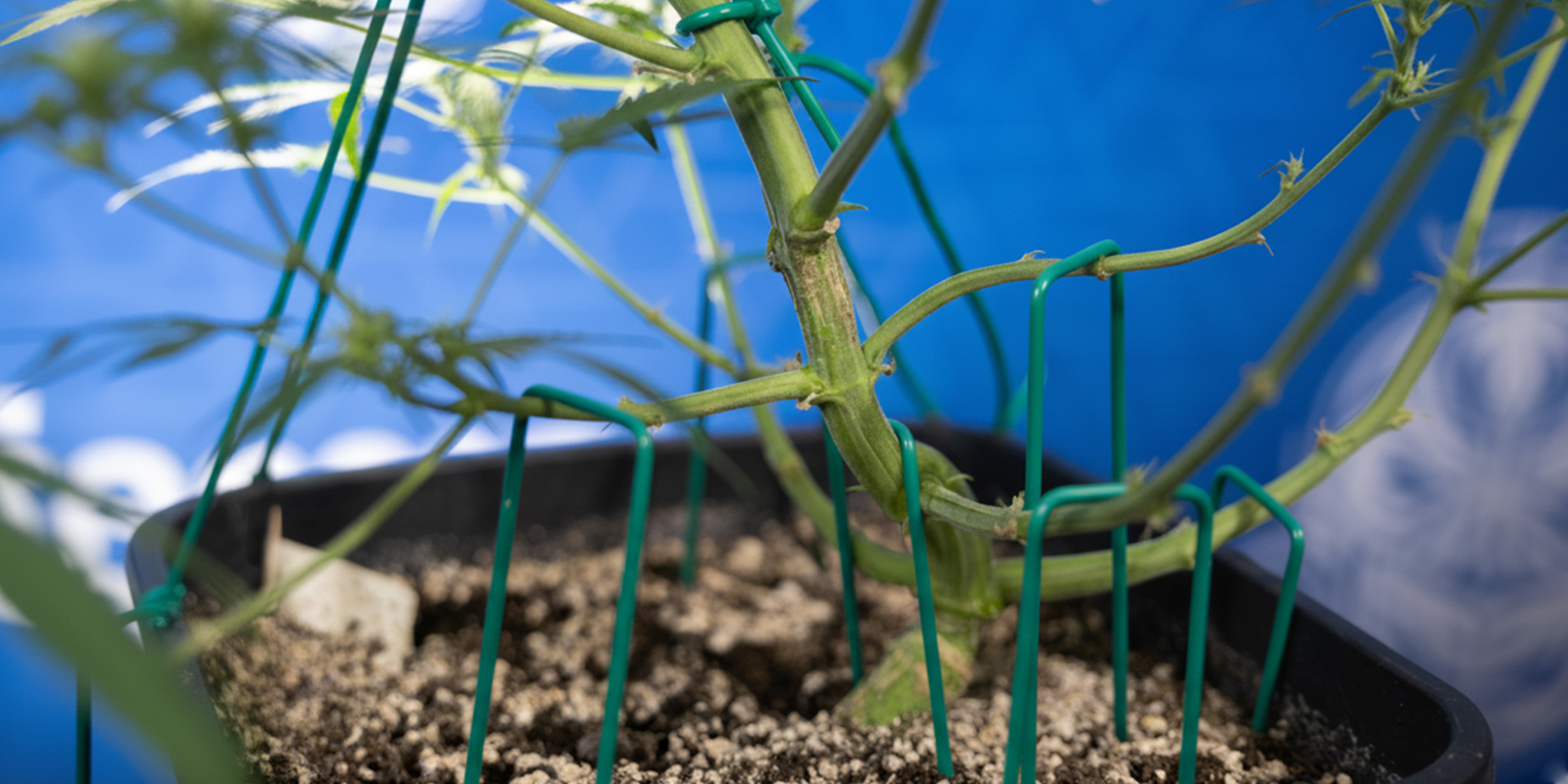
Low stress training autoflowers is all about guiding, not forcing, your plants into a flatter, more efficient shape. With a few simple tools, including soft plant ties, garden wire with a rubber coating, or even string, and a gentle touch, you can open up the canopy and help every bud site get its fair share of light.
Below is a straightforward method you can follow for almost any auto, whether you are running a single plant in a big pot or several in a small tent.
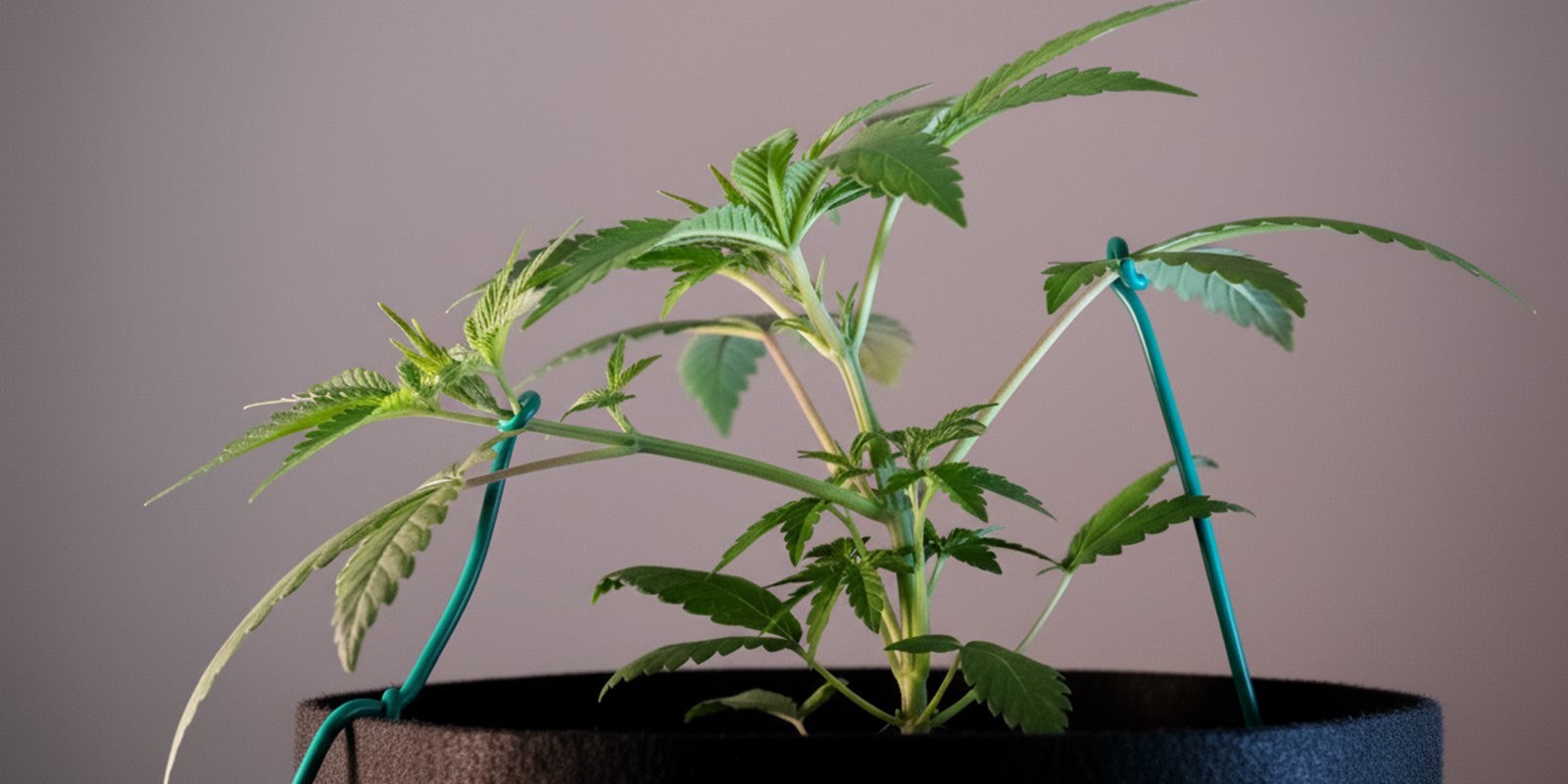
- Wait for 3–4 nodes to form: Let your autoflower move past the seedling stage before you start. When the main stem has three to four sets of true leaves (nodes) and feels a little thicker and more resilient, the plant is usually ready. Starting at this point gives you flexible stems that can be bent without snapping, while still being early enough to shape the plant before flowering really kicks in.
- Gently bend and tie down the main stem: With one hand supporting the base of the stem, slowly arc the top of the plant over so it lies closer to horizontal than vertical. Work in small movements rather than one big bend. Once you are happy with the angle, secure the stem using a soft tie attached to the pot rim or a stake. The goal is to pull the main top down slightly below the height of the side branches so they all begin to compete for dominance.
- Spread out side branches as they develop: Over the next few days, side branches will grow towards the light. When they are long enough, you can add more ties to gently pull them outward, spacing them around the pot. This begins to create a wide, even canopy instead of a tall, narrow plant. Keep all ties loose enough that they do not bite into the stems as they thicken.
- Check plants regularly and adjust ties: Autoflowers can put on growth very quickly, so look in on them daily if possible. Loosen or move ties if they are digging into the plant, and make small adjustments to keep the tops at a similar height. You are aiming for a flat, open structure rather than extreme bending. Once flowering is well underway and stretching slows, you can stop adding new ties and simply maintain the shape.
If you want to explore more training styles beyond basic LST autoflowers, including how these techniques can be combined or adapted to different setups, our dedicated guide on training autoflowering cannabis offers extra context and variations to experiment with in future runs.
Mistakes to avoid when LST autoflowers
Even though low stress training autoflowers is a gentle approach, it is still easy to overdo things or miss small details that cost you time and yield. Watch out for these common pitfalls and quick fixes:
- Bending dry, brittle stems: Stems are far more likely to snap when the plant is thirsty, or lights have just come on. If you need to make a bigger adjustment, do it when the plant is well hydrated and slightly more flexible, and always bend gradually rather than in one quick motion.
- Using harsh or thin ties: Plain wire or tight string can cut into the plant as it grows, effectively girdling stems. Swap to soft plant wire, rubber-coated garden wire, or fabric ties, and leave a little slack so the stem can thicken without being strangled.
- Fixing ties only to the branches: Anchoring every tie to another branch can twist the whole plant out of shape. Instead, secure most ties to the pot rim, tent poles, or small stakes in the soil so each branch is controlled independently.
- Reworking the structure too late: Major reshaping during mid to late flowering can shock autos at the exact moment they should focus on fattening buds. Keep heavy adjustments for early growth, and later on restrict yourself to very small tweaks or simply loosening ties.
- Crowding plants after LST: Spreading branches out increases each plant’s footprint. If you pack too many trained autos into a small area, airflow drops, and lower buds suffer. When you plan a run, allow extra space per pot so the wider canopy can breathe and catch the light properly.
Alternatives to LST for autoflowers
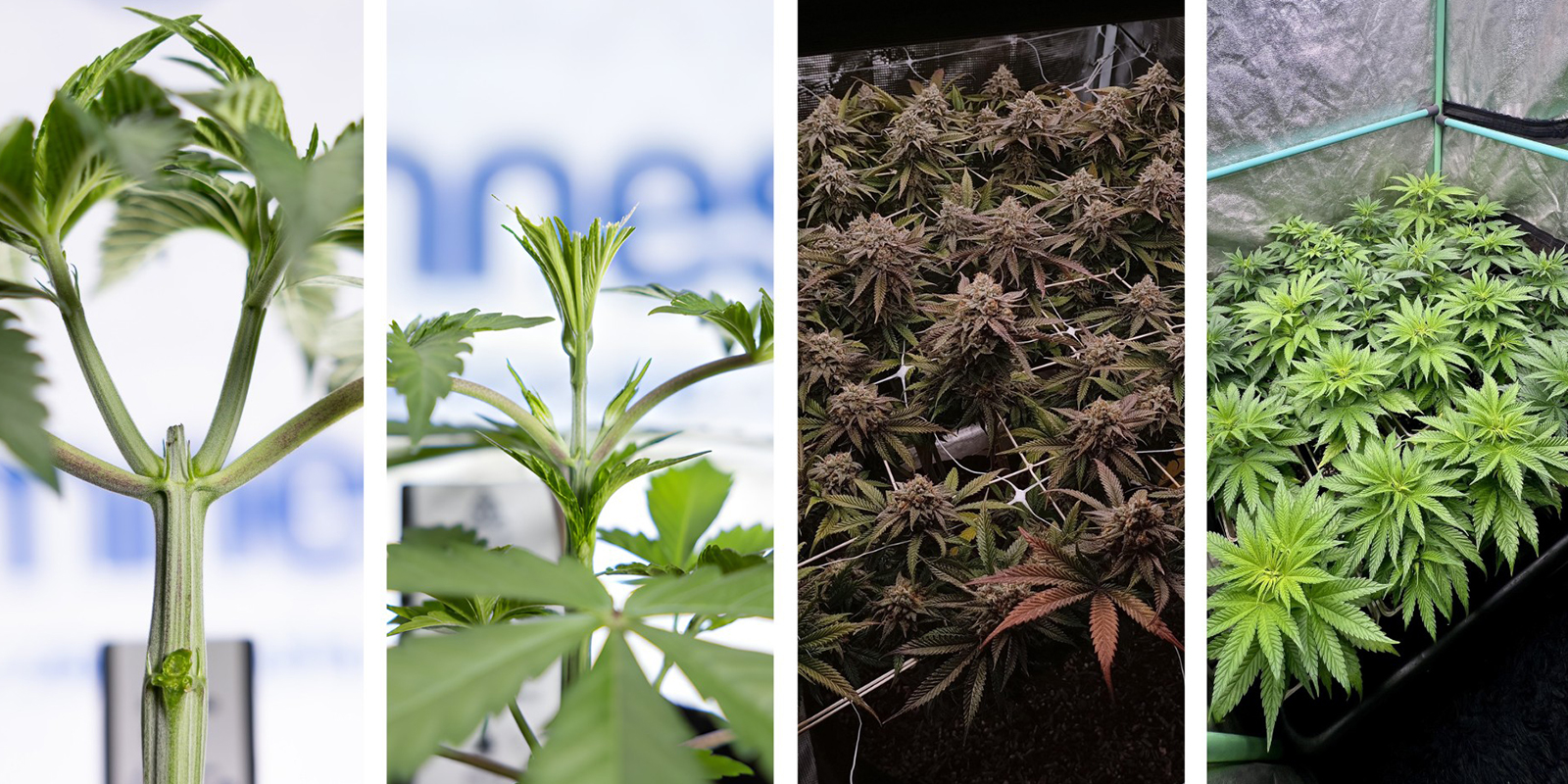
While low stress training autoflowers is usually the safest and most flexible option, it is not the only way to shape your plants. Depending on your space, experience level, and how many autos you are running, other methods can sometimes suit you better. Explore the basics of some popular alternative approaches below:
- Topping: Topping removes the main growing tip to create multiple colas. With photos, this is a classic move, but for autos, it carries more risk because they have little time to recover. If you want to explore topping or FIM, and understand how they compare, our guide to topping vs fimming is a good starting point. For most growers, topping is only worth trying on very vigorous, larger autos in dialed-in conditions.
- FIM (“F**k, I Missed”): FIMming is a softer version of topping that partially removes the new growth instead of a clean cut. It can produce several new shoots but is unpredictable, and again, costs precious time if the plant stalls. Use it only if you are experienced, running robust genetics, and happy to accept some variability in structure.
- ScrOG: Screen of Green uses a net or mesh to guide branches horizontally, creating a single, even canopy. It works best with a small number of plants in a limited space. However, ScrOG can be tricky with fast-growing autoflowers, as they may outpace the screen. This method suits growers who understand their strain’s stretch and can combine gentle bending with careful weaving through the net.
- SOG: Sea of Green relies on many small plants grown with minimal veg time. With autos, SOG can be very efficient in tight spaces: let each plant grow almost naturally, maybe with light leaf tucking, and rely on plant numbers rather than heavy training. It is ideal if you prefer simplicity and quick turnaround over hands-on shaping.
In short, methods that involve cutting, like topping and FIM, are best reserved for confident growers and particularly strong autos, while ScrOG and SOG are more about how you arrange plants in the space. For most home setups, especially for beginners, gentle LST remains the most forgiving way to tame height, boost light exposure, and keep autoflowers happy.
LST: The secret to happy, healthy autoflowers?
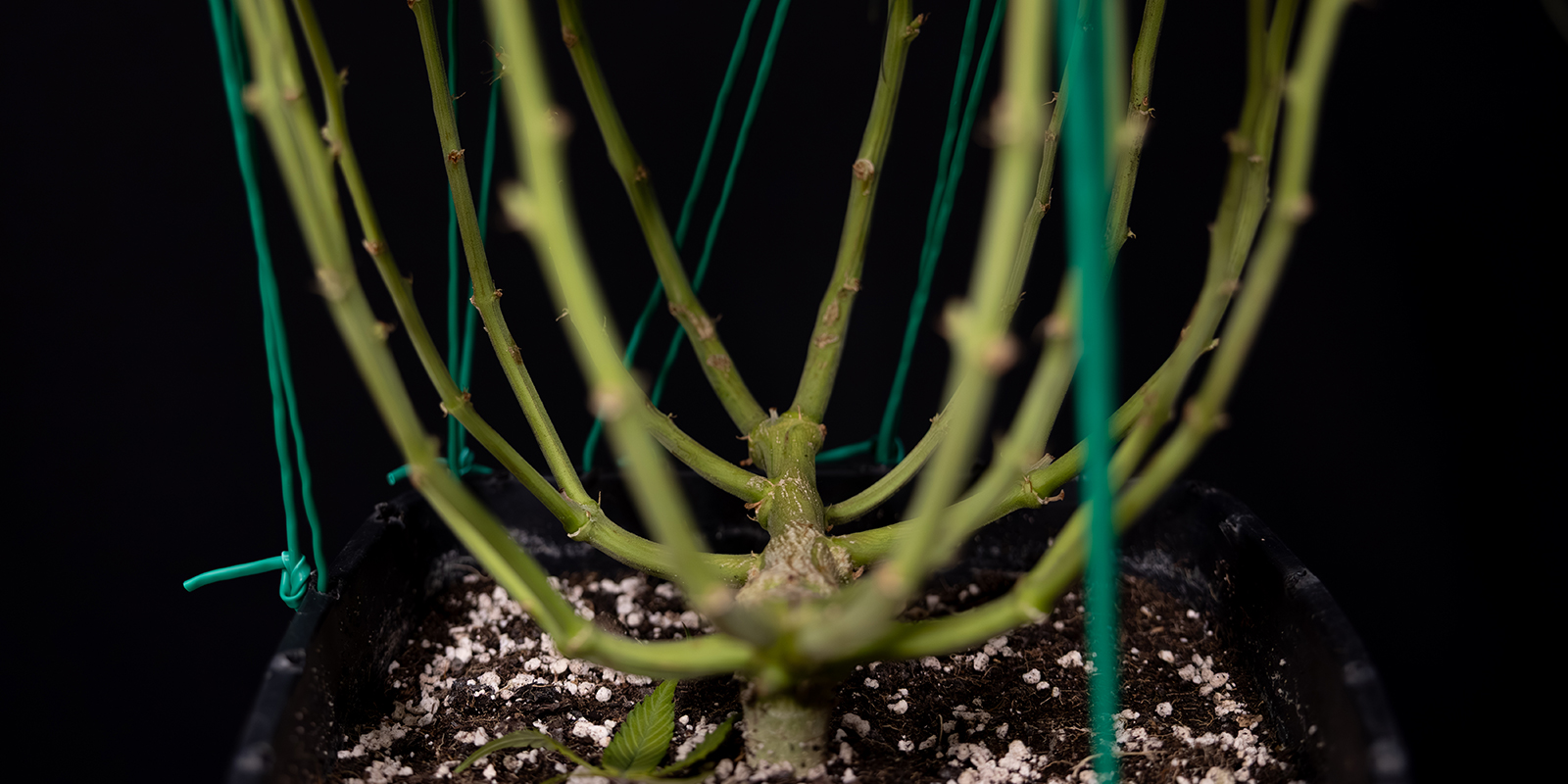
When used thoughtfully, low-stress training autoflowers can turn a modest plant into a compact, efficient bud factory. By opening up the canopy and smoothing out height, you give more sites access to strong light and good airflow, often improving both yield and overall plant health. The main risks come from poor timing, bending too aggressively, or trying to rework the structure once flowering is already in full swing, all of which can slow growth instead of supporting it.
LST is a strong fit for small tents, stealthy cupboards, and any setup where you need to keep autos low and manageable without harsh pruning. Healthy, vigorous plants with at least three to four nodes tend to respond best, while very weak or heavily stressed specimens are usually better left to grow more naturally.
If you are keen to put these ideas into practice, start by choosing resilient genetics that match your space and goals. Explore our range of autoflowering seeds, then pair them with simple training gear such as soft ties, stakes, and a reliable light to create your own dialed-in routine for happy, well-shaped plants.