 8.6 out of 10 based on 80823 reviews







.svg)
.svg)
.svg)
.svg)
.svg)


 Autoflower Seeds
 Feminized Seeds
 Zamnesia Seeds


 Help
Help United States
Transplanting autoflowers: Smooth moves for healthy roots
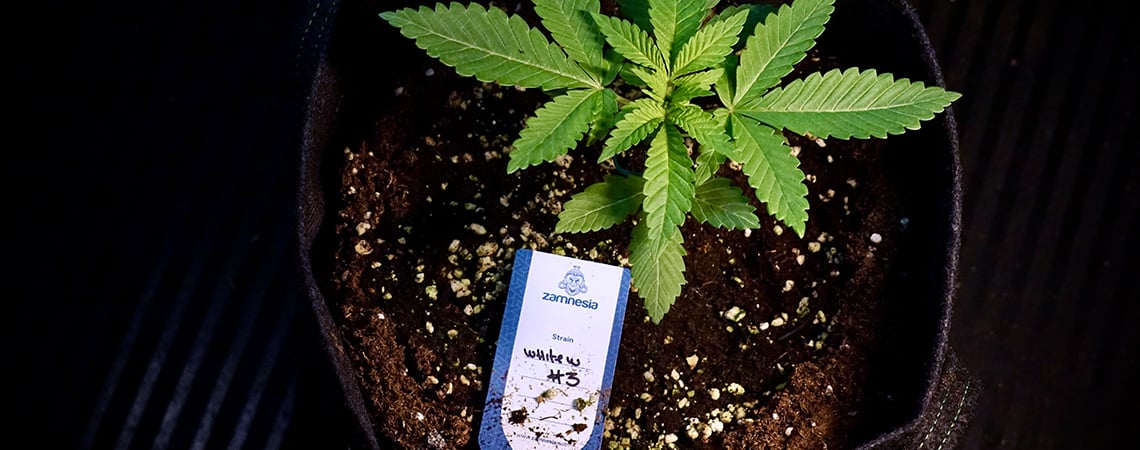



Transplanting autoflowers can be risky, but not impossible. This guide breaks down when, why, and how to move your autos safely, or whether you should skip the process altogether. Learn practical steps, avoid common mistakes, and set your plants up for a smooth, stress-free grow.
Thinking of giving your autoflower a new home? Timing and technique make all the difference.
Autoflowering strains might be fast and hardy, but they're not big fans of change, especially when it comes to their roots. That's why transplanting autoflowers is a delicate operation. When done right, it can support healthy growth and maximize space, but when done wrong, you risk stunting your plant just as it starts to take off.
This guide cuts through the myths and mixed advice, providing a clear plan for when and how to transplant, and when to skip it altogether. Understanding the basics of transplanting autoflowers is key to giving your plants the best possible start.
Can you transplant autoflowers?
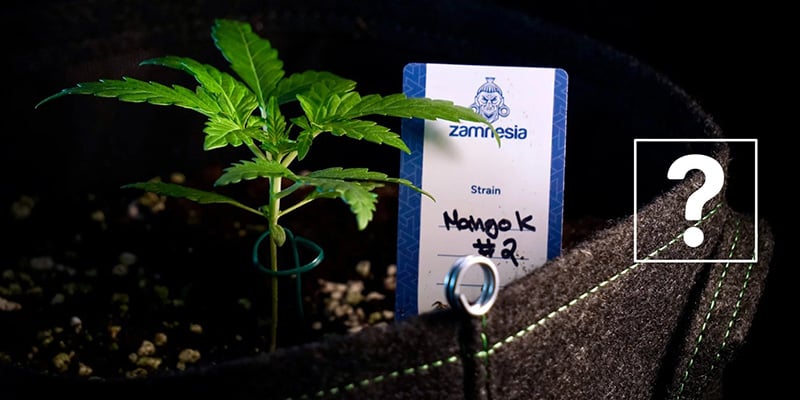
Can you transplant autoflower plants without hurting their potential? It's a common question, and one that causes plenty of confusion. Many growers also wonder whether repotting autoflower seedlings offers any real advantage or simply increases the risk of shock.
There's a widespread belief that repotting autoflowers is completely off-limits. Because autos grow so quickly and switch to flowering on their own schedule, many assume they're too fragile to handle the stress of a move. But that's only part of the picture. So if you’re asking, "Can you transplant autoflower plants safely?" the answer is yes, but only under very specific conditions.
In reality, transplanting autoflowers can be done if the timing and technique are right. The window is narrow, and the margin for error is smaller than with the photoperiod plants, but it's not impossible. With a steady hand and a one-time move early in life, many growers successfully shift their autos into larger pots without issue.
That said, transplanting should only be used when necessary. Starting seeds in their final container is always the safest route. But if you're working with limited space, starting in solo cups or small pots, or managing multiple seedlings, transplanting may still be a practical option.
For more insights on making the most of autoflowers in different grow setups, see our guide on growing autoflowers indoors and outdoors.
When to transplant autoflowers
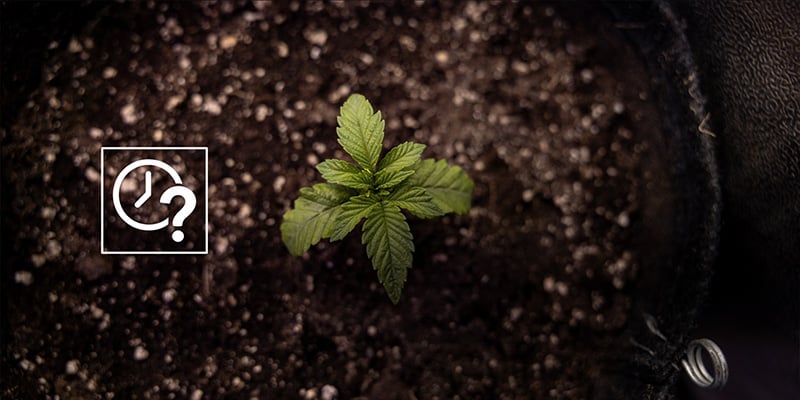
Getting the timing right is critical when transplanting autoflowers. Move too early, and you risk damaging a delicate seedling; move too late, and you risk disrupting root development during a crucial growth phase. So, when to transplant autoflowers? The ideal window is 7–10 days after germination. This timing also answers another common question: when to transplant autoflower seedlings without slowing their early development.
At this stage, the plant typically has two or three sets of true leaves and a stable root system that's still small enough to move with minimal stress. This is the sweet spot, just before rapid vegetative growth kicks in. Waiting longer increases the chances of transplant shock, which autoflowers don't have much time to recover from.
This early window is ideal for transplanting autoflower seedlings. Don't wait for significant vertical growth; by then, the risk of harming yields increases. For growers starting in small containers, a typical concern is when to transplant autoflowers from a solo cup to their final pot. The 7–10 day window applies here as well.
For a deeper look at how transplant timing affects plant development, see our dedicated article on transplanting for bigger yields.
Pros and cons of transplanting autos
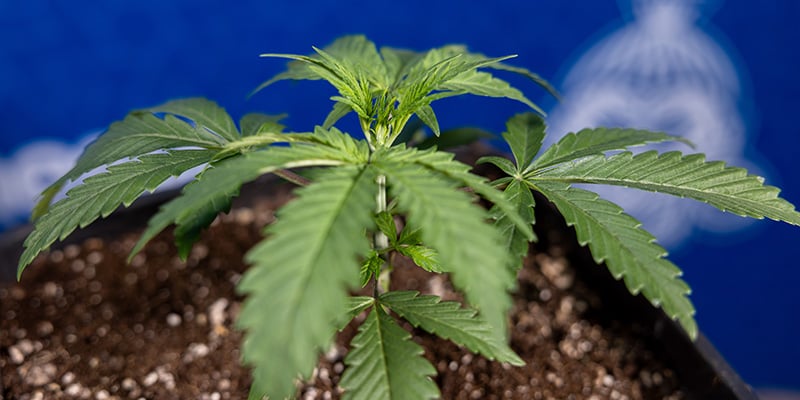
Repotting autoflower plants can be a helpful strategy in certain grow setups, but it's not without risk. Before you commit to moving your autos, weigh the clear benefits against the potential downsides.
Pros
- Better control over soil quality and drainage during early growth
- Encourages early root development if moved at the right time
- Helps manage space efficiently in small indoor setups
Cons
- High risk of transplant shock if done too late or too roughly
- Slowed growth due to root disturbance
- Potential for lower yields if stress interrupts early development
Step-by-step: How to transplant autoflowers without stress
If you've decided that transplanting is necessary, it's crucial to get everything right the first time. Autoflowers won't forgive a messy move. The following steps will walk you through the process from solo cup to final pot, with minimal stress on your plants and maximum chance of success.
Choose the right pot
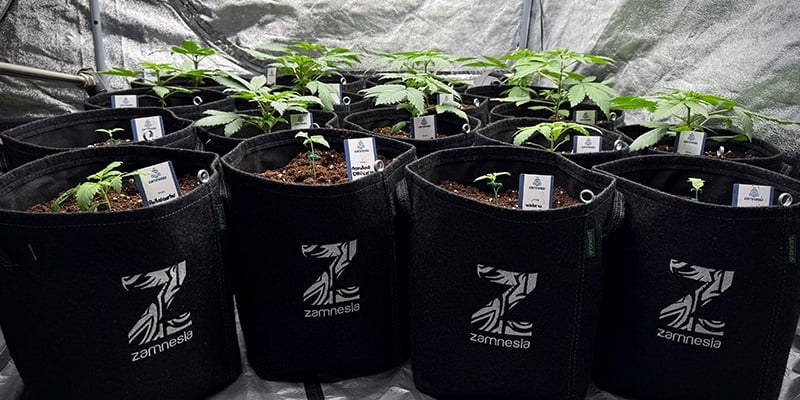
Before anything else, decide where your autoflower will live for the rest of its life cycle. This is your final container, so make it count. Most growers use pots between 2–3 gallons, depending on the space and strain.
You have three main options:
- Air pots: Encourage strong, outward root development through natural pruning, but dry out faster.
- Plastic pots: Cheap and common, but can cause root spiraling without proper aeration.
- Fabric pots: Offer great drainage and root aeration, and are an excellent all-around choice for autoflowers.
For more help deciding, take a look at our guide on selecting the right container size for your plants.
Prep the new home
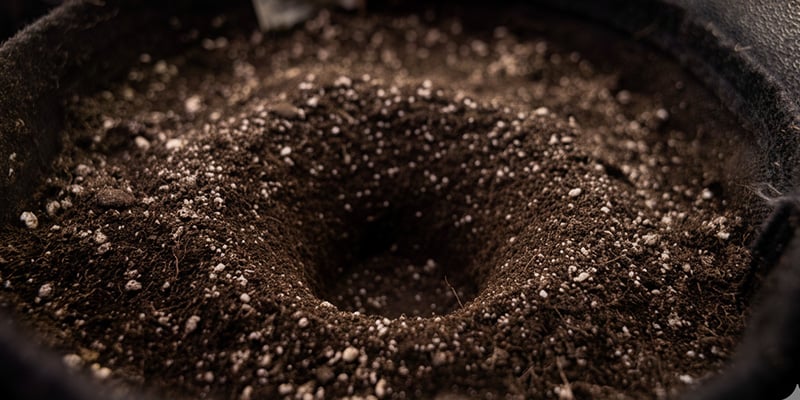
Before touching your plant, make sure your final pot is ready. Use the same soil mix your autoflower has already been growing in to avoid shocking the roots with different textures or nutrient levels. Keep the soil moist, but not soaked, so it's easy to work with and doesn't compress too much around the roots.
Dig a hole deep enough to fit the root ball snugly, ideally slightly wider than the current cup or pot.
For more soil tips, read how to choose the best soil for your grow.
The actual move
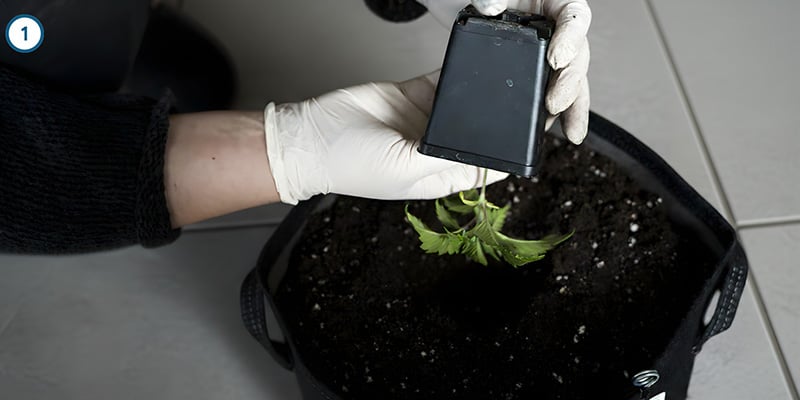
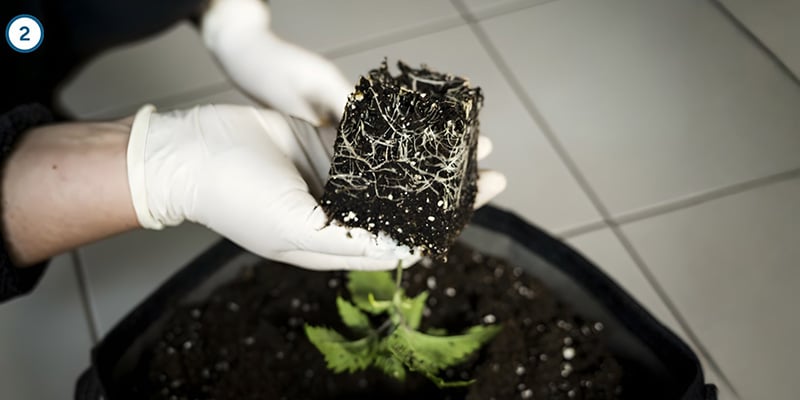
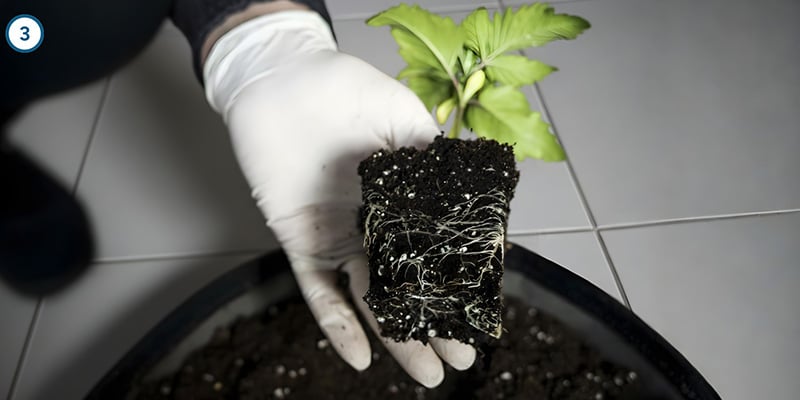
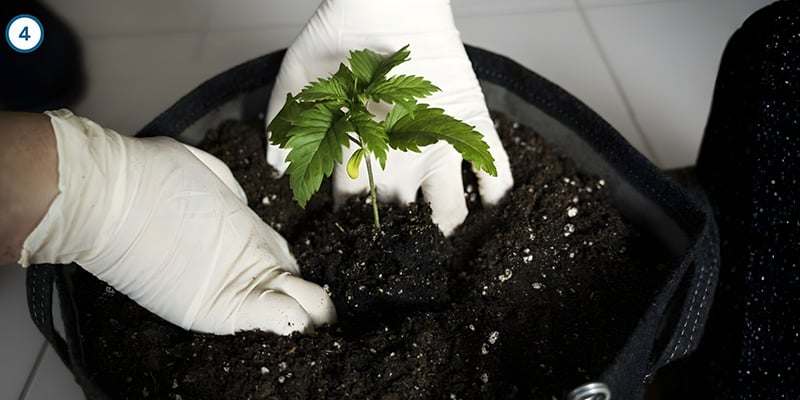
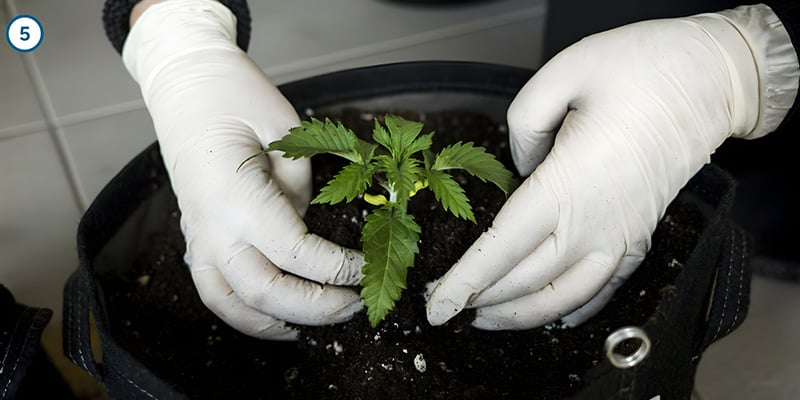
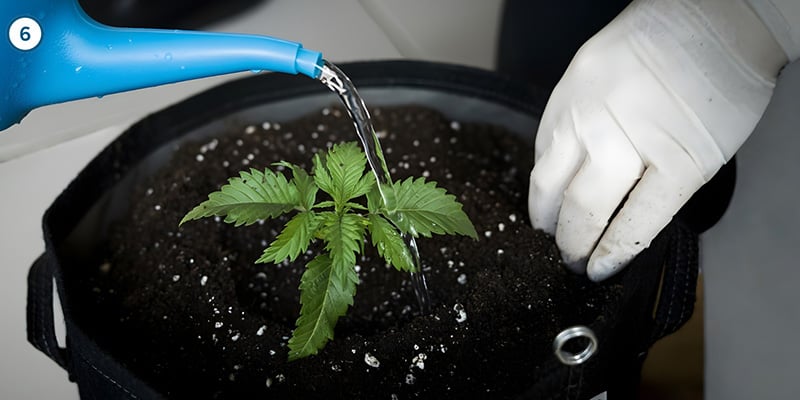
Now comes the most crucial, delicate part. Here's how to lift and transplant your autoflower safely:
- Gently squeeze the sides of the solo cup or plastic pot to loosen the soil. Avoid pulling on the stem.
- Place your hand over the top of the pot, with the stem between your fingers, and tip it upside down slowly.
- Let the root ball slide out naturally into your hand; do not grab or disturb the roots.
- Place the plant into the new hole, making sure it sits at the same depth as before.
- Backfill with soil and lightly press it down to eliminate air pockets, but don't compact it too firmly.
- Water generously to help the root settle into the new space.
Aftercare
The first 48 hours after transplanting are critical. Maintain stable conditions to help your autoflower adjust without added stress. After the initial soak, let the soil dry slightly before watering again to avoid root rot. Maintain a relative humidity level of around 60–70% and avoid exposing the plant to intense light immediately. Stick to a consistent light schedule and keep the canopy at a safe distance from your light source.
For more on watering and moisture control, learn how to water cannabis plants.
Transplanting alternatives: Starting in the final pot
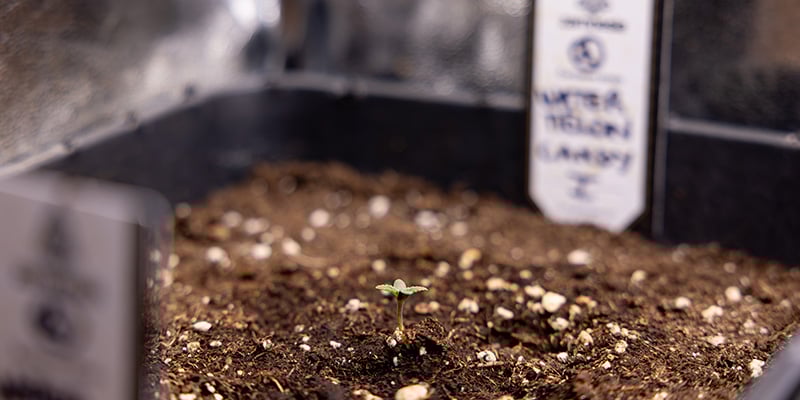
For many growers, the most straightforward and most reliable strategy is to skip transplanting altogether and go straight from seed into the final pot. That way, the autoflower never has to deal with the stress of being moved, and you avoid the risk associated with root disturbance.
Most autoflower growers choose this path because it removes a critical point of failure. Instead of worrying about timing windows, root shock, or aftercare, you provide your plant with a stable environment from the start, ensuring no interruption to growth, no risk of yield loss due to mishandling, and a reduced chance of stunted development. In many cases, an autoflower that spends its entire life in one pot will grow faster and finish stronger than one that has been repotted.
To make this work, select a final container that's large enough to accommodate the entire growth cycle. A pot between 2–3 gallons is typically a good size, providing roots with enough room to spread out while still being manageable for most grow spaces. Choosing the right pot from the start eliminates the need for repotting, making the entire growing process more straightforward and foolproof.
Common transplanting mistakes to avoid
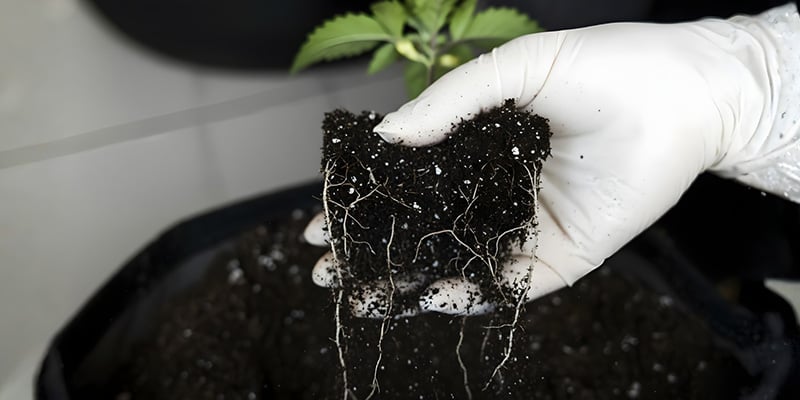
Even with the best intentions, small missteps during transplanting can lead to lasting setbacks for your autoflower. Here are the most common mistakes growers make, along with tips on how to avoid them.
Transplanting autos too late
Waiting until the plant is well into vegetative growth or showing signs of root binding can cause severe stress to an autoflower. Unlike photoperiods, autos don't have time to bounce back. Always aim to transplant within the first 7–10 days, while the plant is still in its seedling phase with only a few true leaves.
Overwatering right after transplant
While it's essential to water the new soil thoroughly during transplant, overwatering in the days that follow can suffocate roots and lead to rot. Autoflowers prefer a light, steady rhythm. Allow the soil to dry slightly before watering again to encourage healthy root growth.
Disturbing the roots too much
Rough handling, breaking up the root ball, or pulling the plant out of its starter pot can shock the system. Autoflowers thrive on stability, so always aim to keep the root mass intact and handle the plant as little as possible during the move.
For more grower pitfalls to avoid, check out our list of the top 10 most common grower mistakes.
Move it or lose it?
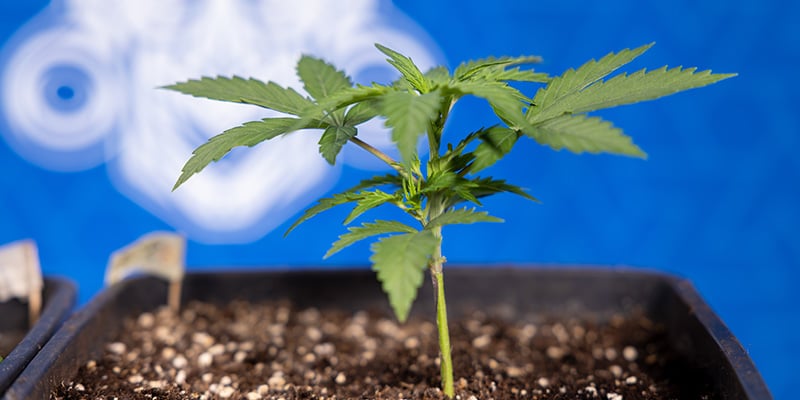
Transplanting autoflowers isn't impossible; it just demands care, timing, and a light touch. If you have to move your plant, aim to do it early, do it once, and keep the process as smooth as possible. Even if growth slows briefly, don't panic. With the proper aftercare, most autos bounce back quickly and finish strong.
As a quick reminder: never reuse pots without sanitizing them, and keep a close eye on your plant for signs of transplant stress in the days following the move. Gentle lighting, stable humidity, and consistent watering will go a long way in helping it recover.
However, if you're on the fence, sometimes the best course of action is no course of action at all. Starting your seeds in their one and final container is often the most foolproof way to grow autos with minimal risk.
Looking to get started or upgrade your setup? Explore our full range of autoflowering seeds and top-quality gear in the Zamnesia Growshop.