 8.6 out of 10 based on 81119 reviews







.svg)
.svg)
.svg)
.svg)
.svg)


 Autoflower Seeds
 Feminized Seeds
 Zamnesia Seeds


 Help
Help United States
The secrets of the SOG method revealed




Discover how the sea of green (SOG) method can help you grow more cannabis in less time. This efficient technique turns small spaces into dense, productive canopies. Learn how to use clones, seeds, or autoflowers to maximize yield and speed. Read on to find out everything you need to know.
Want faster harvests and denser canopies? The sea of green (SOG) method is your shortcut to more weed in less time.
The SOG method is a fast and space-efficient way to grow cannabis by cultivating many small plants close together to form a uniform “sea” of buds, as the name suggests. Ideal for compact setups or quick turnarounds, SOG enables growers to achieve impressive yields without the lengthy wait associated with traditional growing methods.
In this guide, you'll learn how to SOG from start to finish, whether using cuttings, photoperiod seeds, or autoflowers. We'll explore the benefits and potential drawbacks of this method, offer setup tips for soil and hydroponics, and show you how to optimize light, spacing, and airflow for the best possible results.
Ready to turn your grow room into a thriving green canopy? Let's dive in.
What is the SOG method?
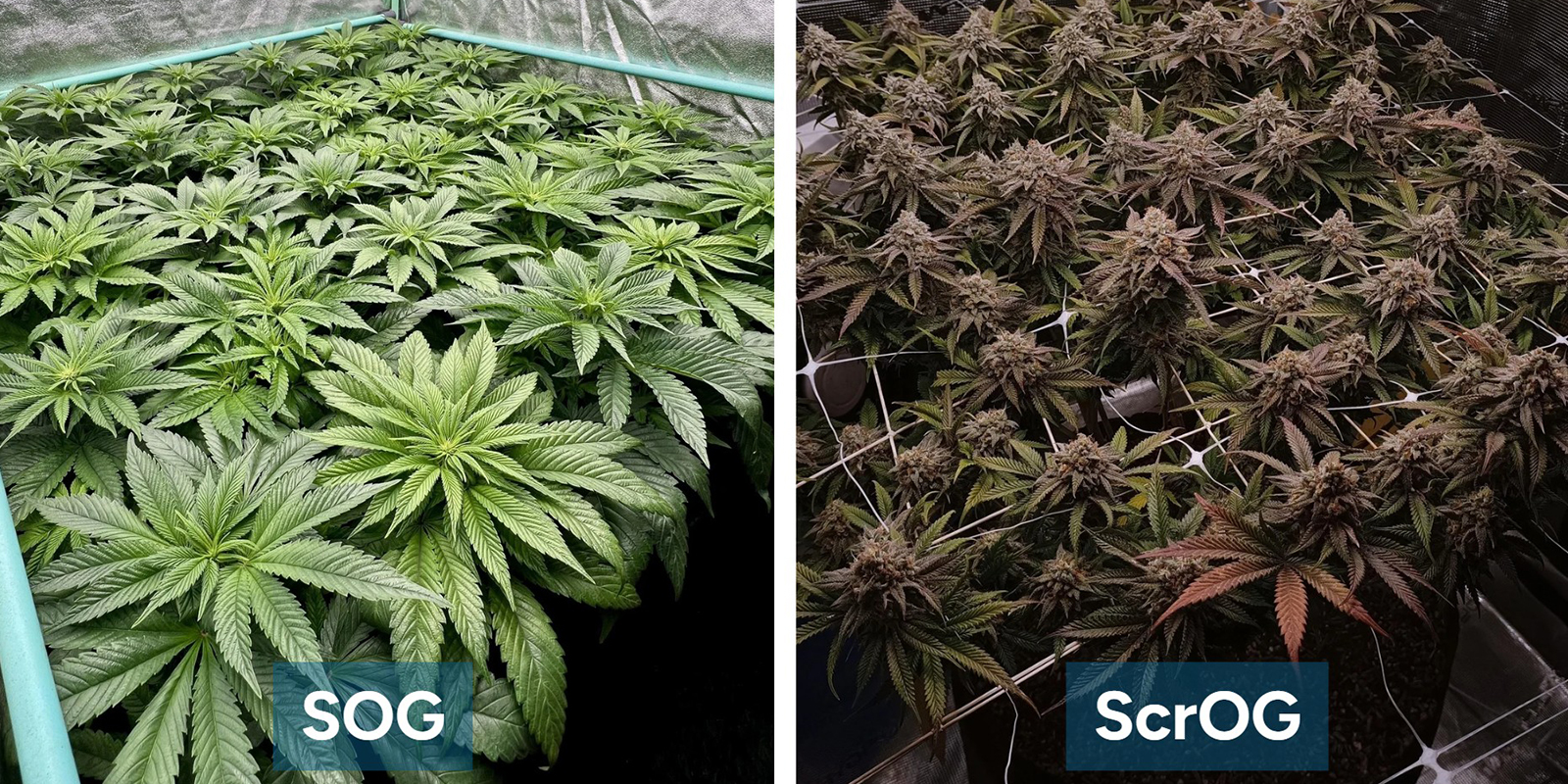
While we've alluded to what this method entails, SOG is a fast and efficient way to grow cannabis by cultivating many small plants close together to form an even canopy. This approach ensures every bud site receives strong, even light, creating a dense “sea” of uniform flowers.
The SOG method utilizes a short vegetative stage and early flowering to achieve rapid harvests and consistent yields. It's ideal for growers who want to maximize their use of limited space and time while maintaining consistent results.
Unlike the ScrOG (Screen of Green) technique, which uses fewer plants trained through a mesh for longer growth, SOG skips the training and relies on plant numbers and uniform height for speed and simplicity.
For more details on plant training, see Zamnesia's guide to training techniques.
Choosing the right SOG style: Cuttings vs seeds vs autoflowers
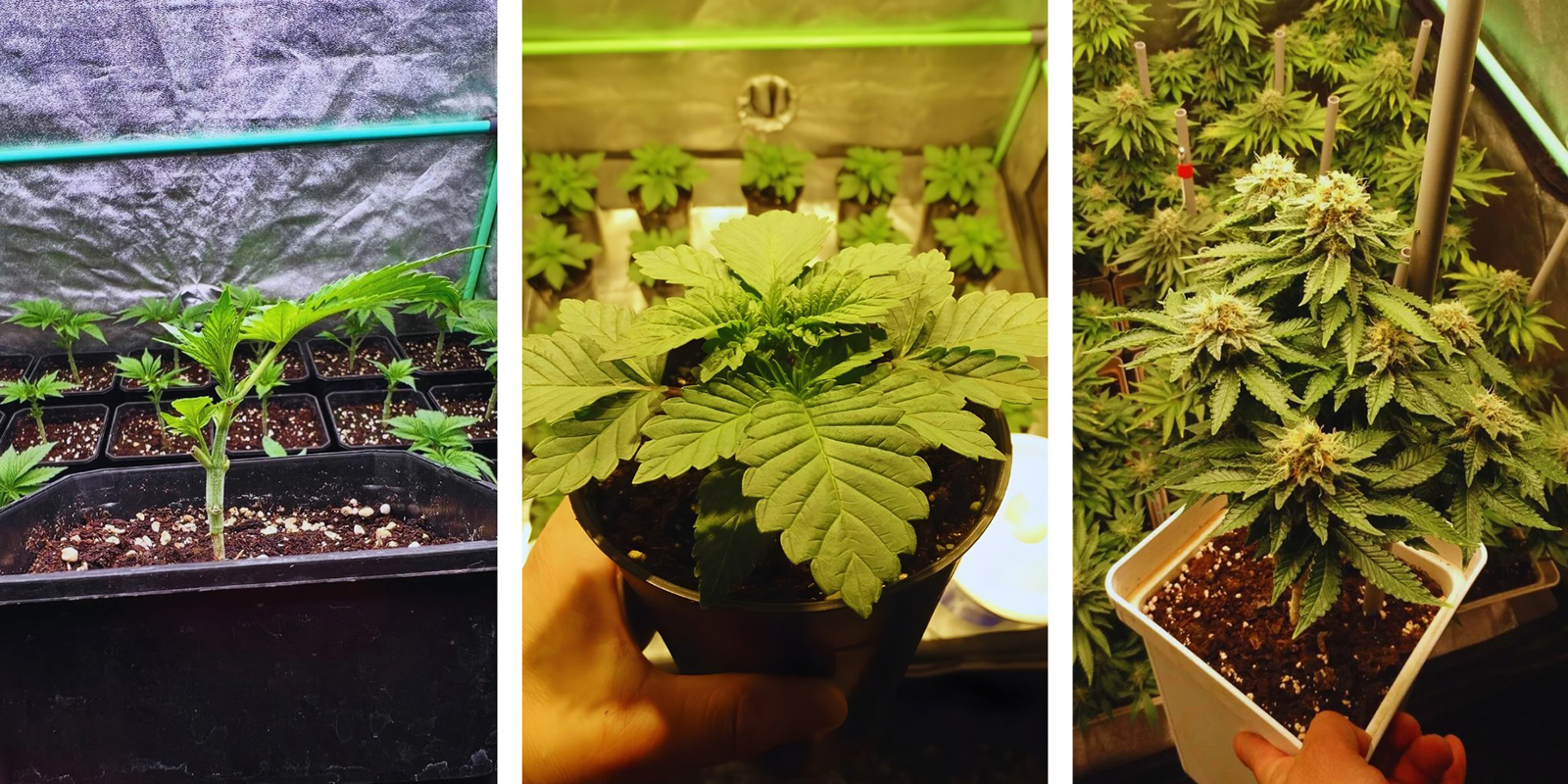
As you might expect, there's more than one way to create a sea of green setup, and your choice of plant type will determine how you grow and harvest. Whether you choose clones, photoperiod seeds, or autoflowering strains, each option has unique benefits and challenges. The key is to pick the approach that matches your space, schedule, and experience level.
Using clones (cuttings)
Clones are the classic choice for SOG growers because they grow into nearly identical plants, creating a perfectly even canopy. This uniformity allows for consistent light distribution and predictable flowering times. Clones also skip the germination phase, resulting in faster turnover and more reliable results. The trade-off is that you'll need healthy mother plants to take cuttings from and maintain genetic stability.
Learn more about seeds and clones in our definitive guide.
Using photoperiod seeds
Growing SOG from photoperiod seeds takes a little more care. Each plant may develop slightly differently, leading to variations in height and growth rate. With proper planning and early topping or trimming, though, you can still achieve a balanced canopy. Photoperiod plants also offer a wider choice of genetics, making it easier to experiment and fine-tune your setup for optimal yields.
Explore Zamnesia's full range of feminized cannabis seeds for dependable options.
Using autoflowering seeds
The idea of a sea of green with autoflowers divides growers. Autoflowers grow rapidly and don't depend on light cycles, which aligns with the SOG philosophy of quick harvests. However, they're less flexible because you can't extend the veg stage or recover from mistakes easily. The best results come from compact, resilient strains grown under a consistent light schedule (18–20 hours daily). With experience, sea of green autoflowers can yield impressive results in very small spaces.
For more on this topic, read Zamnesia's guide on autoflowering versus photoperiod cannabis and browse our selection of autoflowering cannabis seeds.
Setting up a sea of green grow
A successful sea of green setup depends on precision and consistency. Every plant should receive the same amount of light, air, and nutrients to maintain an even canopy. Whether you're growing in soil or using hydroponics, the goal is to create a compact and efficient environment where small plants can thrive.
Spacing and layout
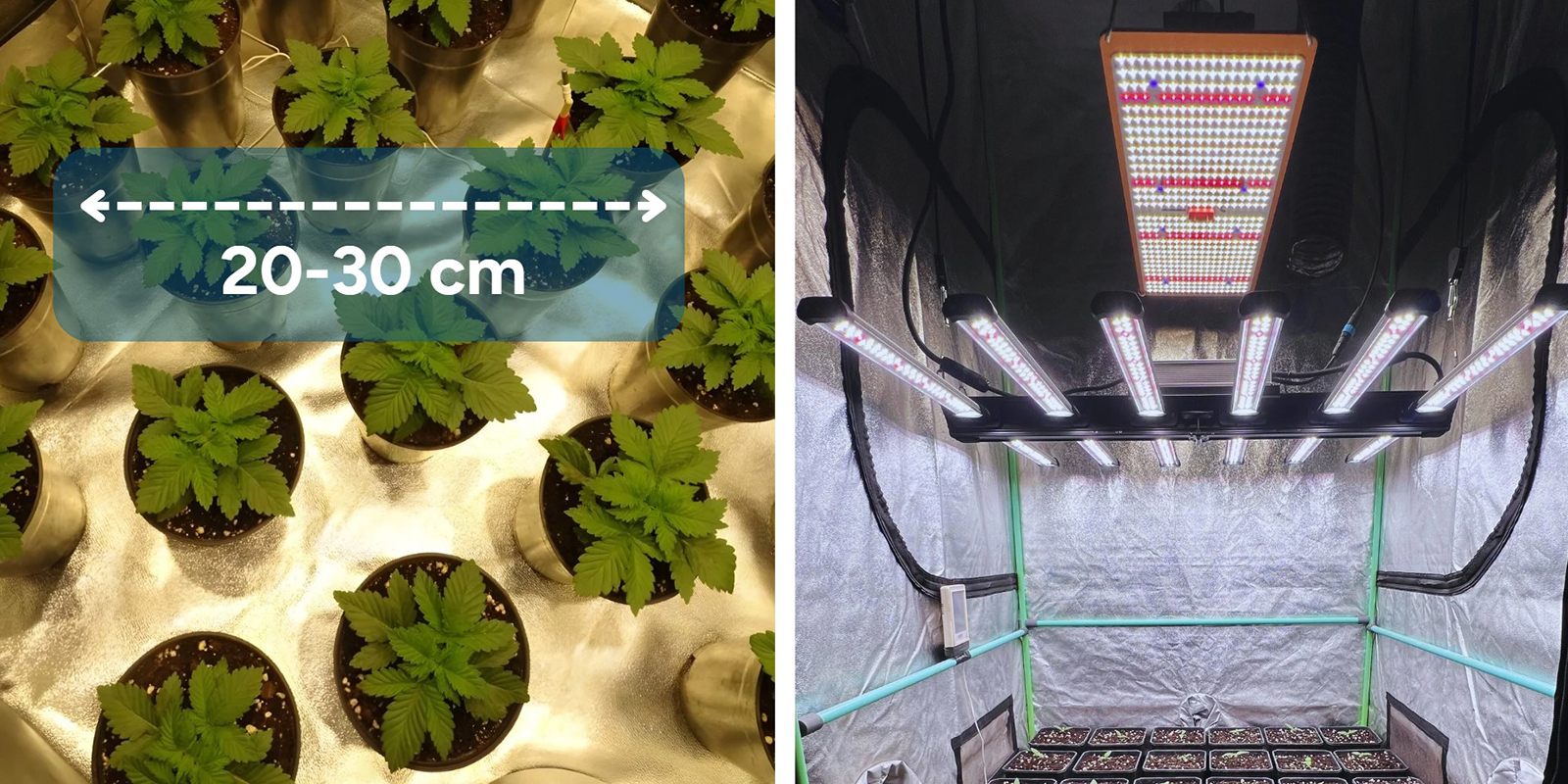
Keep spacing tight but comfortable, around 8–12 inches between plants. This density ensures each plant contributes to the canopy without crowding its neighbors. Square or rectangular pots make the most of your floor space, and placing them in tidy rows helps balance light penetration and airflow.
Lighting setup
Lighting is critical to SOG success. High-quality LED grow lights are often preferred for their efficiency and cool operation, but HPS lamps still perform well in traditional setups. Hang lights evenly and maintain a consistent distance from the canopy to prevent hotspots or stretching. For more detailed advice, check out Zamnesia's guide to lighting cannabis plants.
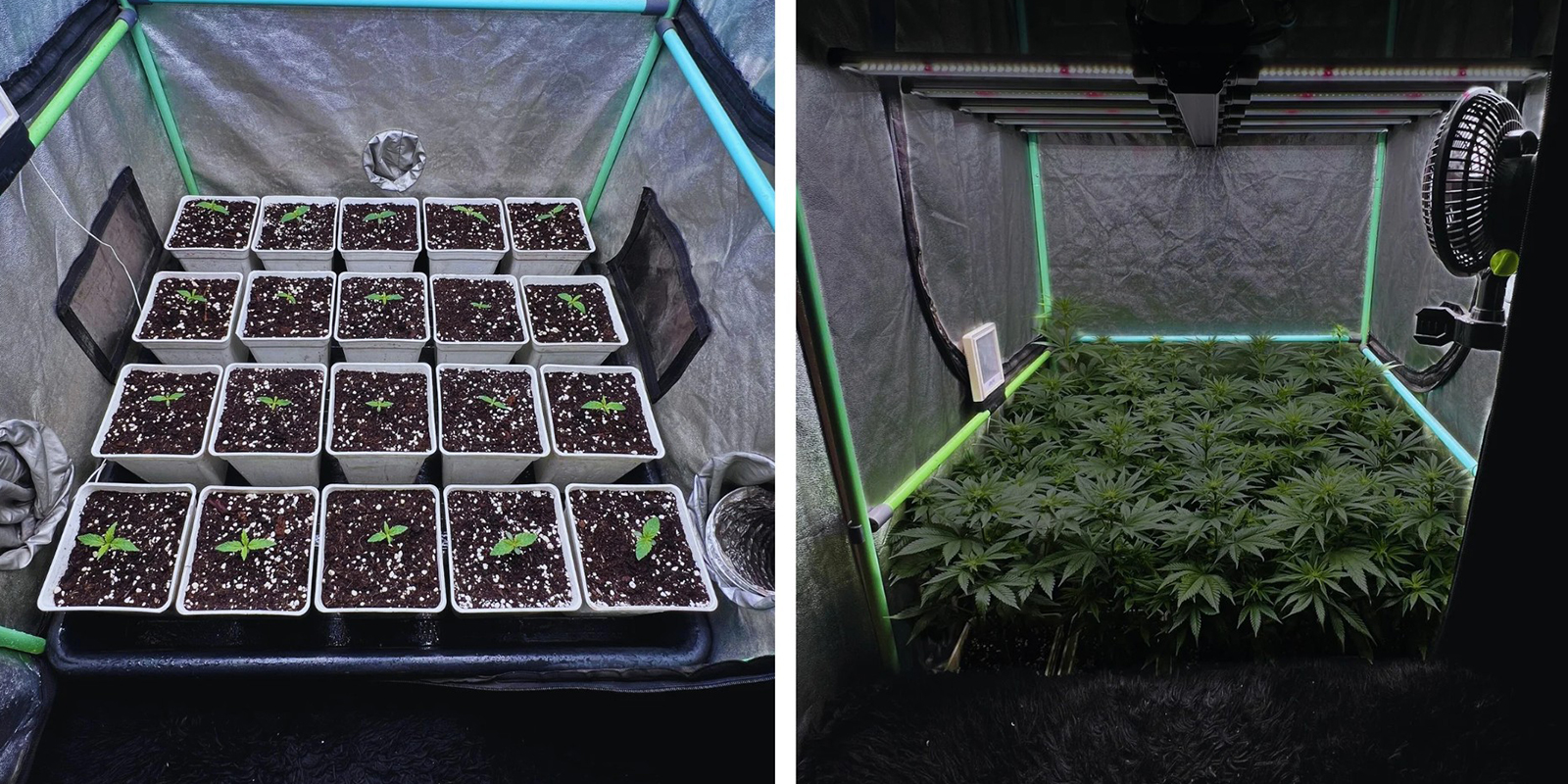
Growing medium
The SOG method works with almost any growing medium, but the choice affects control and maintenance. Soil is forgiving and great for beginners. Coco coir offers strict control over nutrients. Hydroponic SOG systems deliver the fastest results, though they require more monitoring and precision. Whichever method you choose, ensure good drainage, consistent feeding, and stable temperatures.
Airflow and humidity
Dense canopies trap moisture, so steady airflow is essential. Use oscillating fans to circulate air beneath and above the canopy, preventing mold and pests. Maintain humidity around 50% during flowering and keep fresh air moving at all times. A small inline fan and carbon filter can help maintain healthy circulation and odor control.
For more practical grow room setup tips, take a look at our dedicated article on creating and maintaining the ultimate cannabis grow space.
SOG timeline: From veg to harvest
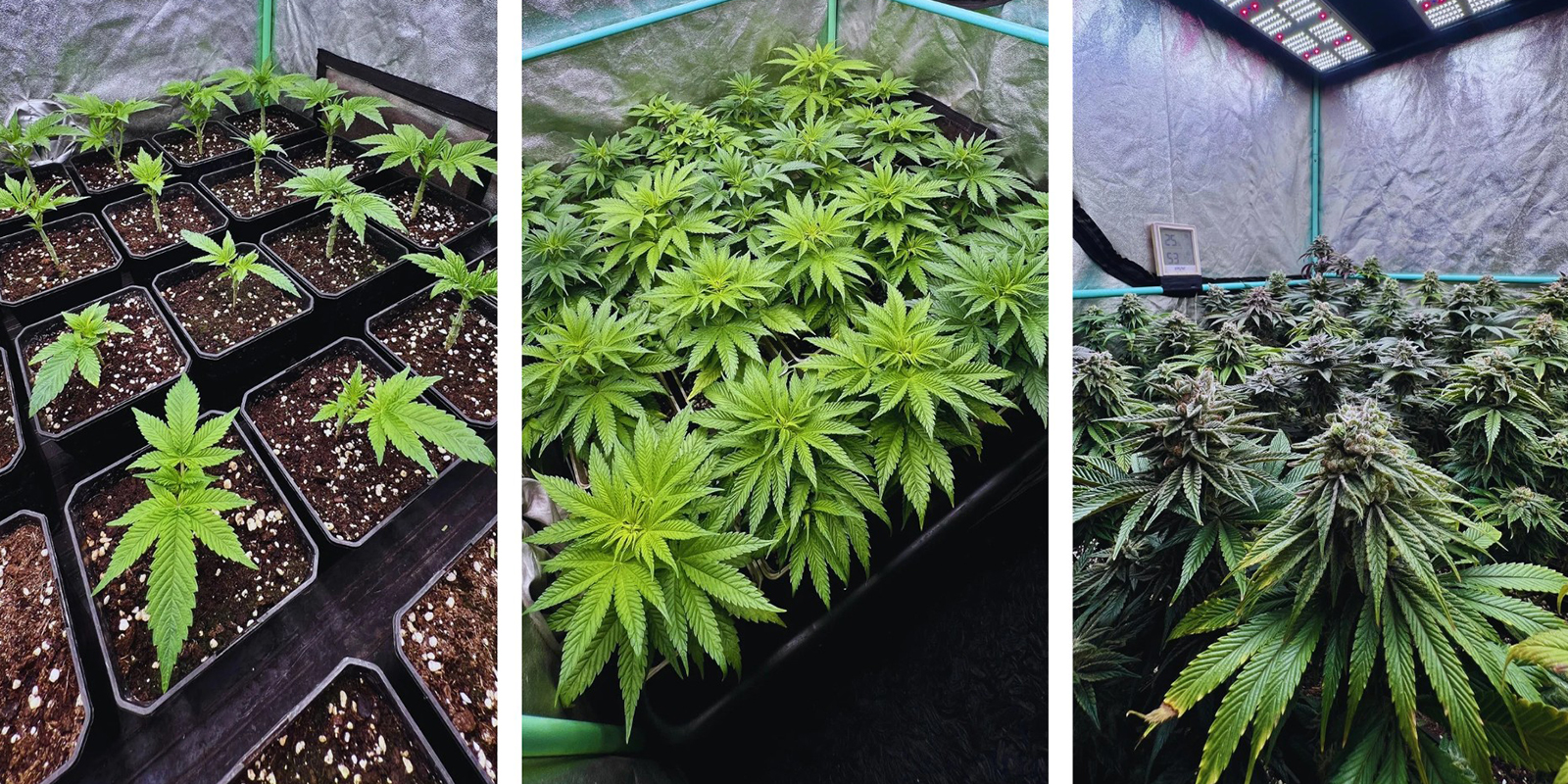
When it comes to a SOG setup, timing is key to fast and efficient harvests. The vegetative stage lasts only about 1–2 weeks, just long enough for plants to reach 6–12 inches and develop a few sets of healthy leaves before switching to flowering. Once the light cycle changes to 12/12, plants bloom together, forming a uniform canopy of buds. Because SOG plants are small and consistent, this early switch enables them to remain compact and productive. Lower branches that receive little light can be trimmed to focus energy on the productive parts of the canopy. Depending on your setup, you can harvest all plants at once for simplicity or stagger batches for continuous yields. For a deeper look at plant development, see Zamnesia's guide on the vegetative phase of cannabis growth.
How to maximize yields in a SOG setup
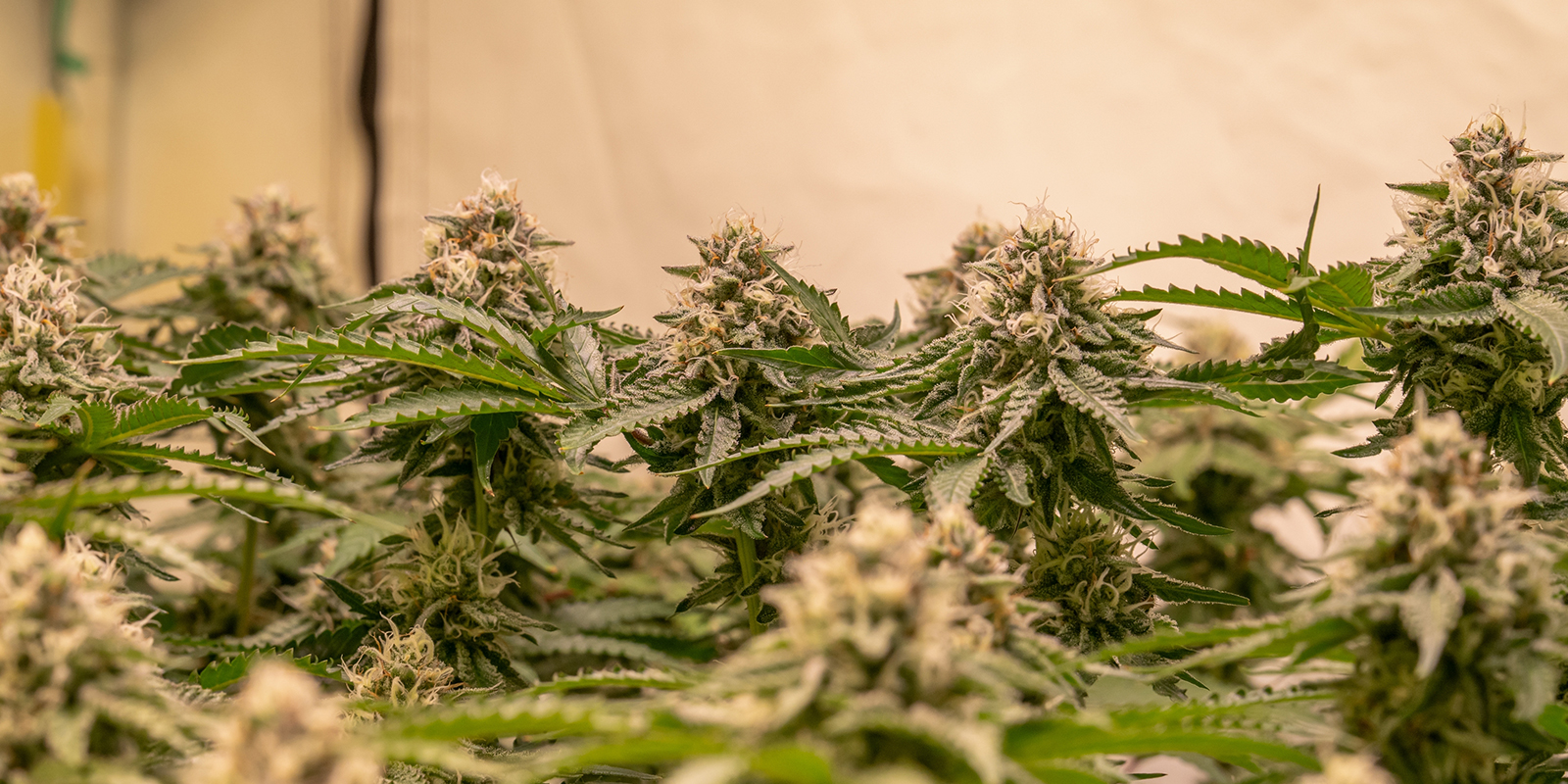
Achieving the most from your sea of green setup comes down to balance: the right genetics, consistent growth, and steady nutrition. Minor adjustments in each of these areas can make a massive difference to your final yield and bud quality.
Choose the right strain
Not every cannabis strain thrives in a SOG setup. Compact, fast-flowering varieties that grow uniformly and respond well to early flowering are ideal. Indica-dominant strains or short hybrids usually perform best, producing dense buds and featuring tight canopies. For some expert guidance and recommendations, take a look at the best cannabis strains for SOG.
Maintain an even canopy
A level canopy ensures every plant gets the same amount of light and airflow. Start with cuttings or well-matched seedlings and keep the lights evenly positioned. Rotate pots occasionally to prevent shading and adjust light height as the canopy fills out. Consistency in growth and structure is what gives the SOG method its signature uniformity and efficiency.
Prune lower growth
Because light rarely reaches the bottom branches in a SOG grow, pruning the lower sections helps redirect energy toward the top buds. Removing small or shaded growth early in flowering helps maintain steady airflow and reduces the risk of mold. Aim to focus all plant energy on producing dense, resinous colas instead of unwanted leafy growth.
Feeding schedule tips
Short veg cycles and dense canopies mean plants need consistent but moderate feeding. Avoid overfeeding during the early vegetative stage and increase nutrients gradually once flowering begins. Maintain a stable pH level in your water or nutrient mix to prevent lockout and ensure the root zone remains healthy. Following a simple, well-timed feeding plan helps each plant reach its full potential.
For more growing advice, visit our complete guide to growing weed.
Common mistakes to avoid
Even the most experienced growers can encounter problems when trying the SOG method for the first time. Avoiding these common issues will keep your plants healthy and your canopy balanced from start to finish:
- Uneven plant height: When plants grow at different speeds, taller ones block light from reaching the rest of the canopy. This leads to uneven bud development and reduced yields. Start with clones or uniform strains and keep lights evenly spaced to maintain a flat, consistent canopy.
- Overcrowding: It's tempting to fit as many plants as possible into a sea of green setup, but too many pots can restrict airflow and root growth. As a general rule, space plants at 8–12 inches and leave enough room for air to circulate freely between them.
- Inconsistent lighting: If light coverage is patchy, some plants will stretch while others stay short. Use evenly distributed LED panels or well-placed HPS lamps and adjust the height as the canopy fills out to ensure equal exposure for all plants.
- Poor airflow: Dense canopies have the potential to trap moisture, creating the perfect environment for mold and pests. Keep oscillating fans running to move air across the canopy and install an extractor or carbon filter to refresh the air and manage humidity.
For more help troubleshooting your grow, take a look at our dedicated cannabis problem-solving guide.
Ready, set, SOG!
The sea of green method is all about speed and efficiency, not simplicity. When dialed in with the right genetics, airflow, and lighting, it delivers dense canopies and fast, repeatable harvests that make the most of any grow space. Success comes from planning, precision, and keeping every plant in harmony, from clone to cola. Whether you're running a compact tent or experimenting with hydroponics, the key is consistency. Ready to build your own SOG grow? Explore Zamnesia's full range of cannabis seeds and grow gear to get started.