 8.6 out of 10 based on 80654 reviews








.svg)
.svg)
.svg)
.svg)
.svg)


 Autoflower Seeds
 Feminized Seeds
 Zamnesia Seeds


 Help
Help United States
 7 min
7 min
Creating A Magic Mushroom Outdoor Patch



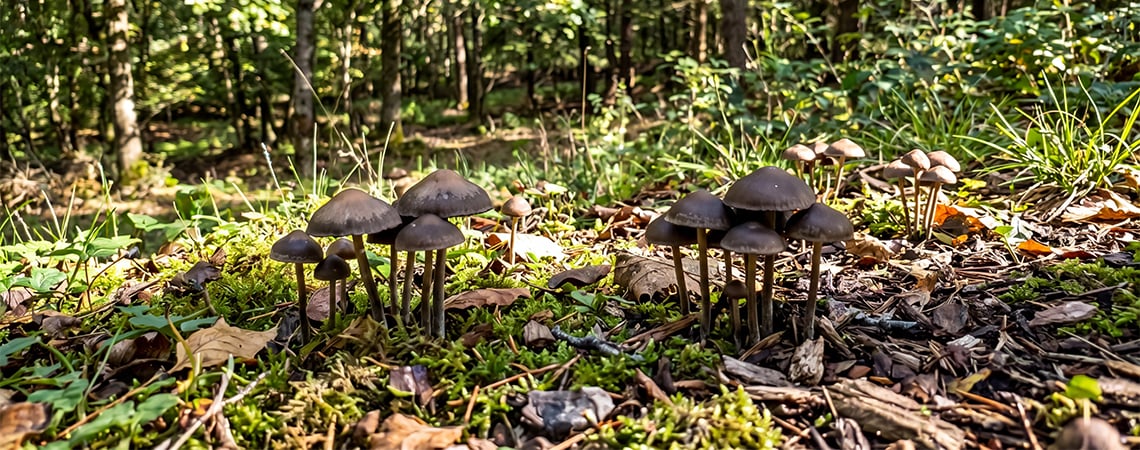
Not every species wants the same setup. Wood chips, manure, rain, and timing all shape whether an outdoor patch returns year after year.
Some magic mushroom species can fruit outdoors if local conditions line up with what the fungus actually needs. Results hinge on habitat, substrate, and seasonal weather, not a universal method. Psilocybe cubensis is a useful reference point because it shows how strongly outdoor growth depends on matching the species to the environment.
What matters most is what mushrooms respond to in the wild. Some species favor wood chips, while others do best in dung-rich pasture. A recurring patch forms when mycelium fully colonizes a suitable area and keeps getting the right mix of moisture, temperature, and organic matter.
Can You Grow Magic Mushrooms Outside?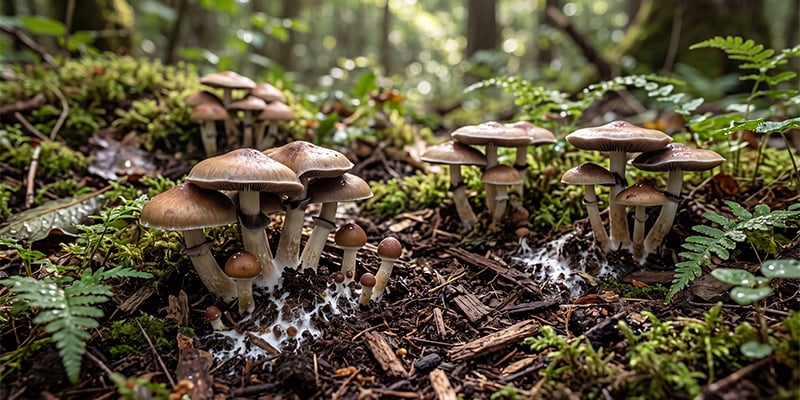
Yes, you can grow magic mushrooms outside, but success depends on whether your environment can consistently provide the conditions the fungus needs to colonize and fruit. Temperature range, humidity, rainfall patterns, and the right substrate, the material the mycelium feeds on, matter just as much as the species itself.
Outdoor growth also exists on a spectrum. On one end, mushrooms appear naturally when spores land in a suitable spot and mycelium establishes below the surface. On the other, growers try to create more reliable conditions by building an outdoor bed with the right organic material and adding established mycelium. When it works, the result can behave like a semi-managed patch that fruits with the seasons.
Learning how to grow magic mushrooms outside comes down to habitat. Wood-loving species usually do best in chip-rich beds, while species like cubensis are linked to nutrient-dense, manure-influenced substrates in warm, humid climates. Outdoor setups can be low-effort, but they are never as controllable as indoor cultivation.
The Lifecycle of Magic Mushrooms Outdoors
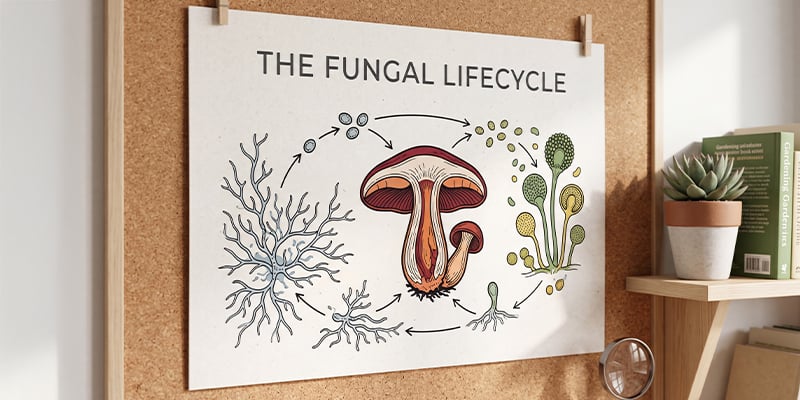
Outdoors, the mushroom life cycle is driven by timing and conditions as much as genetics. It starts with spores, microscopic reproductive cells released from mature mushrooms, that land on a suitable food source.
If moisture, temperature, and nutrients are in place, the spores germinate and form mycelium, a fine, thread-like network that spreads through the substrate and breaks down organic material. This colonization phase can take weeks to months, and it often stays hidden below the surface.
Once the mycelium is established and the environment shifts in the right direction, often after rain, a drop in temperature, or a rise in humidity, it can begin pinning. Pins are the tiny early structures that develop into full mushrooms during fruiting.
When mature, the mushrooms release spores, spreading their genetics and restarting the cycle. That is one reason a productive patch can return season after season.
Climate & Seasonal Conditions for Outdoor Growth
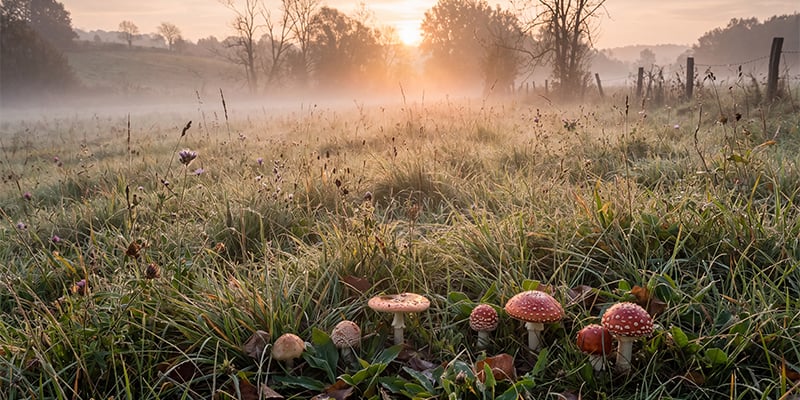
Outdoor mushrooms respond to a fairly narrow set of cues. Many psilocybin species do best when daytime temperatures stay mild to warm, often around 64–82°F, with cooler nights that encourage fruiting instead of continued vegetative growth.
Rainfall patterns matter just as much as overall averages. A wet stretch after a drier period can trigger pinning, especially if the substrate stays damp without becoming waterlogged. Consistently high humidity helps pins develop into mature mushrooms, while dry wind and intense sun can stall growth or cause it to abort.
Fruiting windows are seasonal, and they vary by region. In much of Europe, outdoor conditions are usually most favorable from late summer into fall for many species, while parts of the US may see spring and fall flushes depending on latitude. Tropical and subtropical areas can support more frequent cycles, sometimes tied to monsoon-like rains. Species choice matters. Our types of magic mushrooms overview helps put those differences into context.
How to Grow Magic Mushrooms Outdoors: Step-by-Step
The steps below follow a habitat-first approach to outdoor growing, focusing on the factors you can influence: site choice, substrate, moisture, and timing. Because outdoor conditions are not sterile or fully controllable, think in terms of improving the odds of healthy colonization and seasonal fruiting, not following a guaranteed formula.
Take each stage patiently, keep your expectations realistic, and make informed, responsible decisions throughout.
1. Site Selection
Site choice is the biggest factor you can control outdoors. Look for a warm, humid microclimate that helps the substrate hold steady moisture without turning swampy.
Light matters because it affects evaporation. A spot with indirect sun or partial shade is usually best. Psilocybe cubensis likes warmth, but intense midday sun can dry the surface fast and stall growth. Look for ground that stays lightly moist after rain or watering, while still draining well enough for oxygen to reach the mycelium.
Protection matters, too. Sheltered corners, spots behind shrubs, or areas along a fence line reduce wind exposure and help hold humidity. Choose a low-traffic location where people, pets, and wildlife are less likely to dig, trample, or disturb the bed once it is established.
2. Prepare the Substrate
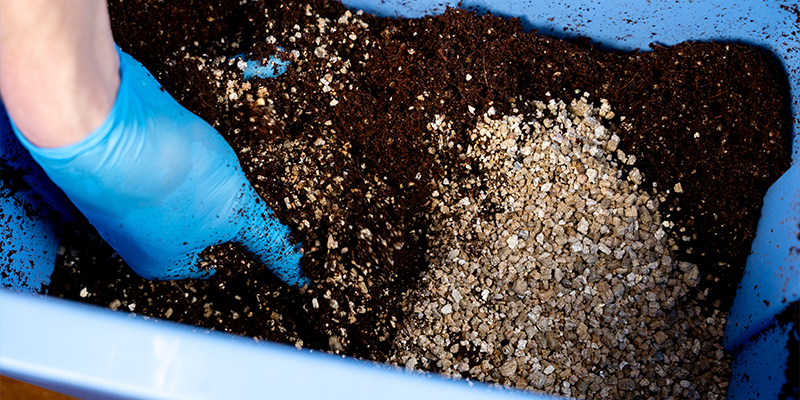
Fungi are not generic decomposers. Many species perform best on specific organic materials because the substrate is both their food source and their moisture reserve.
For Psilocybe cubensis, a coco coir-based substrate is common, especially mixes built around coco coir, vermiculite, and gypsum, often shortened to CVG. Outdoors, some growers also use manure-based options such as well-aged horse manure, reflecting how this species often appears in dung-rich soils in warm climates. Whatever you use, keep it clean and consistent so the mycelium has an even medium to colonize.
Hydration is critical. Aim for field capacity. When you squeeze a handful firmly, only a drop or two of water should come out. Too dry slows colonization, while too wet reduces airflow and invites problems.
3. Building the Bed
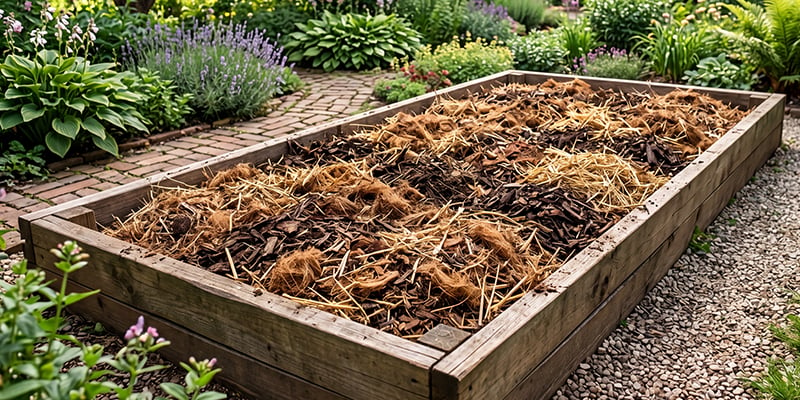
A simple outdoor bed gives mycelium (the fungus's root-like network) a stable, nutrient-rich area to colonize and then fruit when conditions line up.
- Clear a small patch of soil, removing weeds and debris. Laying down cardboard can help suppress regrowth and improve moisture retention.
- Add a 2–3 inch layer of substrate, such as coco coir, aged horse manure, or a coco coir/vermiculite/gypsum (CVG) mix.
- Break up the spawn and distribute it evenly through the substrate, mixing gently to encourage even colonization.
- Cover it with a thin top layer of substrate or straw to protect the surface and slow evaporation.
- Water lightly, then add mulch, straw, or leaf litter to buffer the bed from sun and wind.
4. Maintenance and Fruiting
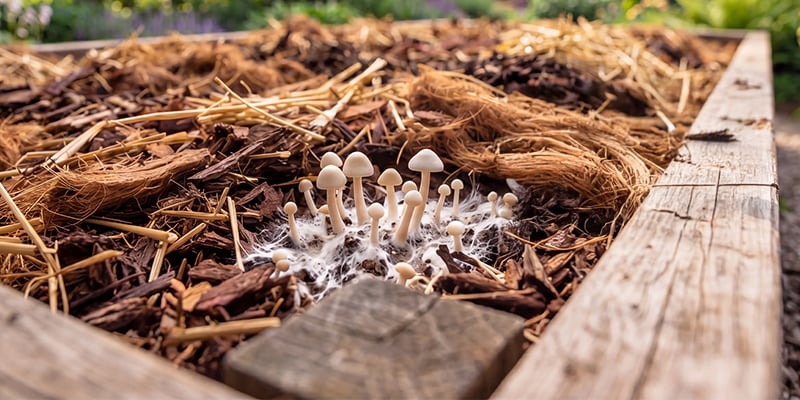
After the bed is built, the main job is maintaining steady moisture while the mycelium colonizes. Outdoor incubation can take several weeks for Psilocybe cubensis, so water during dry spells to keep the patch lightly moist, but do not soak it. Waterlogged substrate limits airflow and slows growth.
Fruiting is usually triggered by a combination of warmth and humidity. When temperatures sit roughly in the 68–86°F range and moisture rises, often after rainfall or a deliberate increase in watering, you may see pins forming at the surface.
Harvest at the right moment to minimize disturbance. Mushrooms are usually picked just as the veil beneath the cap starts to pull away from the stem. Twist gently or cut at the base, taking care not to dig into the surrounding mycelium so the bed can keep cycling.
Popular Psychedelic Mushroom Species Found Outdoors
Several well-known psychedelic mushroom species are closely tied to outdoor habitats rather than indoor grows. Looking at where they fruit naturally gives useful context, because each species has its own preferred climate, food source, and seasonal rhythm.
Some are linked to warm, dung-rich environments where nutrients are abundant, while others prefer cooler regions with woody debris, grassland edges, or damp coastal conditions. Those differences help explain why certain species show up reliably in specific landscapes, and why outdoor growth can mean very different things depending on what you are trying to cultivate or identify.
1. Psilocybe cubensis
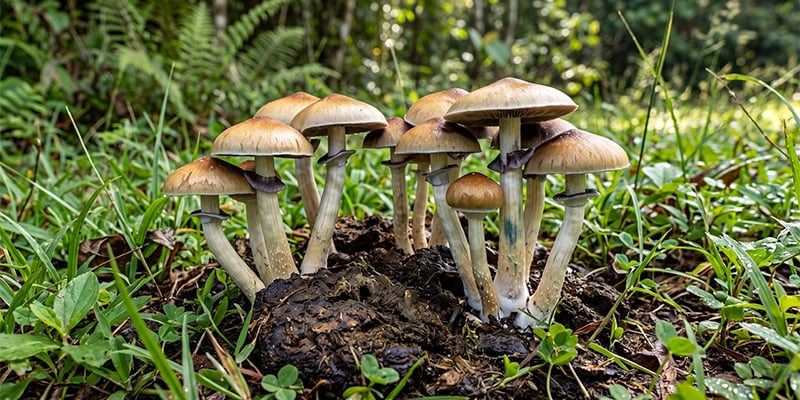
Psilocybe cubensis is the most widely recognized psilocybin-containing mushroom species in the world, and it is the one most commonly associated with warm, humid outdoor environments. In the wild, it is typically found in subtropical and tropical climates, especially across nutrient-rich grasslands and grazing areas.
Its preferred conditions are fairly consistent: sustained warmth, high humidity, and organically rich substrates, often linked to dung-rich soils. That climate preference is a major reason it is far less likely to appear outdoors in cooler temperate regions, where temperature and moisture cycles do not stay stable for long.
When people look into how to grow Psilocybe cubensis outdoors, they are really trying to recreate the same three drivers, heat, moisture, and seasonal rainfall patterns, that trigger natural fruiting in its native habitat.
2. Psilocybe cyanescens
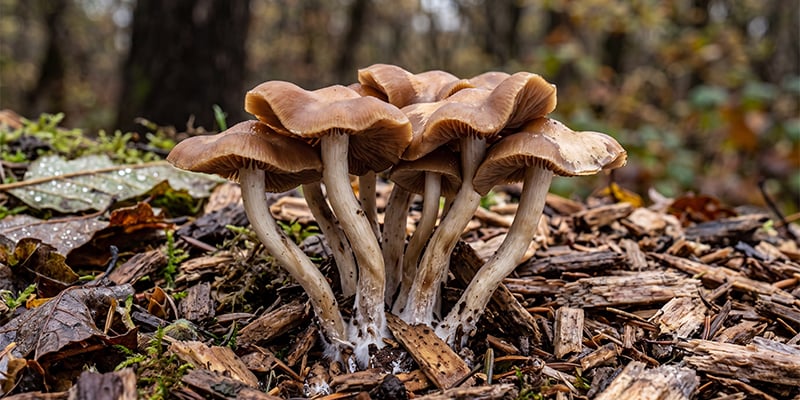
Psilocybe cyanescens, often called wavy caps, is a well-known wood-loving species tied to temperate climates, not tropical ones. It regularly shows up in mulched garden beds, woody debris, and landscaped areas, especially when the year turns colder and wetter.
While P. cubensis depends on heat and dung-rich grassland habitats, this species prefers cool temperatures, persistent fall moisture, and lignin-rich organic matter such as wood chips. That wood-first ecology is the key difference. It is not a pasture mushroom, and it does not usually follow warm-season rainfall patterns.
Its cold-season fruiting behavior also makes it seem sudden to observers. One week, a wood chip bed looks inactive. The next, it can produce clusters after sustained rain and low nighttime temperatures.
3. Psilocybe azurescens
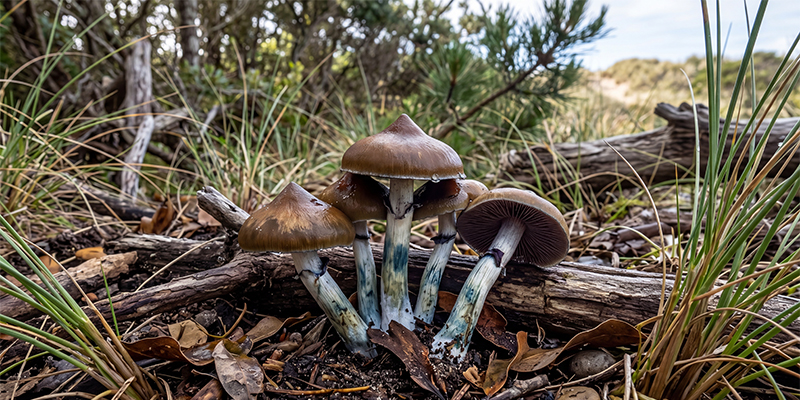
Psilocybe azurescens is another wood-loving species, best known for appearing in humid coastal environments where decaying plant matter is plentiful. It is often associated with sandy soils, driftwood and wood debris, and grass-fringed patches in cool maritime regions.
Compared with warm-weather species, it tends to prefer cooler temperatures, plenty of fresh air exchange, and consistently damp conditions maintained by seasonal rainfall. Rather than manure-based or open grassland substrates, it is strongly linked to woody material that can slowly break down and feed the colony.
That ecology makes it very different from P. cubensis. Azurescens lines up more closely with fall fruiting cycles and coastal weather patterns, so it is far less suited to hot, summer-dominant climates.
4. Panaeolus cyanescens
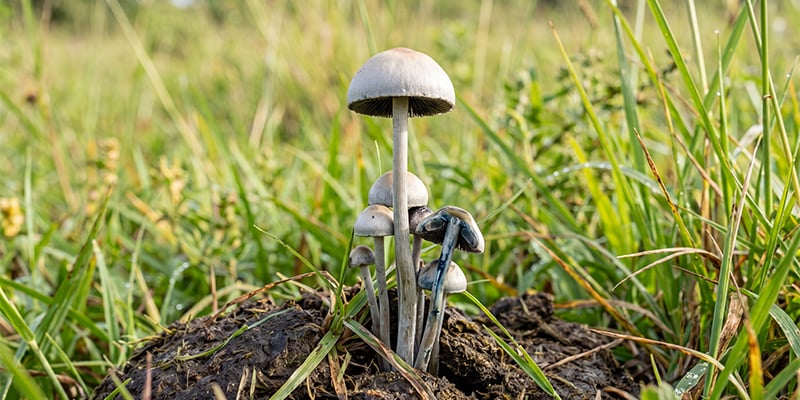
Although it is not a Psilocybe species, Panaeolus cyanescens is one of the most discussed psychedelic mushrooms in conversations about outdoor habitats. It is usually found in tropical and subtropical regions, where it is closely associated with dung-rich pastures and heavily grazed land.
This species thrives in warm temperatures and high humidity, taking advantage of nutrient-dense environments shaped by livestock activity. It is also more sensitive to drying out than many wood-loving species, so it tends to appear during wet, rainy periods when moisture stays high long enough to support fruiting.
Ecologically, its dung-based lifestyle makes it more comparable to Psilocybe cubensis than to wood specialists such as P. cyanescens or P. azurescens, even though it belongs to a different genus.
Advantages & Disadvantages of Outdoor Growth
Outdoor growing can be surprisingly effective when your climate and substrate match the species, but it also brings in variables you cannot fully control.
- Natural ecosystem benefits: Outdoor patches can tap into real-world cycles, fresh air, rainfall, and established microbial communities, supporting healthy colonization when conditions line up.
- Lower maintenance in ideal climates: In warm, humid regions, or reliably cool, wet ones for wood-lovers, you may need less active management because temperature and moisture are naturally available.
- Weather unpredictability: Heat waves, cold snaps, wind, and unseasonal drought or heavy rain can stall growth or ruin a fruiting window.
- Contamination risks: Competing fungi, bacteria, and mold spores are everywhere outdoors, so clean starts help but never guarantee a stable patch.
- Wildlife interference: Insects, slugs, rodents, and even curious pets can damage beds, eat pins, or scatter substrate.
How Magic Mushroom Patches Form in Nature
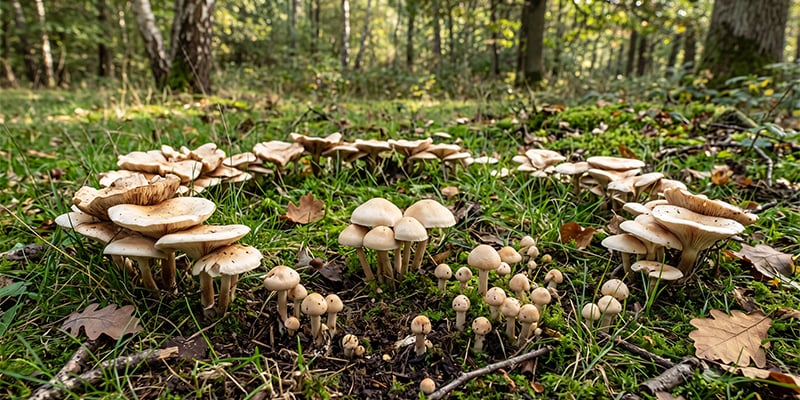
A magic mushroom patch is simply an area where psychedelic mushrooms fruit again and again because an underground mycelium network has properly colonized whatever it feeds on. Once mycelium takes hold, it can persist through changing weather, producing fruits when temperature, moisture, and fresh air line up.
In some cases, people try to mirror that process by building outdoor beds with nutrient-rich substrates and then letting the mycelium spread, settle, and fruit in a way that resembles a naturally occurring patch. Done well, the result can look deceptively wild.
This is also why, under the right conditions, it can be possible to cultivate magic mushrooms outdoors in garden beds or even along lawn edges, usually where extra organic material has been introduced. For context on what you might encounter in the wild, see our magic mushroom hunting guide.
Is Growing Magic Mushrooms Outdoors Right for Your Environment?
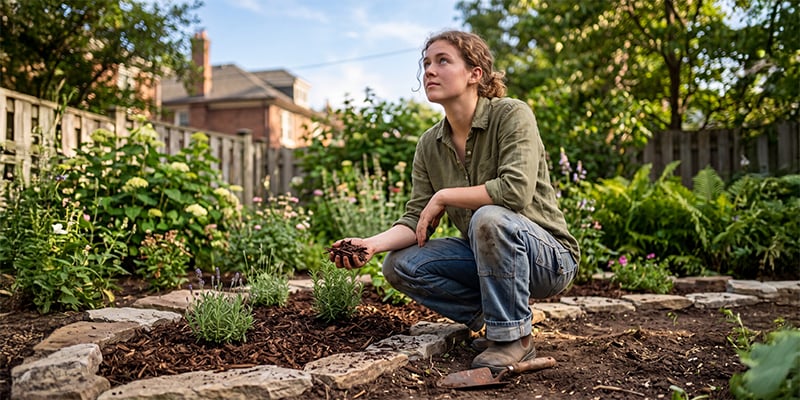
Outdoor fruiting is less about technique and more about matching a species to the place you live. Temperature ranges, seasonal rainfall, humidity, and the right substrate (wood debris versus manure-based material) are the real drivers of whether mycelium can establish and fruit reliably.
When people ask, "Can you grow magic mushrooms outside?", the honest answer is that it depends on local conditions and legality, plus how closely you can replicate the habitat the species expects. Treat this guide as education first: learn the ecological differences, recognize lookalikes, and keep your approach responsible and informed.
If your climate is too dry, too cold, or too changeable, an indoor approach may be easier to control. Our how to grow magic mushrooms indoors guide explains the basics.
-
 4 min
September 27, 2022
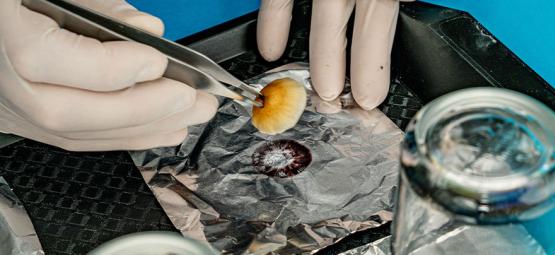
How To Take Magic Mushroom Spore Prints
In order to grow magic mushrooms from scratch, you need spores. It's from these tiny things that everything else grows! Taking your own spore print is easy enough, and can be the beginning of a...
4 min
September 27, 2022
How To Take Magic Mushroom Spore Prints
In order to grow magic mushrooms from scratch, you need spores. It's from these tiny things that everything else grows! Taking your own spore print is easy enough, and can be the beginning of a...
-
 5 min
April 26, 2022
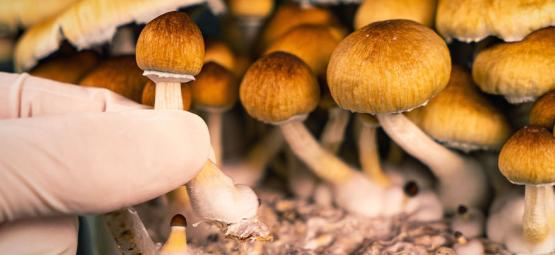
How To Harvest Magic Mushrooms
Now the time has come to harvest your magic mushrooms, you're almost there. Mastering this stage is fairly simple, but crucial if you want to reap the rewards of all your hard work. Find out how...
5 min
April 26, 2022
How To Harvest Magic Mushrooms
Now the time has come to harvest your magic mushrooms, you're almost there. Mastering this stage is fairly simple, but crucial if you want to reap the rewards of all your hard work. Find out how...
-
 2 min
November 15, 2018
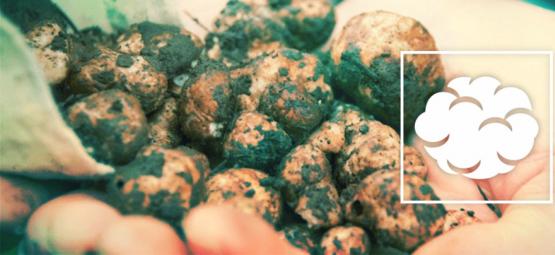
How to Grow Your Own Magic Truffles (From Scratch)
Growing your own magic truffles is a highly satisfying activity. Not only does it save you money, it allows you to establish a deeper connection with the truffles. However, mushrooms are not the...
2 min
November 15, 2018
How to Grow Your Own Magic Truffles (From Scratch)
Growing your own magic truffles is a highly satisfying activity. Not only does it save you money, it allows you to establish a deeper connection with the truffles. However, mushrooms are not the...
-
 4 min
November 24, 2017
How To Identify Different Types Of Magic Mushrooms
Looking for help identifying your favourite magic mushrooms? In this article, we take a look at the most common types of shrooms that you can encounter.
4 min
November 24, 2017
How To Identify Different Types Of Magic Mushrooms
Looking for help identifying your favourite magic mushrooms? In this article, we take a look at the most common types of shrooms that you can encounter.