 8.6 out of 10 based on 80446 reviews







.svg)
.svg)
.svg)
.svg)
.svg)


 Autoflower Seeds
 Feminized Seeds
 Zamnesia Seeds


 Help
Help United States
Cannabis Aphids Explained: Spotting, Removing, and Preventing Aphids on Weed
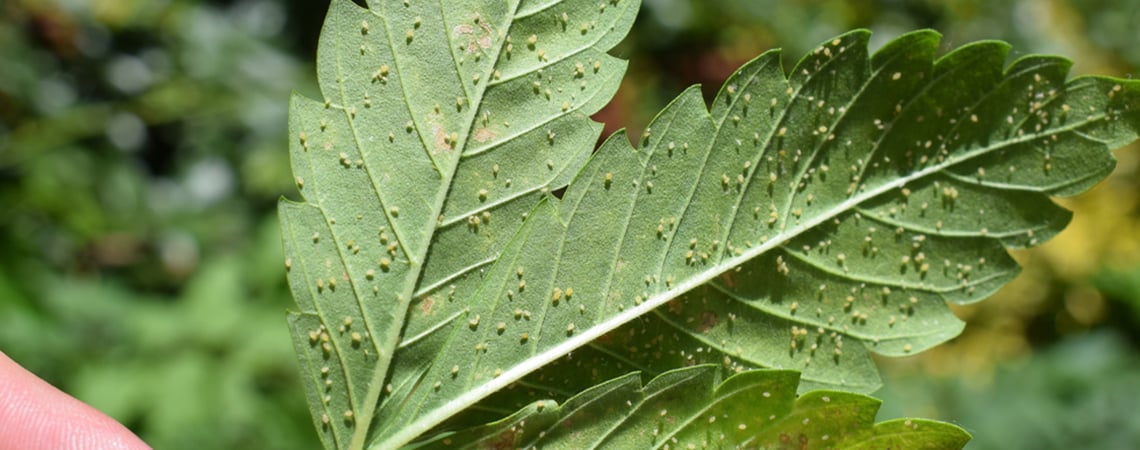


Seeing sticky honeydew or curled leaves? Find out how aphids on cannabis spread fast, what they look like up close, and which gentle controls work without wrecking buds.
Few things make a grower’s stomach drop faster than spotting tiny insects crawling over otherwise healthy fan leaves. The good news: Most infestations are manageable if you identify the pest quickly and respond with a solid plan.
This guide focuses on cannabis aphids found on leaves, stems, and buds—not root aphids, which act differently and require a different approach. Aphids are small, soft-bodied sap-suckers that multiply fast, weaken plants, and leave behind sticky honeydew that can attract mold.
If you catch aphids on weed early, you’ll have plenty of options, from simple hands-on removal to targeted sprays and biological controls, without having to write off your crop.
What are cannabis aphids?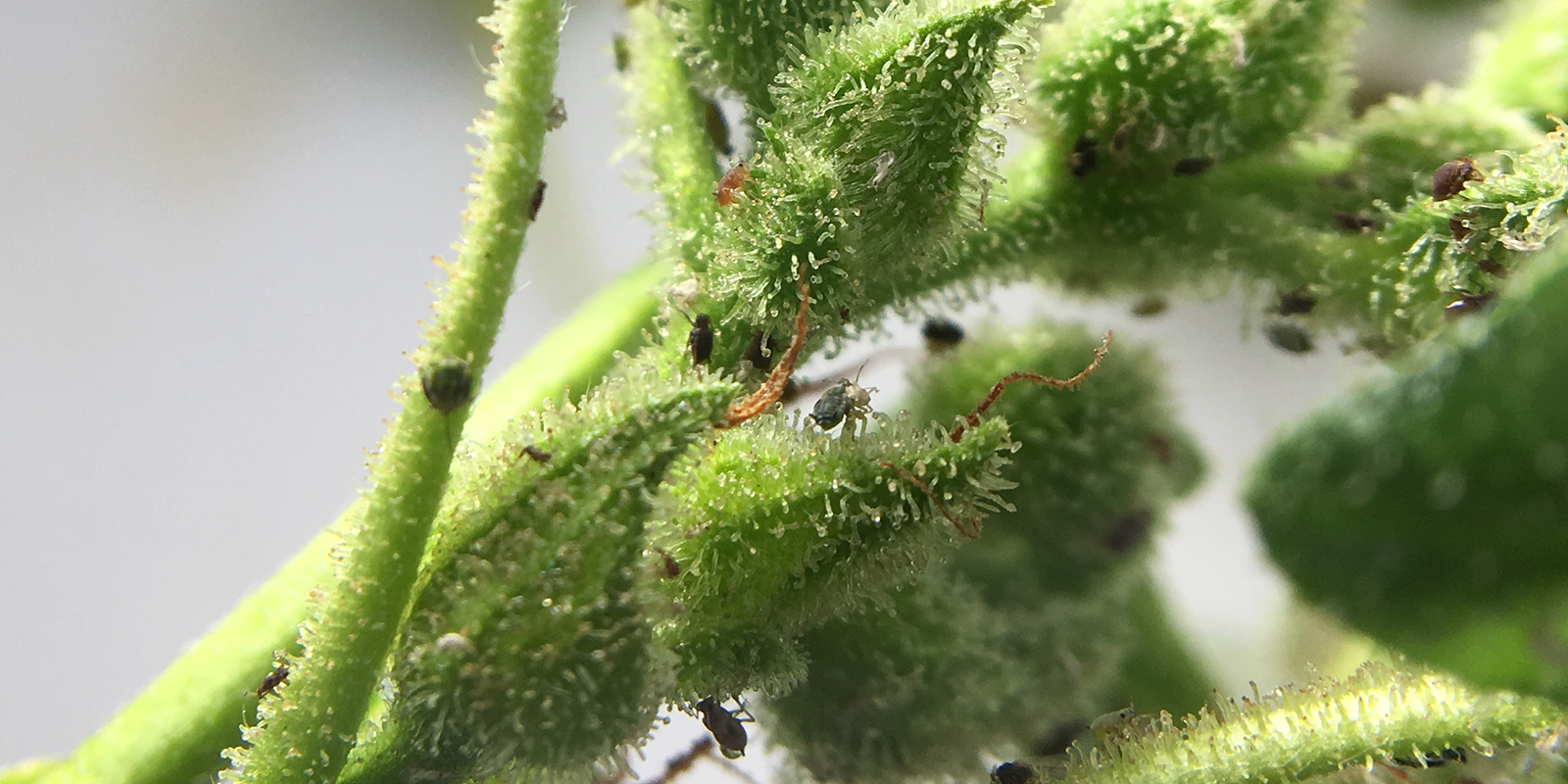
Cannabis aphids are small, soft-bodied insects that feed by piercing plant tissue and sucking out sap. You’ll usually spot them clustered on the undersides of leaves, along stems, and sometimes tucked into developing buds, where they’re sheltered from airflow and harder to reach with sprays.
Cannabis attracts aphids because new growth is basically an all-you-can-eat buffet: tender leaves and fresh shoots are easy to puncture and packed with sugars and nutrients. Outdoors, plants can get hit when winged adults drift in from nearby vegetation. Indoors, infestations often start when aphids hitch a ride on a clone, a tool, or even your clothing.
Aphids on cannabis can be green, pale yellow, black, brown, or reddish, depending on the species and life stage. They reproduce incredibly fast. Many give birth to live young and don’t even need to mate, so a small colony can spread across multiple plants in just a few days.
How to identify aphids on cannabis plants
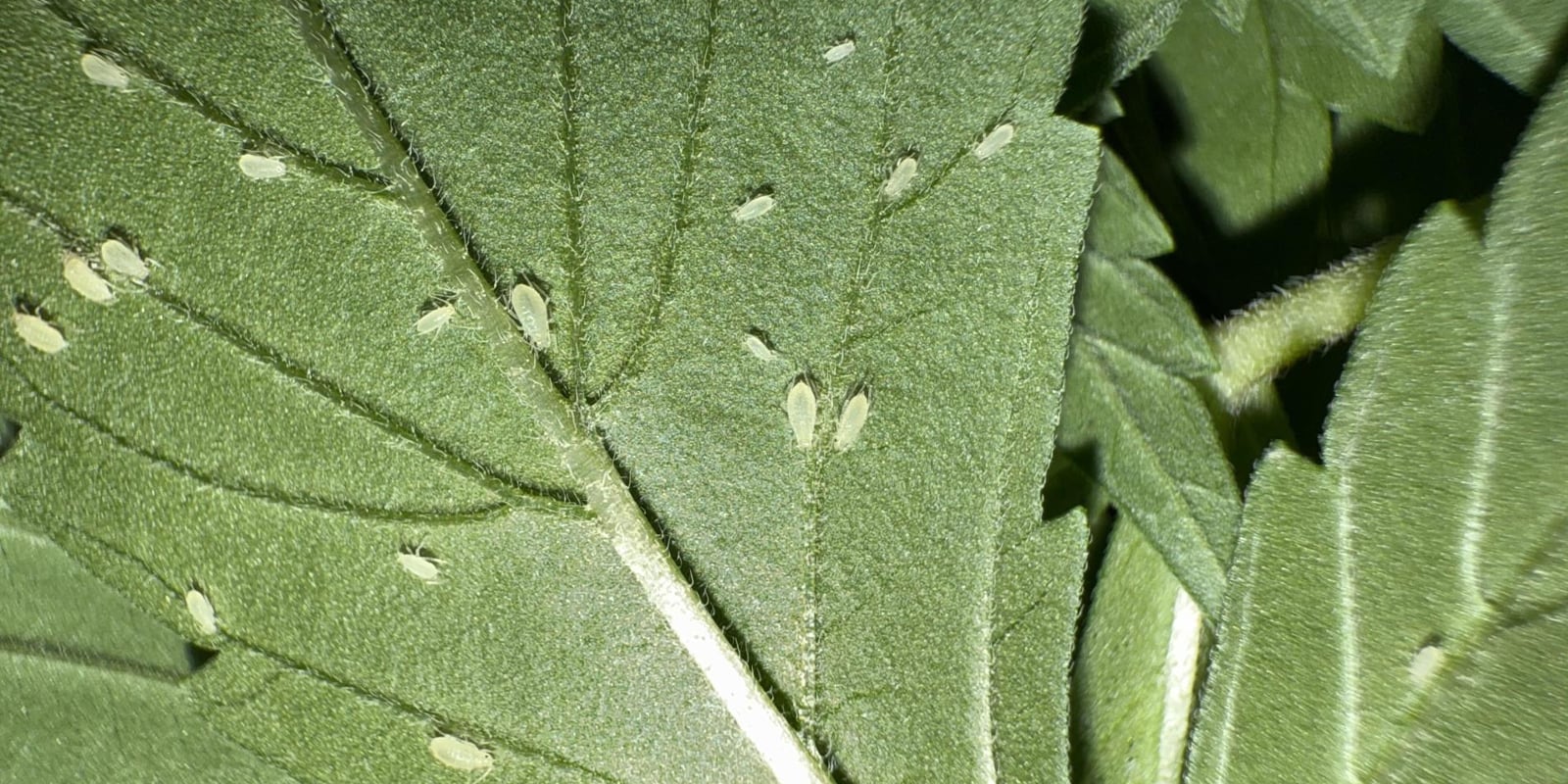
Aphid damage often shows up before you spot the bugs themselves. Watch for leaves that curl, wrinkle, or “taco” at the edges, along with overall yellowing and pale speckling where sap has been pulled out.
Next, check the undersides of leaves and inspect petioles and stems. You’re looking for clusters of pear-shaped insects (often green, yellow, or black), sometimes with shed skins nearby. With aphids on weed, you might also notice sticky honeydew on leaves or pots. This sugary residue can lead to sooty mold and slower, weaker growth.
It’s also worth ruling out common lookalikes. Spider mites leave fine webbing and pinprick-like stippling, thrips cause silvery streaks with black dots of frass, and fungus gnats hover around overly wet soil. For more on the wider cast, see our guide to insect pests.
Aphids vs root aphids: Don’t confuse the two
Leaf aphids live on the plant itself, mostly under leaves, on stems, and sometimes in buds, so the damage is visible: curled growth, yellowing, and sticky honeydew.
Root aphids, on the other hand, stay down in the medium and feed on roots. That tends to look more like a general decline: weak vigor, drooping, slow growth, and mysterious nutrient problems. Since they’re hidden in soil or coco, contact sprays and leaf washes won’t fix the issue.
Treatment methods aren’t interchangeable, so it’s worth confirming what you’re dealing with before you jump in. For the underground version, see our separate guide to root aphids.
Are aphids harmful to cannabis plants?
Aphids weaken cannabis by draining sap, which reduces the plant’s ability to photosynthesize and push strong new growth. Over time, that stress can show up as slower vegging, smaller flowers, and lower yields, especially if the infestation takes off during the stretch.
They also cause knock-on problems. Feeding damage makes plants more vulnerable to environmental stress, and the honeydew they leave behind can encourage mold while making foliage grimy and less efficient. Aphids may also spread plant diseases as they move from leaf to leaf, which is one reason growers take them seriously.
Early infestations are much easier to control because the colonies haven’t had time to multiply, spread across the canopy, or tuck themselves deep into buds.
How to get rid of aphids on cannabis plants
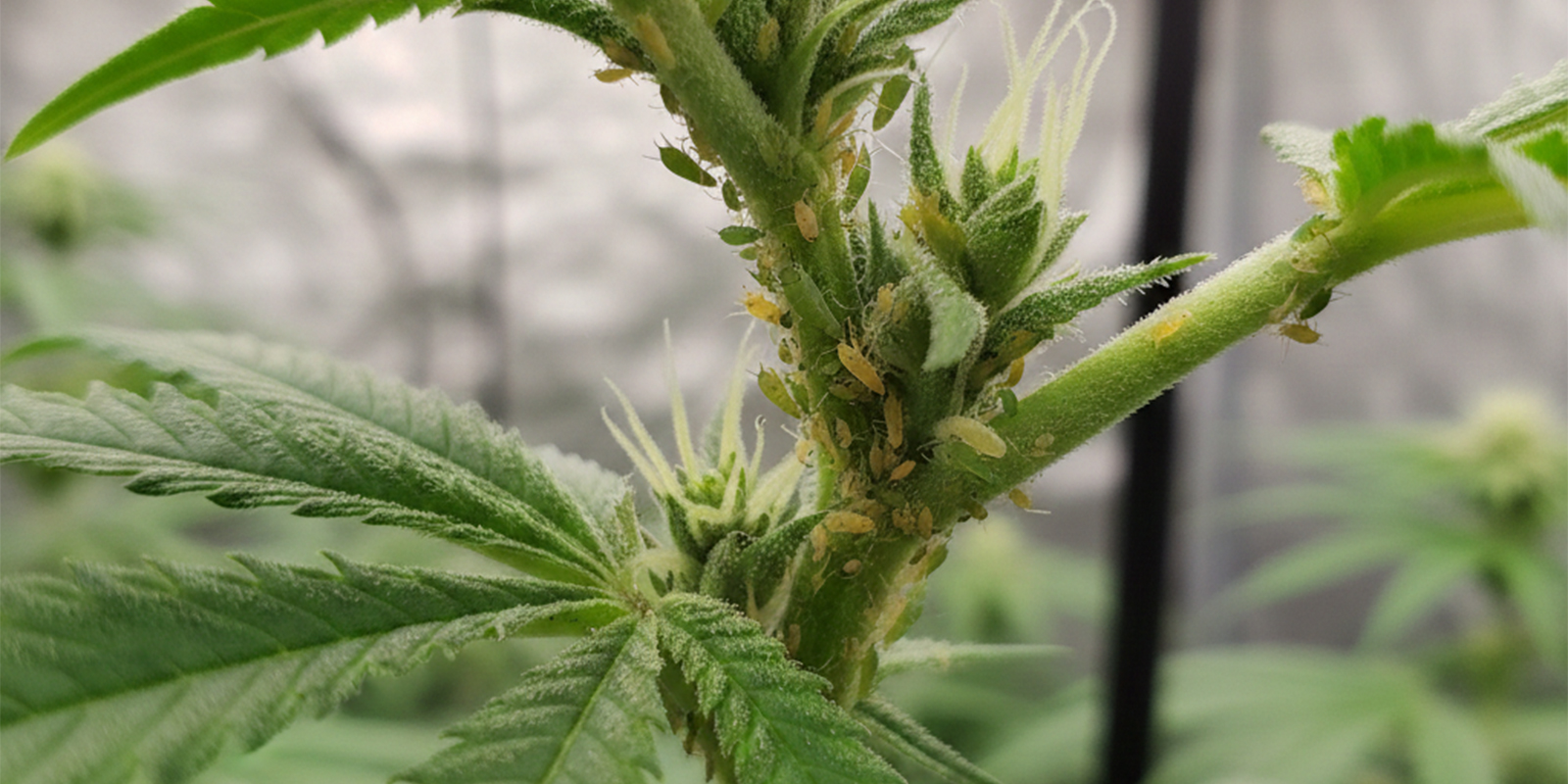
A successful knockdown is less about one “magic” spray and more about a repeatable routine that prevents reinfestation.
- Isolate affected plants right away. Moving them away from the rest of the tent or garden limits how quickly aphids spread across the canopy.
- Rinse and remove. A firm spray of lukewarm water (especially under the leaves) can knock off a lot of them; then wipe any clusters off stems and leaf undersides with a damp cloth or cotton swab.
- Clean up the area. Remove heavily infested leaves and clear away fallen debris so you’re not giving pests a safe hiding spot.
- Repeat on schedule. Since new nymphs keep hatching, retreat every few days for 2–3 rounds to break the life cycle.
This is the core of how to get rid of aphids on cannabis plants without relying on a one-and-done fix.
Natural and organic aphid treatments
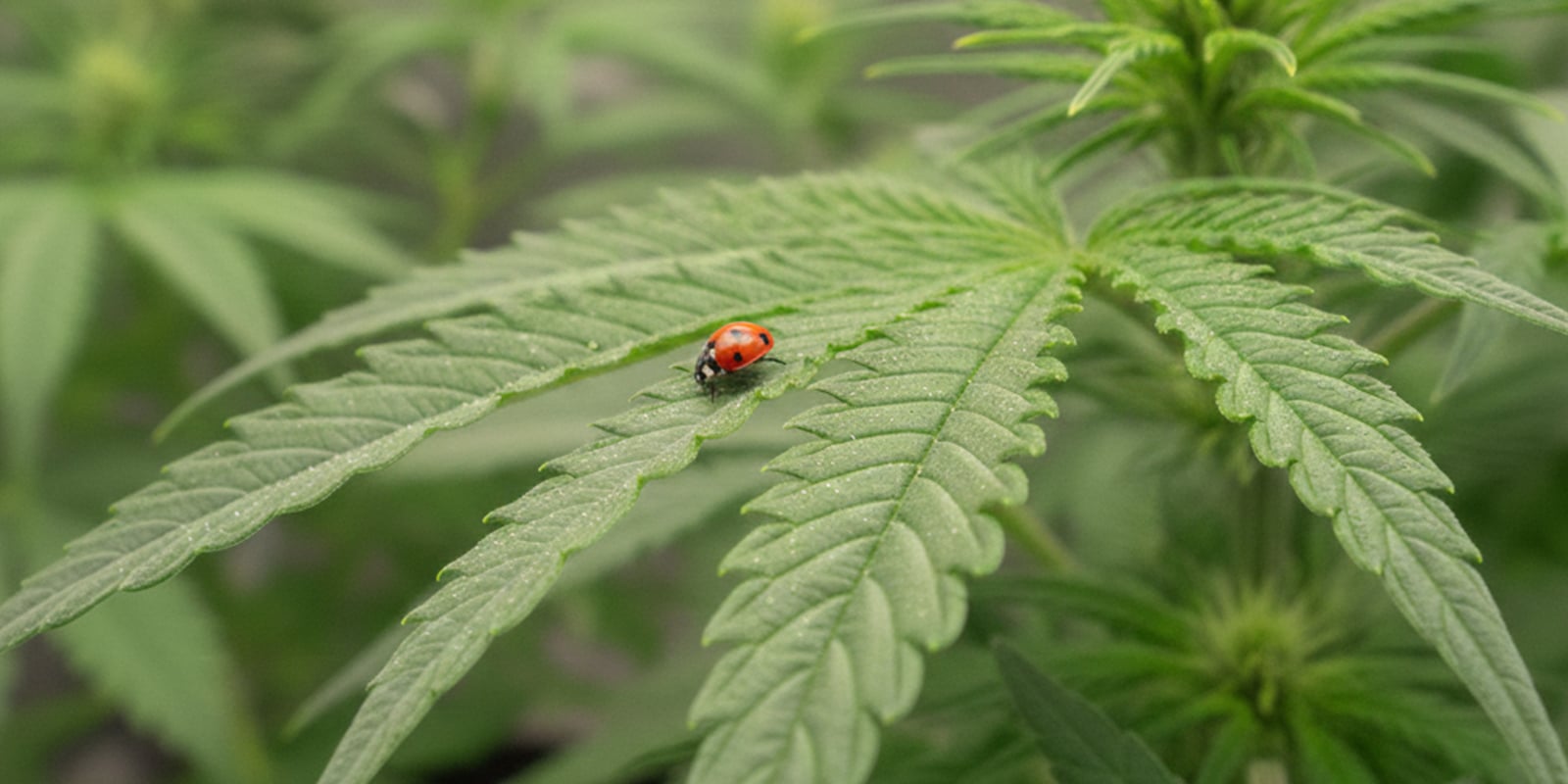
For many growers, the sweet spot is a gentler approach that still hits aphids where it hurts.
- Neem oil: a popular option in veg, used as a foliar spray when mixed correctly. It can deter feeding and disrupt development, but it’s not something you want lingering on flowers.
- Insecticidal soap: effective on contact by breaking down an aphid’s outer layer, so thorough coverage (especially under leaves) matters.
- Horticultural oils: these can smother soft-bodied pests, but it’s best to use them cautiously and follow the label directions.
- Beneficial insects: ladybugs and lacewing larvae are natural predators that can clear colonies quickly, especially in greenhouses and outdoor grows.
Home remedies get searched nonstop, but skip harsh mixes or high-strength DIY sprays that can scorch leaves. Spray with the lights off, start with a mild solution, and test a small area first to avoid stressing the plant.
Can you treat aphids during flowering?
Flowering infestations feel higher-stakes because anything you spray can end up on the buds you plan to dry and consume. That’s why the goal shifts from aggressive control to careful reduction, while keeping flowers as clean as possible.
Stick to gentle, low-intervention methods: remove the worst-hit leaves, lightly rinse the foliage to knock aphids loose (avoid soaking dense buds), and wipe stems and leaf undersides where they cluster. If you release beneficial insects, they can do the work without leaving residues behind.
Avoid heavy oils and strong-smelling products late in bloom, and be cautious with anything that might coat trichomes or trap moisture. Whatever route you take, consistent follow-ups matter more than going heavy once; new nymphs can keep showing up for days.
Can you still use cannabis flowers affected by aphids?
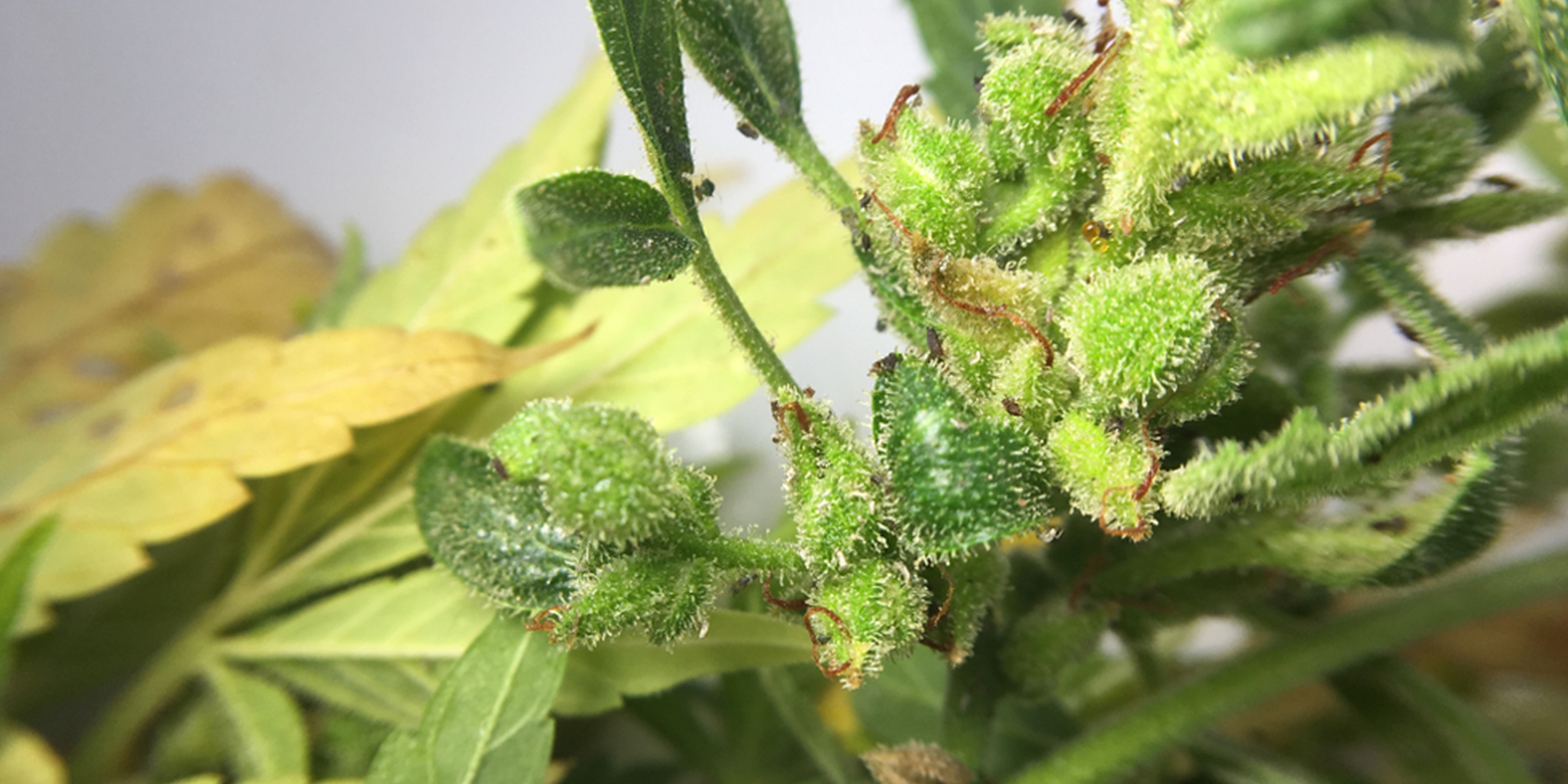
Sometimes, yes, but only if the infestation was light and you can thoroughly clean and inspect the harvest. Aphids don’t “infect” buds the way mold does, but their bodies, shed skins, and honeydew can still end up in the flowers, which is obviously not what you want to smoke or vape.
Buds may still be usable after a careful bud wash, a slow dry with plenty of ventilation, and a close post-harvest inspection while you trim. If you’re finding lots of insects deep inside dense flowers, or you notice signs of secondary issues like mold or rot, it’s safer to toss the affected buds.
Trust your senses and be strict with quality control; anything that looks or smells off shouldn’t make it into the jar.
How to prevent aphids on cannabis plants
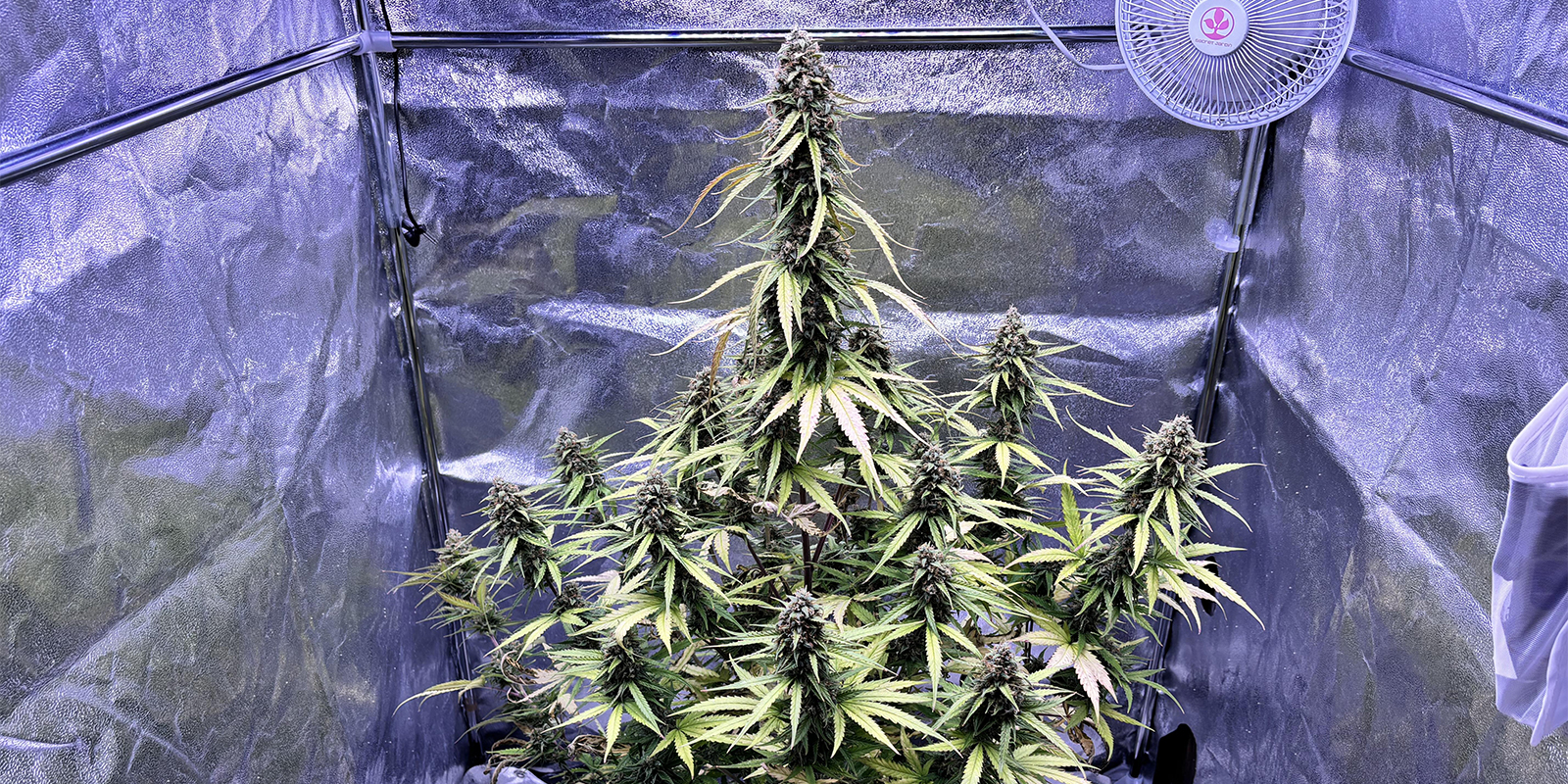
Prevention is all about stacking small advantages so aphids never get the chance to establish a colony. Solid hygiene, regular checks, and a stable grow environment lower the odds of an outbreak and make any early stragglers much easier to deal with.
The tips below focus on practical routines you can build into your day-to-day grow, from quarantine habits to canopy management, so you’re not constantly playing catch-up once pests show up.
Environmental control and plant hygiene
Aphids thrive when a grow gets a little neglected, so dialing in the basics really pays off. Keep temperature and humidity steady, maintain strong airflow through the canopy, and avoid overdoing nitrogen, which can trigger lots of soft new growth they love.
Hygiene matters just as much: clear out dead leaves, disinfect tools between plants, and quarantine any new clones or houseplants before they enter your grow space. A quick leaf check every few days (especially the undersides) helps you catch issues early, when a simple rinse might still do the trick.
Monitoring and early detection habits
Build a simple scouting routine and stick with it. Check plants at least twice a week in veg, and more often during peak summer or in outdoor conditions, paying close attention to fresh growth tips and the undersides of leaves.
Sticky traps won’t fix an infestation, but they’re great as an early warning system for winged pests. When you spot the first few aphids on cannabis, isolate the plant, rinse the foliage, and remove any heavily infested leaves; small moves early can prevent a full-blown colony later.
Avoiding overfeeding with nitrogen
Lush, dark-green growth can look like a win, but it often makes your plants more appealing to sap-suckers. Too much nitrogen promotes soft, tender shoots that aphids can pierce easily, and it can also slow how quickly a plant “hardens up” under stress.
Aim for balanced feeding instead of pushing max-strength nutrients all the time. Watch for clawing, overly glossy leaves, and fast, stretchy growth, then back off and keep your pH in range so the plant can take up what it needs without excess.
Preventive sprays and beneficial insects
A light preventative routine can stop problems before they start. In veg, occasional foliar sprays, like diluted insecticidal soap or neem, can help deter pests. Apply with the lights off and avoid soaking the medium. For more options, see our guide to natural pest repellents.
Beneficial insects are another solid line of defense. Ladybugs, lacewing larvae, and parasitic wasps go after aphids early and help keep populations from exploding. In flowering, skip oily sprays and lean on predators, spot removal, and tight environmental control.
Aphids aren’t the end of your harvest
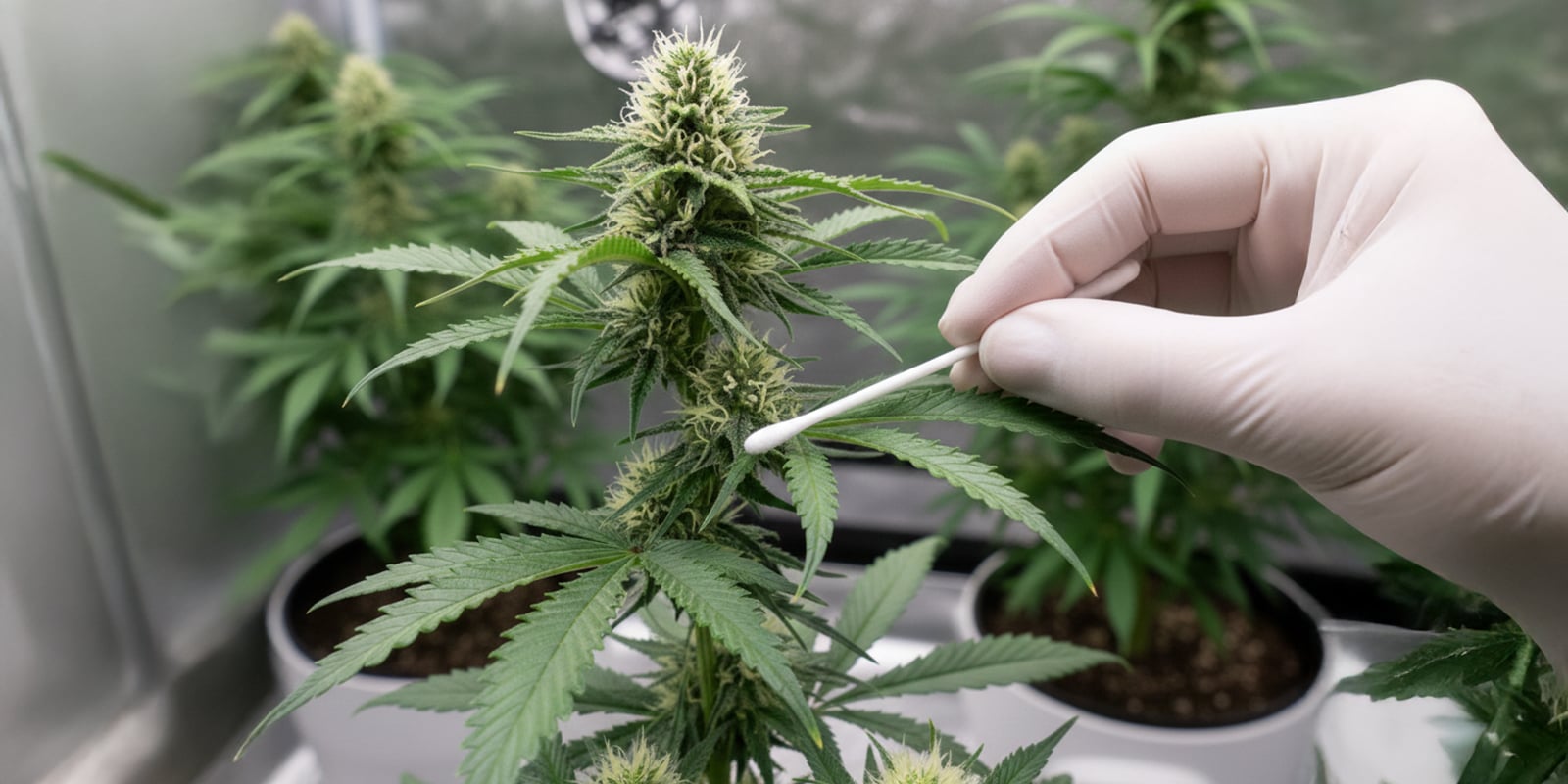
Aphids are one of those pests most growers run into sooner or later, and they’re rarely a reason to panic. The real advantage is acting fast. When you ID them early, you can step in while numbers are still low and your plants can rebound quickly.
Things get a bit more delicate in flowering, when you’ll want to avoid heavy sprays on buds and stick with gentler, targeted methods instead. Long term, prevention beats cure every time. Clean habits, a stable environment, and regular checks make it much harder for infestations to take hold.