 8.6 out of 10 based on 80850 reviews








.svg)
.svg)
.svg)
.svg)
.svg)


 Autoflower Seeds
 Feminized Seeds
 Zamnesia Seeds


 Help
Help United States
Why It's Important To Determine The Gender Of Your Cannabis Plants
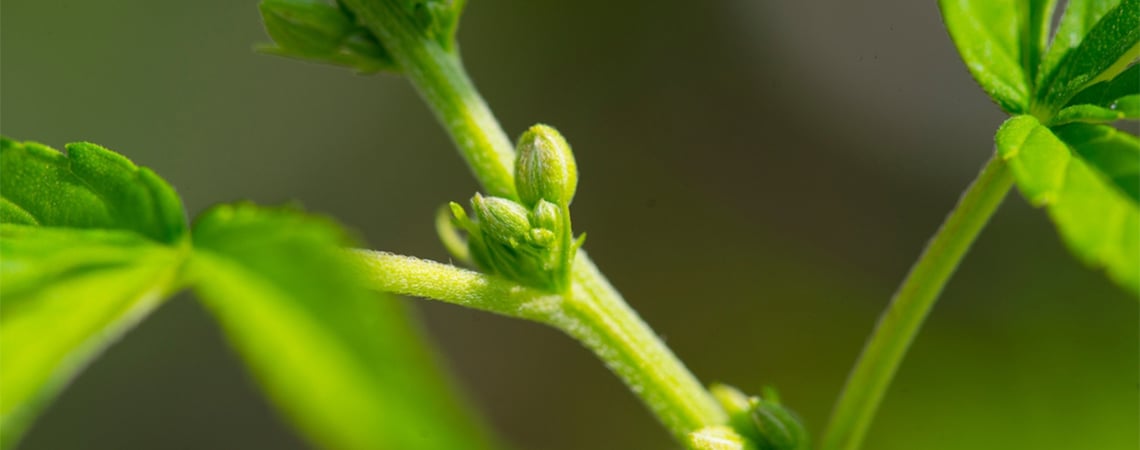



Not sure if that “bump” at the node is new growth or a pre-flower? Use these visual cues to avoid surprise pollination and seeded buds.
One unnoticed male can turn your grow room into a pollen factory, leaving you with seeded buds and a serious hit to yield and quality. That’s why learning to spot sex early is one of the most valuable skills you can pick up as a home grower—especially if you’re working with regular seeds.
This guide is designed to be visual-first, with clear photos and side-by-side comparisons so you can check your plants quickly and confidently as they mature. You’ll learn the early signs of a male plant and the early signs of a female plant, plus exactly where to look at the nodes as pre-flowers start to form.
To keep things simple, we’re covering straightforward cannabis sexing only; hermaphrodites (plants showing both sets of traits) aren’t included in this guide.
When Can You Tell if a Cannabis Plant Is Male or Female?
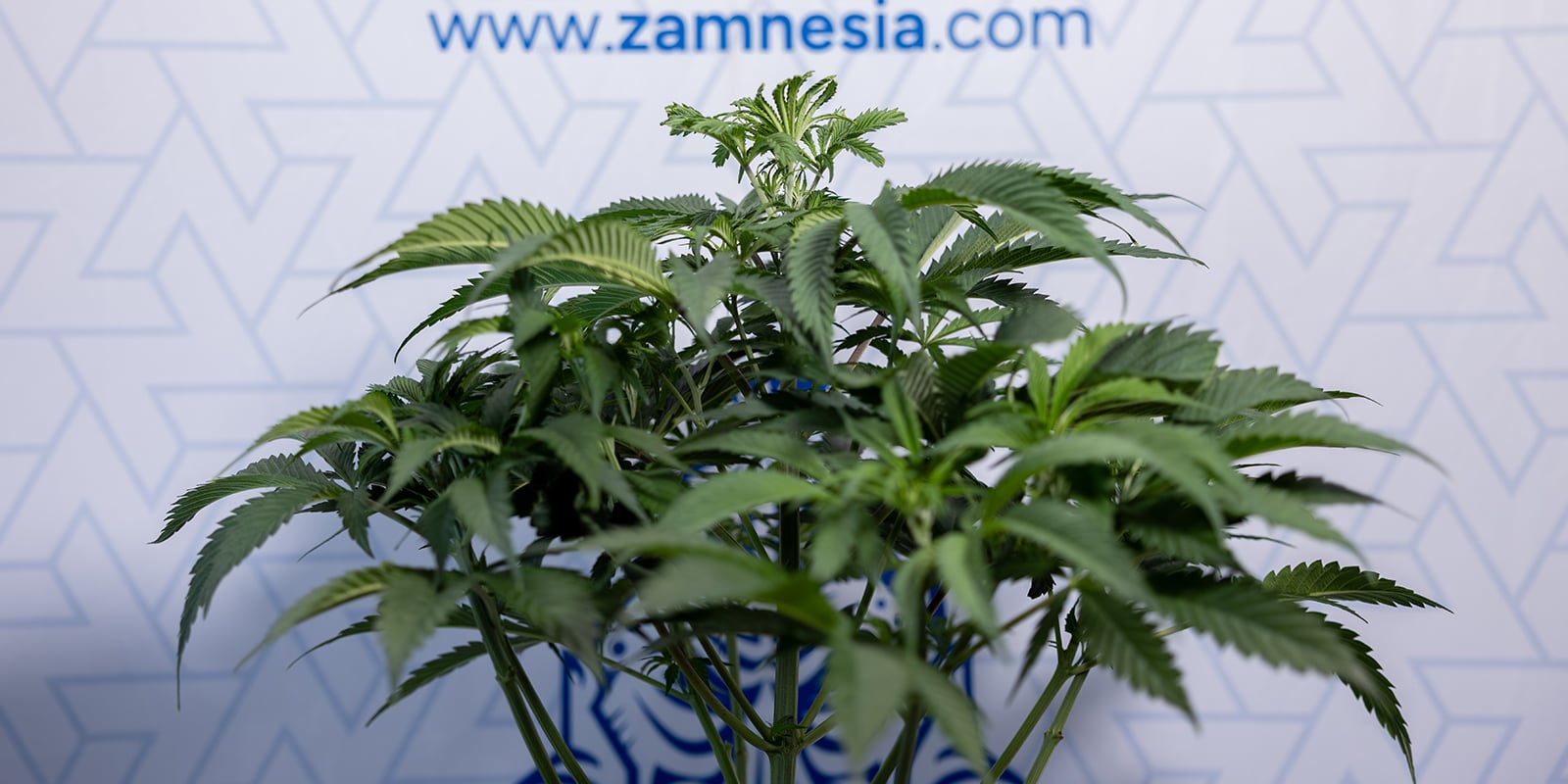
Cannabis plants don’t show sex during the early vegetative stage. Most of the time, you’re looking for pre-flowers at the nodes, which typically show up around weeks 4–6 from seed (or roughly 1–3 weeks after flipping the light cycle indoors), depending on genetics and overall vigor.
Your environment can shift that timeline. Strong light, stable temps, and consistent feeding often lead to clearer, earlier development, while stress, slow growth, or cold conditions can delay (or muddy) those first signs. Even with a dialed-in setup, don’t rush the call—stipules and fresh new growth are easy to mistake for sex traits.
A solid rule of thumb is to wait until the structures are clear enough that you can confidently tell whether a weed plant is male or female—and keep in mind that sexing cannabis seeds isn’t possible based on looks alone.
Understanding Cannabis Pre-Flowers
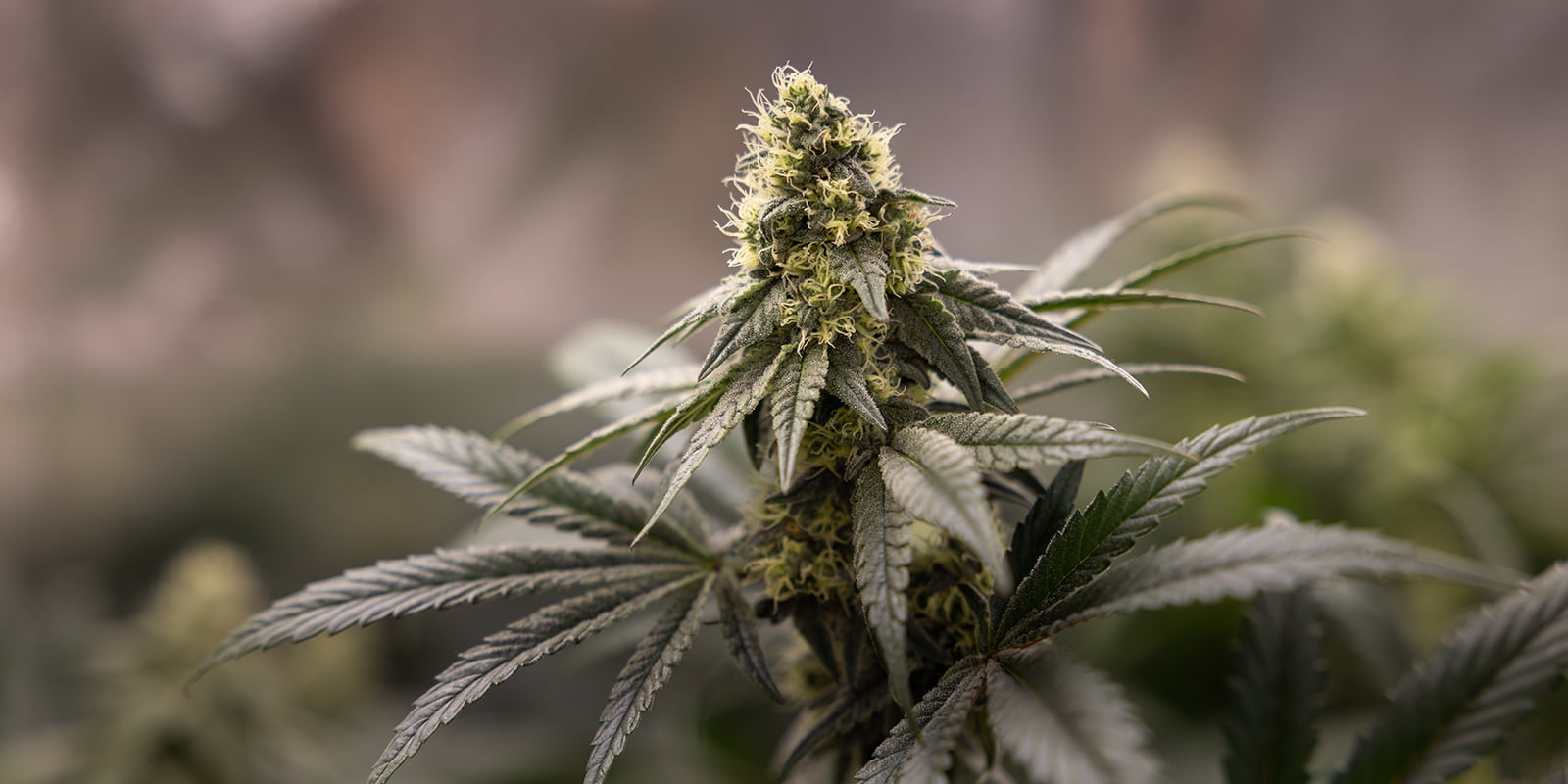
Pre-flowers are the first visible sex organs a cannabis plant produces, and they’re what you’ll use to ID males and females early. You’ll find them at the nodes, where a branch meets the main stem, usually tucked just above the stipules (the small, pointy, leaf-like growth at each node).
It’s easy to mix up pre-flowers with fresh vegetative growth. New growth looks like tiny leaves and shoots reaching outward, while pre-flowers show up as small, distinct structures that stay tight to the node instead of stretching out like a new branch.
These markers often appear before full flowering because the plant is hitting sexual maturity, even if it hasn’t fully entered the cannabis flowering period. When you start sexing cannabis, the key difference is structural: males tend to form round pollen sacs, while females develop a teardrop-shaped calyx where pistils will later emerge.
Early Signs of a Male Cannabis Plant
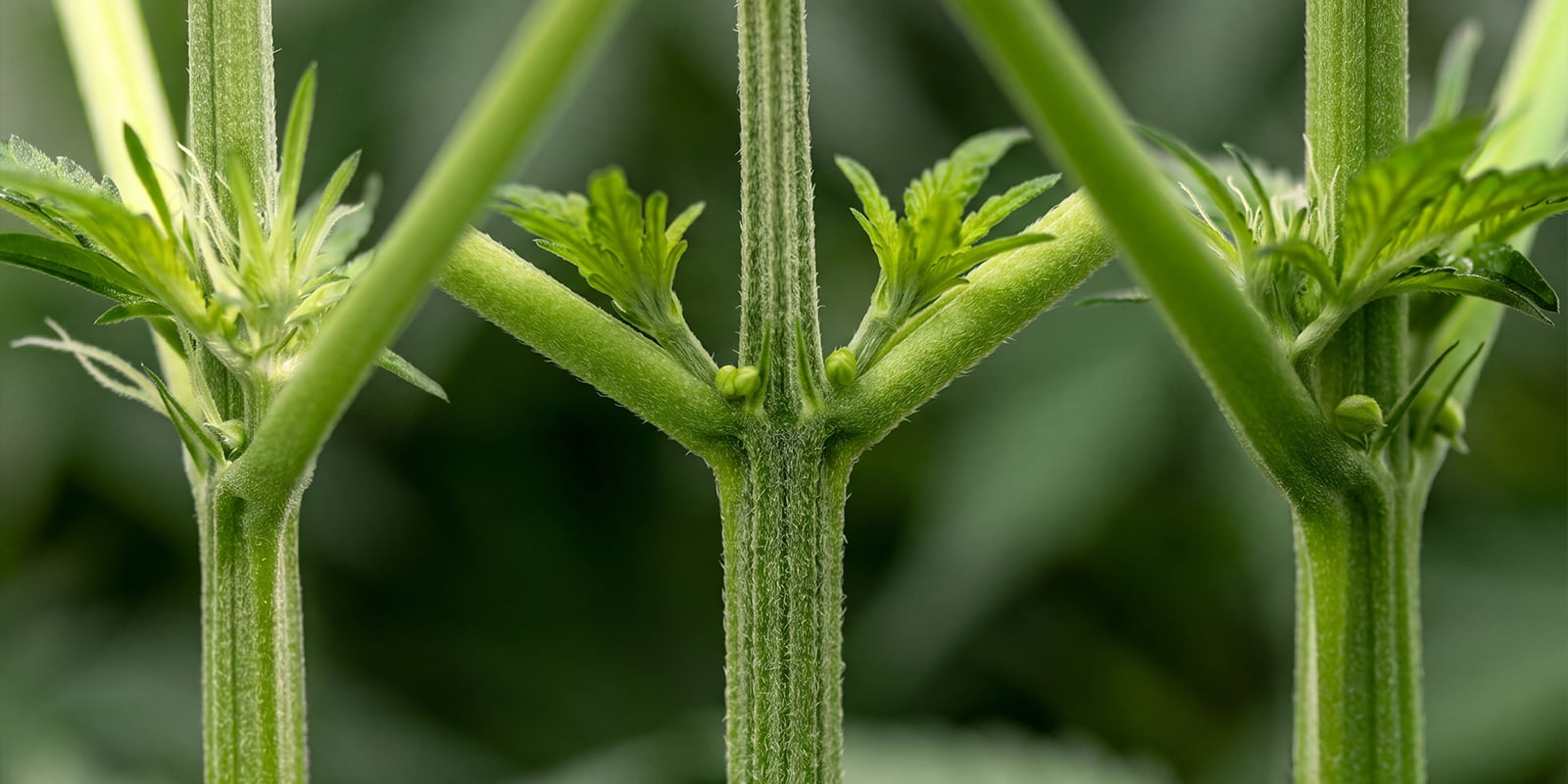
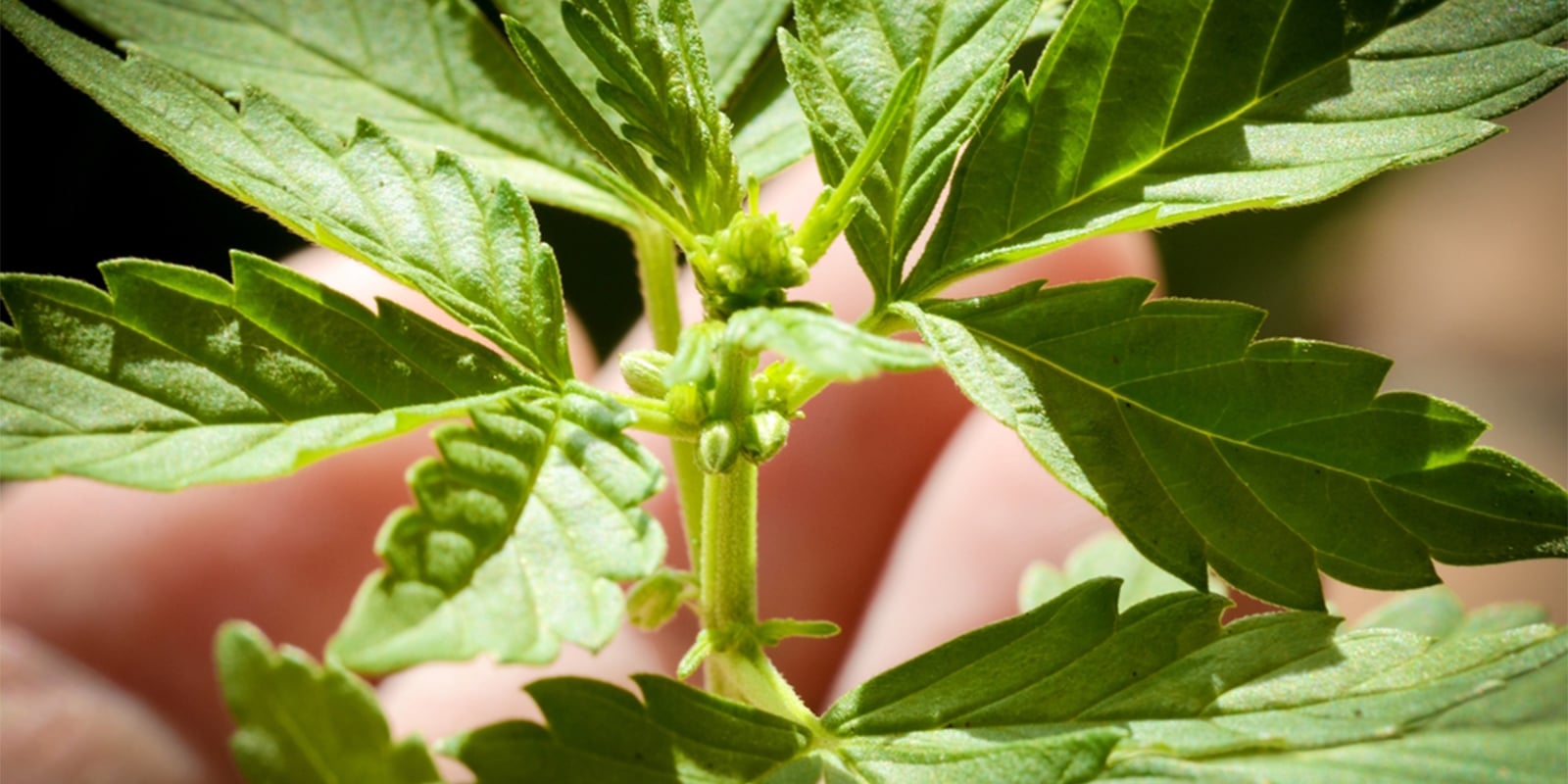
Male plants tip you off with pollen sacs: small, smooth, round-to-oval balls that form on a short stalk. They typically show up at the nodes first—often on the upper half of the plant, where growth is most vigorous—and they sit a little farther off the stem than the tighter, teardrop-shaped structures you’ll see on females.
Timing varies, but males often show before females—sometimes as early as week 4 from seed or within the first couple of weeks after switching to a 12/12 schedule indoors. That’s why it pays to check your nodes regularly as soon as pre-flowers start forming.
When you’re looking at pictures of early signs of a male plant, don’t bet everything on one clue. Check multiple nodes, look for several sacs developing (not just one random bump), and use our deeper guide on spotting male cannabis plants if you’re still not sure.
Early Signs of a Female Cannabis Plant
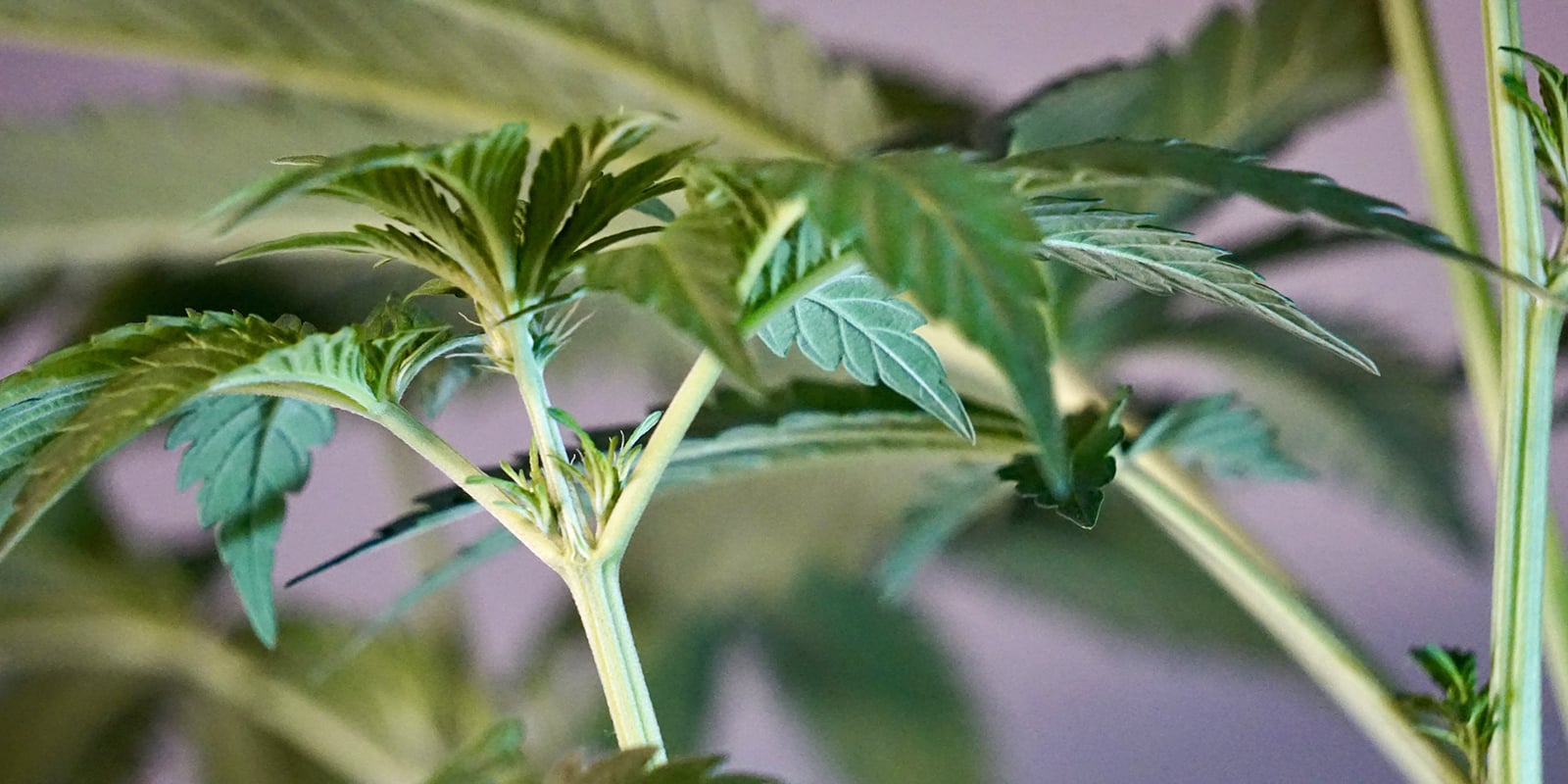
Female plants form a calyx at the node: a small, teardrop-shaped structure that sits tight against the stem. Often, you’ll spot the calyx itself before any “hairs” show up—those hairs are pistils. They usually pop out a little later as the plant commits more clearly to flowering.
That’s why you can still identify female pre-flowers before pistils appear, but it takes a closer look than spotting males. Compared to pollen sacs, a calyx is less round, less “stalky,” and it won’t hang away from the node. Once pistils appear, they typically look like a pair of thin white strands pushing out from the tip.
Early signs of a female plant can be more subtle—and more inconsistent across the plant—so check several nodes under good light and compare what you’re seeing to trusted references. If you’d rather skip the guesswork altogether, feminised cannabis seeds can be a practical option for growers focused on sinsemilla.
Male vs Female Weed Plants: Key Differences at a Glance
For a quick male vs female weed plant check, focus on what’s happening at the nodes rather than overall size. Structure beats guesswork, especially before full flowering.
| What to look for | Male | Female |
|---|---|---|
| Pre-flower shape | Round, ball-like sacs; often on a tiny stalk | Teardrop calyx tight to the stem |
| Position at the node | Sits slightly away from the stem; may appear in small clusters | Hugs the node; later shows two fine pistils |
| Speed of development | Often shows earlier and becomes obvious faster | Can be slower and more subtle at first |
| Growth pattern (general) | Tends to be leggier with wider internodes | Often bushier with tighter node spacing |
Fast identification tip: don’t decide based on one “odd bump”. Check multiple nodes, give it a few days, and look for consistent, repeatable structures before you act.
What to Do if You Identify a Male Cannabis Plant
Most growers remove males because once pollen sacs open, an entire room can get pollinated fast—shifting your females from bud production to seed production. Pollen is light, it rides air currents and clothing easily, and it only takes a little to do the job.
To minimize spread, act before sacs split and follow a calm, clean routine:
- Turn off fans to reduce drifting pollen.
- Gently bag the plant from the top down, then cut it at the base.
- Seal the bag before moving it through your grow space.
- Wipe down nearby surfaces and change clothes after handling it.
Keeping a male can be intentional if you’re collecting pollen or making seeds. If that’s the plan, isolate it well and read up on pollen and cannabis breeding before you move forward.
How to Prevent Male Plants From Ruining Your Grow
A few habits can dramatically reduce the risk of accidental seeding:
- Starting with feminised seeds: choose reliable genetics to minimize the chance of males showing up in the first place, especially if you’re working with limited space or a tight flowering schedule.
- Regular early inspection routines: check nodes every couple of days from sexual maturity onward, and confirm changes across several sites before you let your guard down.
- Environmental stress reduction: keep light leaks, heat spikes, drought, and rough handling to a minimum; stress can cause weird growth and make identification harder.
- Isolation and monitoring best practices: quarantine any “maybe male” plant away from airflow and the rest of the canopy until it’s confirmed, and follow male cannabis plant advice if you need a safe next step.
Common Mistakes When Sexing Cannabis Plants
Even with a magnifier and good light, a few classic slip-ups can throw off cannabis sexing:
- Mistaking new growth for pre-flowers: fresh stipules and tight leafy tips at the node can look “bulbous” at a glance, but it’s just normal vegetative growth.
- Checking plants too early: before sexual maturity, there may be nothing definitive to see, so early calls are usually guesswork.
- Mixing up calyxes and pollen sacs: a calyx is usually teardrop-shaped and sits close to the stem, while pollen sacs are rounder and often form on a tiny stalk.
- Relying on a single sign instead of patterns: one weird bump doesn’t prove anything; look for repeat structures across multiple nodes over several days.
Trust Your Eyes: Final Tips for Identifying Plant Sex
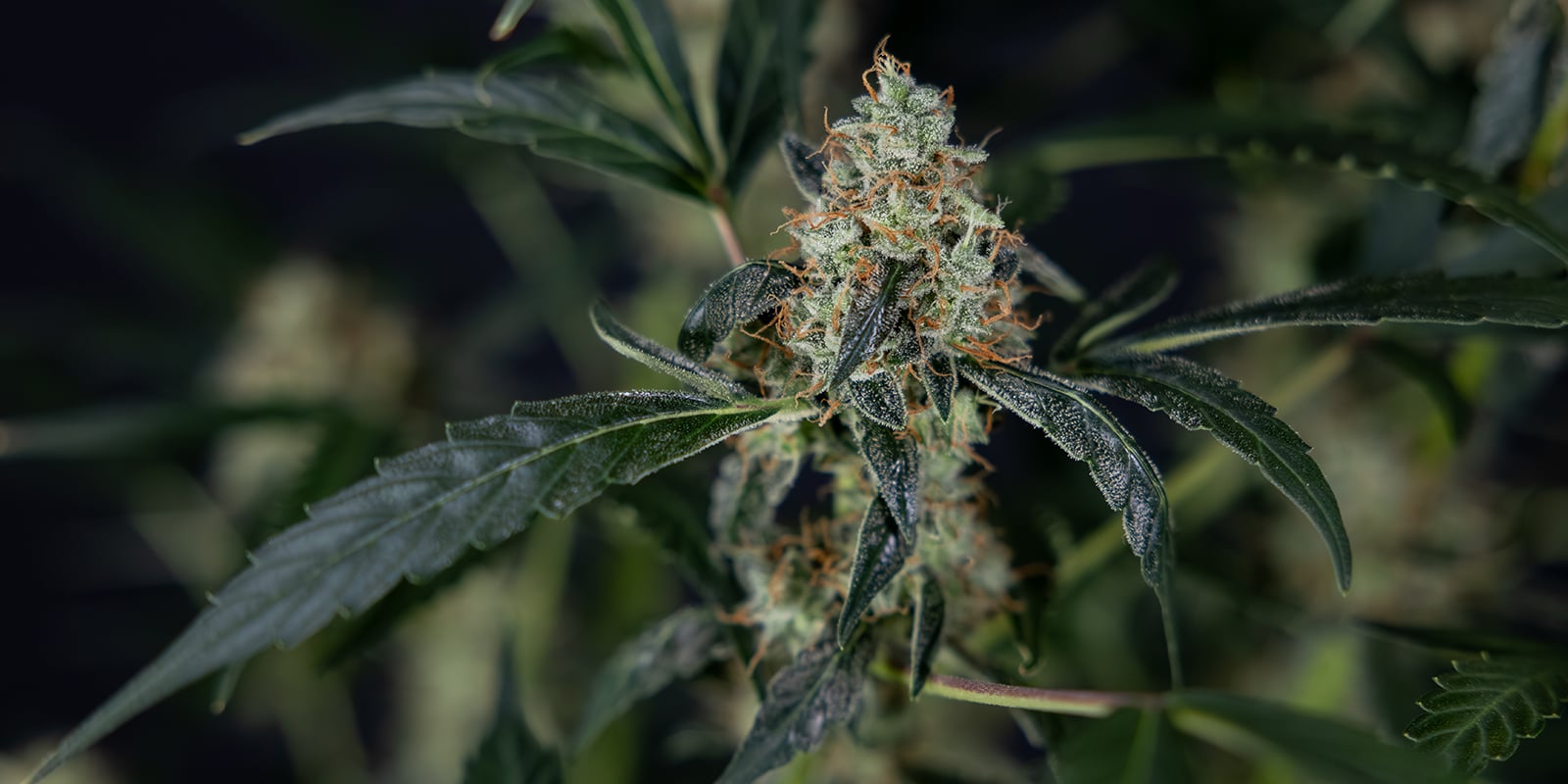
The most reliable tells are still at the nodes: males develop round sacs that sit off the stem, while females form a teardrop-shaped calyx that later pushes out pistils. Good light, a steady hand, and checking more than one site will beat rushed decisions every time.
Give your plants a little time to declare themselves, then check again a couple of days later—sex traits often show up gradually, not all at once. Side-by-side visual comparison helps, too; keeping pictures of early signs of a male plant handy makes subtle differences easier to catch. Bookmark this guide and come back to it whenever a new grow hits that uncertain “is it showing yet?” stage.